
Calabria · Tropea, Scilla, Pizzo
Villages of Calabria
The South you never expected, suspended between cliff and myth
- Sea & islands
- History & art
- Romantic
A coastline the ancients called the Coast of the Gods, a fishing village grown upon the rocks, a castle that holds within it both ice cream and tragedy. Tropea, Scilla and Pizzo are not destinations to tick off a list: they are three different ways of looking at the same turquoise sea, and of letting those who grew up here tell you their stories.
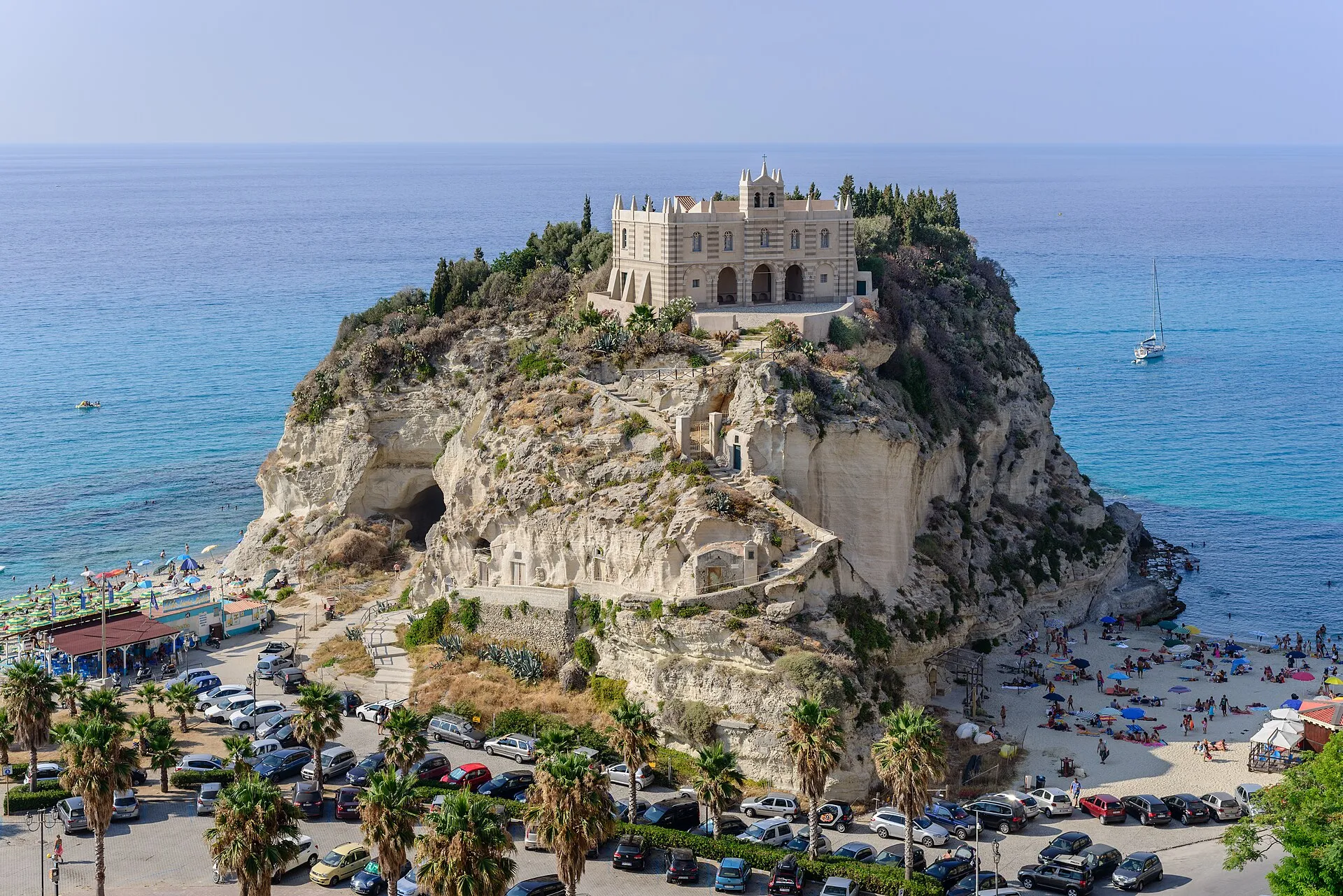
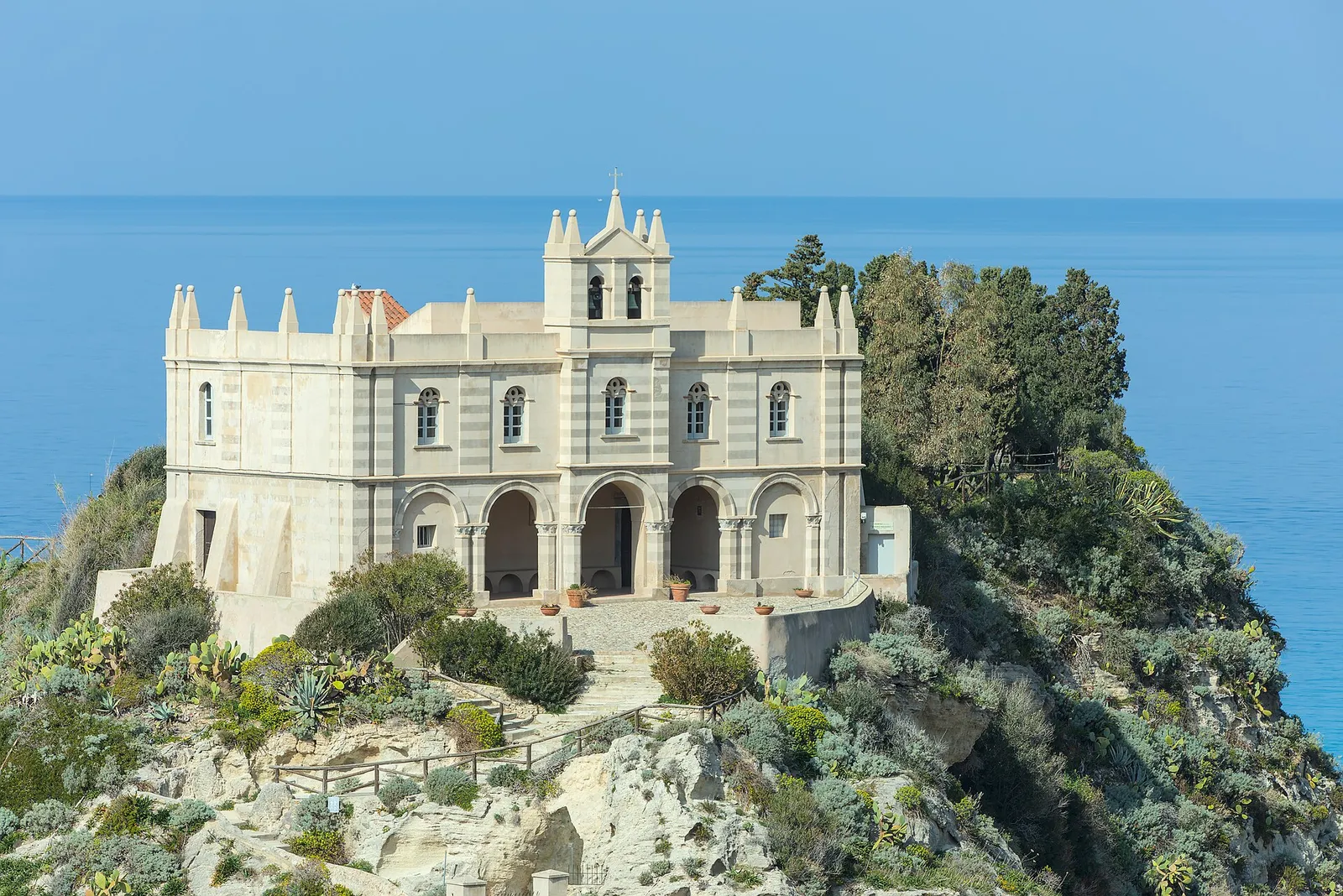
There is a Calabria that rattles like a postcard and one that speaks in a low voice, and we go looking for the second. In Tropea we take you to the edge of the tufa cliff at the hour when the sun drops behind Stromboli, and as the village turns pink our tour leads point out, down below on the little island, the sanctuary of Santa Maria dell'Isola: a Benedictine monastery clinging to the rock, where legend has it that a wooden statue of the Madonna arrived from the sea. Further along, the Costa degli Dei opens up, and someone will tell you, with a half-smile, that it was Hercules himself who founded it. You half believe it, but you will remember it forever.
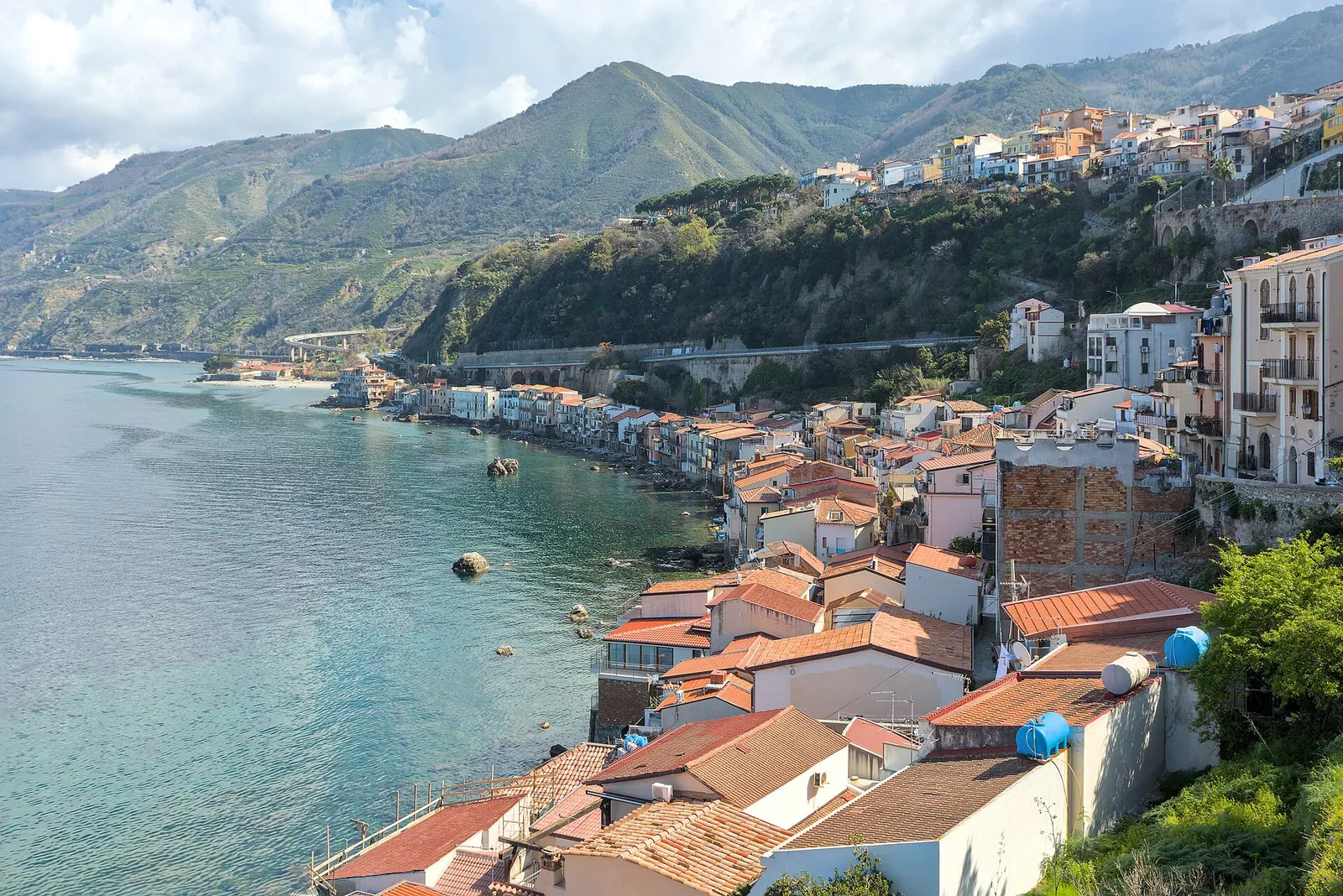
In Scilla the myth becomes almost tangible. Before you lies the Strait, and somewhere in those currents Homer imagined Scylla, the nymph transformed into a six-headed monster by the jealousy of the sorceress Circe, condemned to terrorise sailors opposite Charybdis. Beneath the Castello dei Ruffo, Chianalea draws close — the fishermen's quarter: houses that fish directly from the water, boats tied to doorways, alleyways that look like canals. Here swordfish hunting is a ritual centuries old, still carried out from the high walkways of the spadara boats, and in the evening you taste it in a sandwich eaten on the pier, with your feet almost in the wave.
Then there is Pizzo, perched on its spur overlooking the Gulf of Sant'Eufemia. In the Aragonese castle, in 1815, Gioacchino Murat — Napoleon's brother-in-law and King of Naples — was imprisoned and shot: a story our tour leads tell in the very rooms where it happened. And then the sweet: the Tartufo di Pizzo, born of pure improvisation when a gelato maker, left without moulds during a festival, began shaping the balls of ice cream by hand, hiding inside them a heart of melted chocolate. A mistake that became legend, today protected as a PGI.
Upcoming departures
Upcoming departures coming soon — write to us for dates and info.
What you'll live
Tropea on the cliff at sunset
The sanctuary of Santa Maria dell'Isola suspended above the sea, and the Costa degli Dei catching fire as the sun drops behind Stromboli.
Chianalea, the village on the water
The fishermen's quarter of Scilla, houses and boats among the rocks, and a swordfish sandwich eaten on the pier at dusk.
The Tartufo where it was born
In Pizzo, in the little square on the gulf, the PGI ice cream with its heart of melted chocolate: born from a mistake, turned into legend.
Civita and the Raganello Gorge
An Arbëreshë village where Albanian is still spoken and carved chimney pots keep watch over a canyon cut into the rock.
Stories of the villages
Every village on the journey keeps a story. Here are the ones your tour lead will bring back to life.
 01
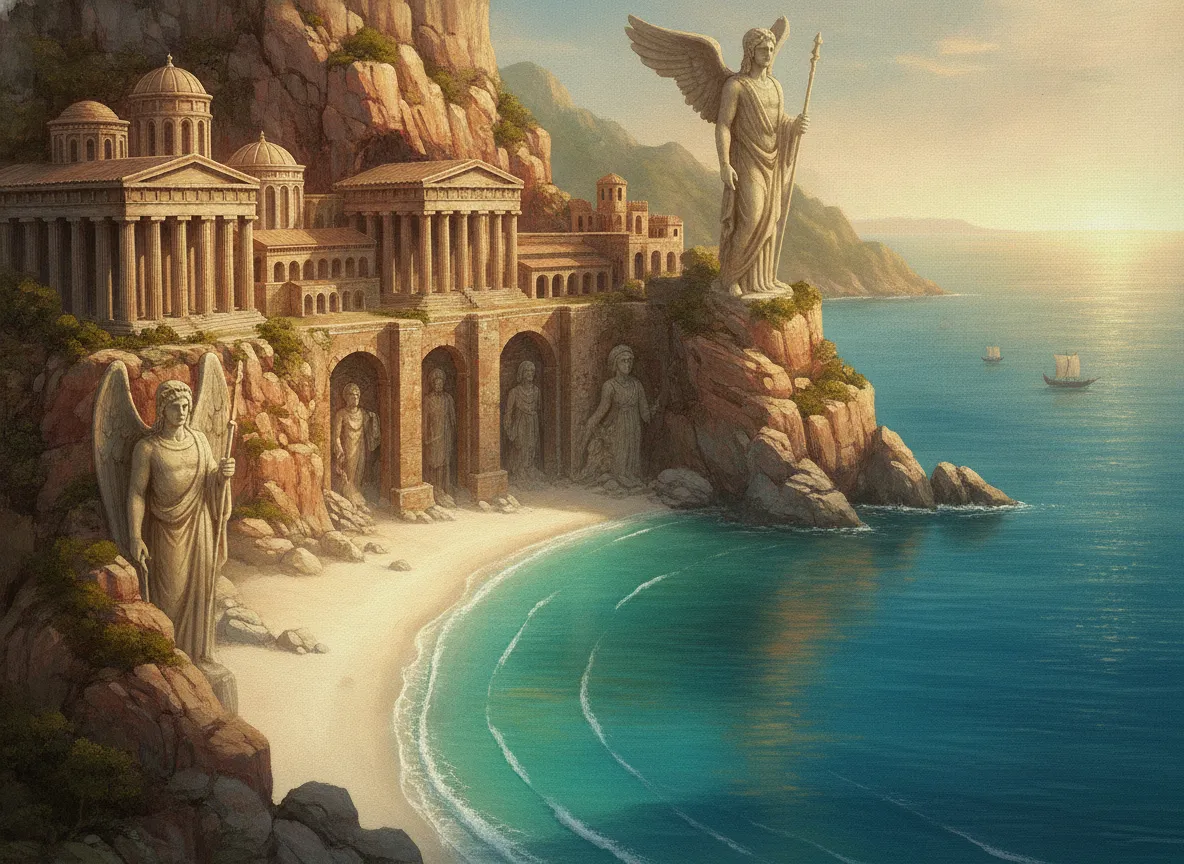
01Tropea — The gods and the Madonna on the rock
Tradition has it that Hercules himself, returning from his labours, landed on this shore and consecrated it: ever since, the stretch of coast between Tropea and Capo Vaticano has been called the Costa degli Dei, because it seemed too beautiful to belong to mere mortals alone. On a tufa islet dropping sheer into the sea, Benedictine monks built the sanctuary of Santa Maria dell'Isola, where legend tells of a wooden statue of the Madonna arriving from the sea, welcomed as a gift from the waves.
Your tour lead takes you to the edge of the cliff at the hour when the sun drops behind Stromboli and the village turns pink. From up there the sanctuary seems to float on the water, and as the air carries the scent of salt and freshly cut red onion you understand why, for three thousand years, people have never stopped speaking of gods here.
 02
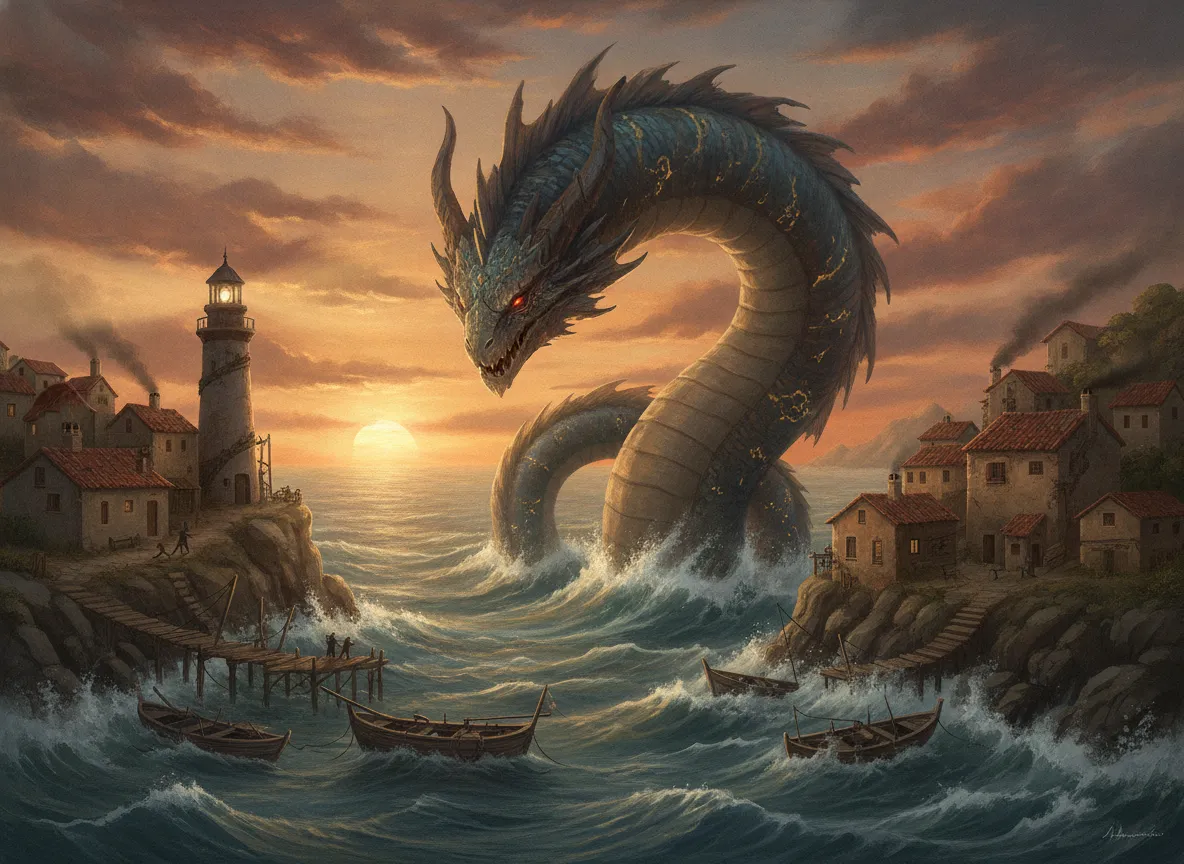
02Scilla — The monster of the Strait and the village that fishes in the water
In the Odyssey, the Strait is guarded by two scourges of sailors. On one side the whirlpool of Charybdis swallows ships whole; on the other, Scylla — a beautiful nymph whom the jealousy of the sorceress Circe transformed into a six-headed monster, condemned to snarl from the cliff and snatch passing sailors. Homer imagined her right here, beneath the rock where the Castello dei Ruffo stands watch today, facing the currents that still churn at the turn of the tide.
At the foot of the castle, Chianalea draws close — the fishermen's quarter: houses with their foundations in the water, boats tied to doorways, alleyways as narrow as canals. Here swordfish hunting is a ritual centuries old, still carried out from the high walkways of the spadara boats. The tour lead takes you down when the other groups have already left, and in the evening you taste that fish in a sandwich eaten on the pier, with your feet almost in the wave and the myth breathing on the back of your neck.
 03
03Pizzo — A king shot dead and an ice cream born by mistake
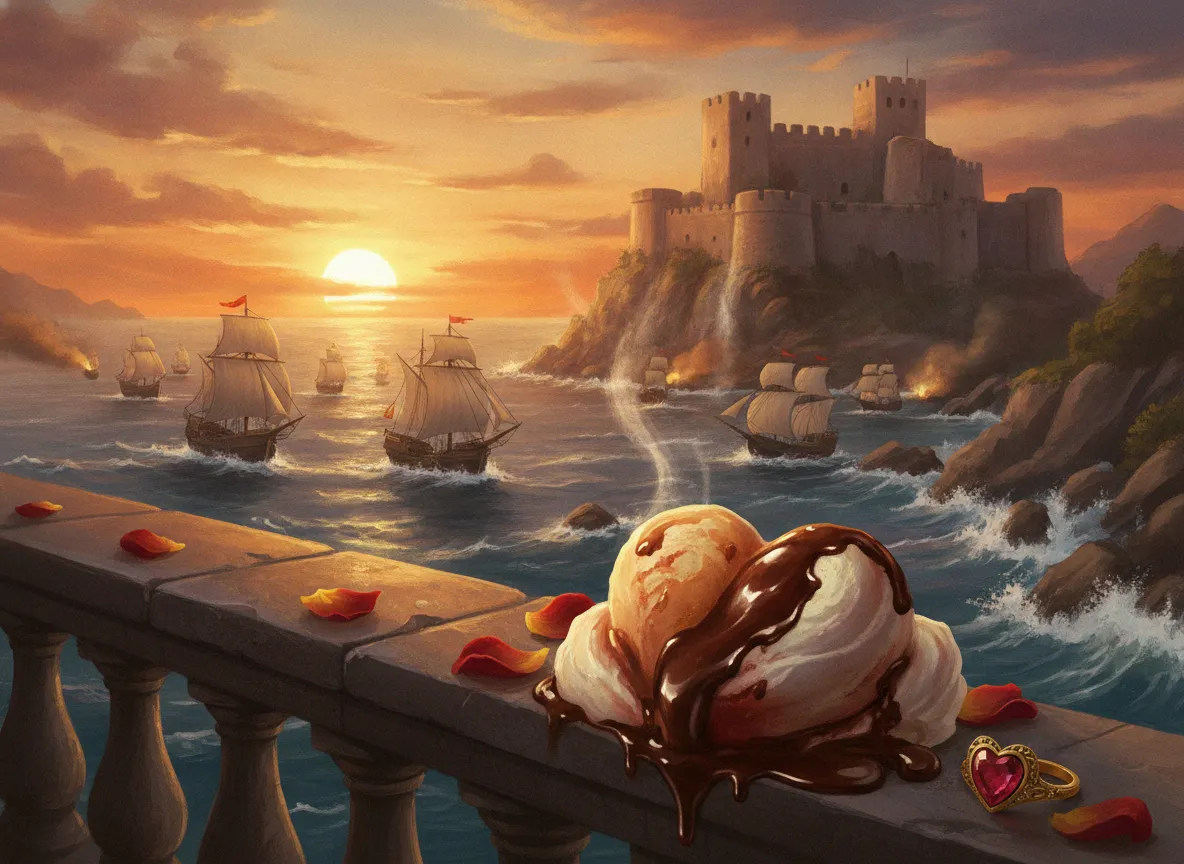
In the Aragonese castle perched above the Gulf of Sant'Eufemia, in October 1815, a kingdom came to an end. Gioacchino Murat, Napoleon's brilliant marshal and King of Naples, landed at Pizzo in a desperate attempt to reclaim his throne: captured, he was swiftly tried and shot within those very walls. Your tour lead tells you the story of his final hour in the rooms where it happened, where the weight of that tragedy can still be felt.
But Pizzo also knows how to sweeten history. The story goes that during a festival a gelato maker ran out of moulds and, unwilling to disappoint his customers, began shaping the balls of ice cream by hand, hiding inside them a heart of melted chocolate: and so the Tartufo di Pizzo was born — a mistake turned into legend, today protected as a PGI. You taste it where it was born, in the little square overlooking the sea, as the chocolate runs warm at the first bite: it is the sweetest farewell Calabria knows how to give.
Between Greek myth and Napoleonic kings
Greeks, Normans, Aragonese and Bourbons have left on this stretch of the Tyrrhenian a layering of legend and history: you sail inside the verses of Homer and step into the rooms where a kingdom ended. These are the stops your tour lead will bring to life before your eyes.
- 8th century BC
Homer and the monster Scylla
In the Odyssey the Strait is guarded by two scourges of sailors: Scylla, the nymph turned into a six-headed monster, facing the whirlpool of Charybdis.
- 12th century
The sanctuary on the cliff
On the little island of Tropea, Santa Maria dell'Isola takes shape — an ancient Benedictine monastery clinging to the rock that drops sheer into the sea.
- 1492
The Aragonese Castle of Pizzo
Ferdinand I of Aragon has the quadrangular fortress built at Pizzo, overlooking the Gulf of Sant'Eufemia, on a tower already dating from the fourteenth century.
- 1815
The end of Murat
On 13 October, Gioacchino Murat, Napoleon's brother-in-law and King of Naples, is tried and shot in the castle of Pizzo after a failed landing.
- c. 1960
The Tartufo becomes legend
In Pizzo a gelato maker without moulds shapes balls of ice cream by hand with a heart of melted chocolate inside: the Tartufo is born, today a PGI product.
The Furore group tour — from 20 to 50 participants, on fixed calendar dates — moves through Tropea, Scilla and Pizzo like three chapters of a single story. Transfers take place by coach along the Costa degli Dei, with stops at the right workshops and tables chosen by the dedicated tour lead who accompanies the group for the entire journey. In Tropea there is time for a swim beneath the cliff before climbing to the sanctuary, and a taste of the celebrated Red Onion PGI, sweet enough to eat like a piece of fruit; in Scilla the descent into Chianalea happens at just the right moment and the swordfish arrives still warm from the boat; in Pizzo the Tartufo is savoured where it was born, in the little square by the sea. For those who want to go beyond the postcard, the programme includes Civita, an Arbëreshë village suspended above the Raganello Gorge, where for five centuries an ancient Albanian language has still been spoken and the carved chimney pots tell of a Calabria from another world.
Each stop has its own local expert woven into the group's journey: people born here, or who have chosen to stay, capable of opening doors that no printed guide has ever known. You sign up by choosing a date from the calendar, and from that moment the Furore tour lead coordinates every detail — transfers, entrances, tables and stops — so that the group truly lives the Calabrian villages, rather than merely passing through them.
The journey map
When to go
What's included
- Dedicated storytelling tour lead
- Transfers on site included
- Selected charming places to stay
- Experiences and tastings on the programme
- Furore 24/7 assistance
Not included
- Return travel to the departure location
- Meals not indicated in the programme
- Tips and personal extras
- Travel insurance (optional)
Where you will sleep
We choose every place to stay by hand: no anonymous chains, but places with a soul, in the heart of the villages or looking out over the landscape.
Historic residences
Palaces and stone houses in the centre of the villages, among ancient walls and silence.
Boutique hotels
Small charming hotels, with a view, attentive service and an intimate atmosphere.
Farmhouses and wineries
Authentic hospitality among vines, olive trees and real tables, where they welcome you like home.
Your tour lead
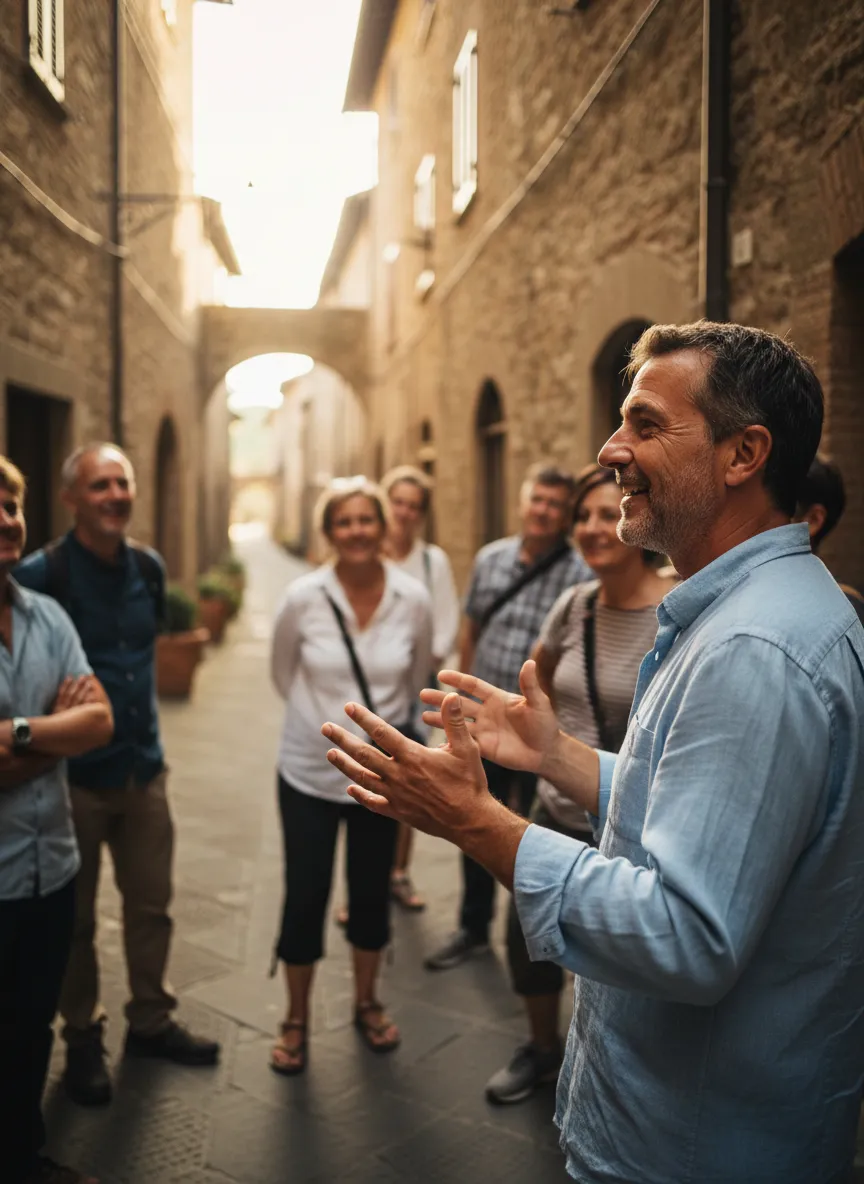
Not just any chaperone: a storyteller of the land, born here or who chose to stay. They know the true stories, the doors to open and the right rhythms. They are the person who turns a beautiful journey into an unforgettable memory.
The journey timeline
- Departure from Naples
- Day 1
Tropea, the cliff and the gods
Arrival and a walk through the historic centre to the belvedere overlooking the sanctuary. Aperitivo with the Red Onion PGI and a fish dinner as the sun sets behind Stromboli.
- Day 2
The Costa degli Dei
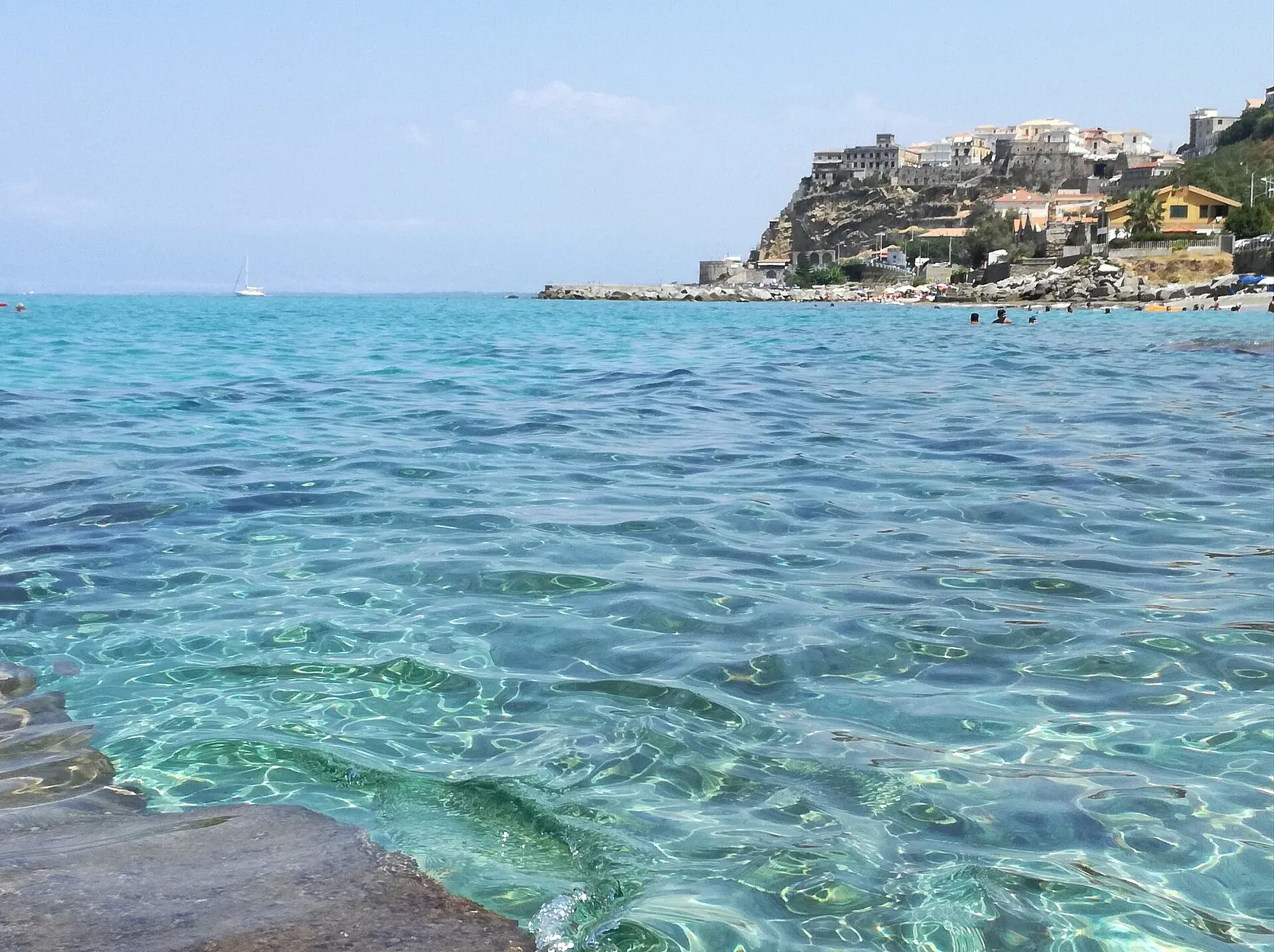
A day among the most hidden coves of the coast, from Capo Vaticano to the tufa beaches, with a swim and lunch by the sea at a spot chosen for you.
- Day 3
Scilla between myth and sea
Private transfer towards the Strait, the Castello dei Ruffo and the descent into Chianalea through the fishermen's alleyways. Swordfish in the evening, on the pier.
- Day 4
Pizzo and the Tartufo
The journey up to Pizzo, Murat's castle and its Napoleonic history, then the ritual of the Tartufo in the little square overlooking the gulf. Farewells by the sea.
- Return to Naples
Frequently asked
What is the best time to visit the villages of Calabria?
Late spring (May–June) and early autumn (September): the sea is already warm or still mild, the light is magnificent and the villages are lively without the August crowds.
How many days does the Tropea, Scilla and Pizzo tour last?
The tour takes place over 4–6 days: enough time to experience the three villages at a leisurely pace, enjoy the Costa degli Dei and include a day in Civita.
How does booking the tour work?
You choose your preferred date from the Furore calendar, sign up and pay the fee. The tour departs with a group of 20 to 50 people and a dedicated tour lead who accompanies the group for the entire duration of the journey.
How do you travel between the villages?
By coach transfers along the coast, coordinated by the tour lead: stops at points that a hurried itinerary would skip, and no logistical detail left to chance.
More villages to discover
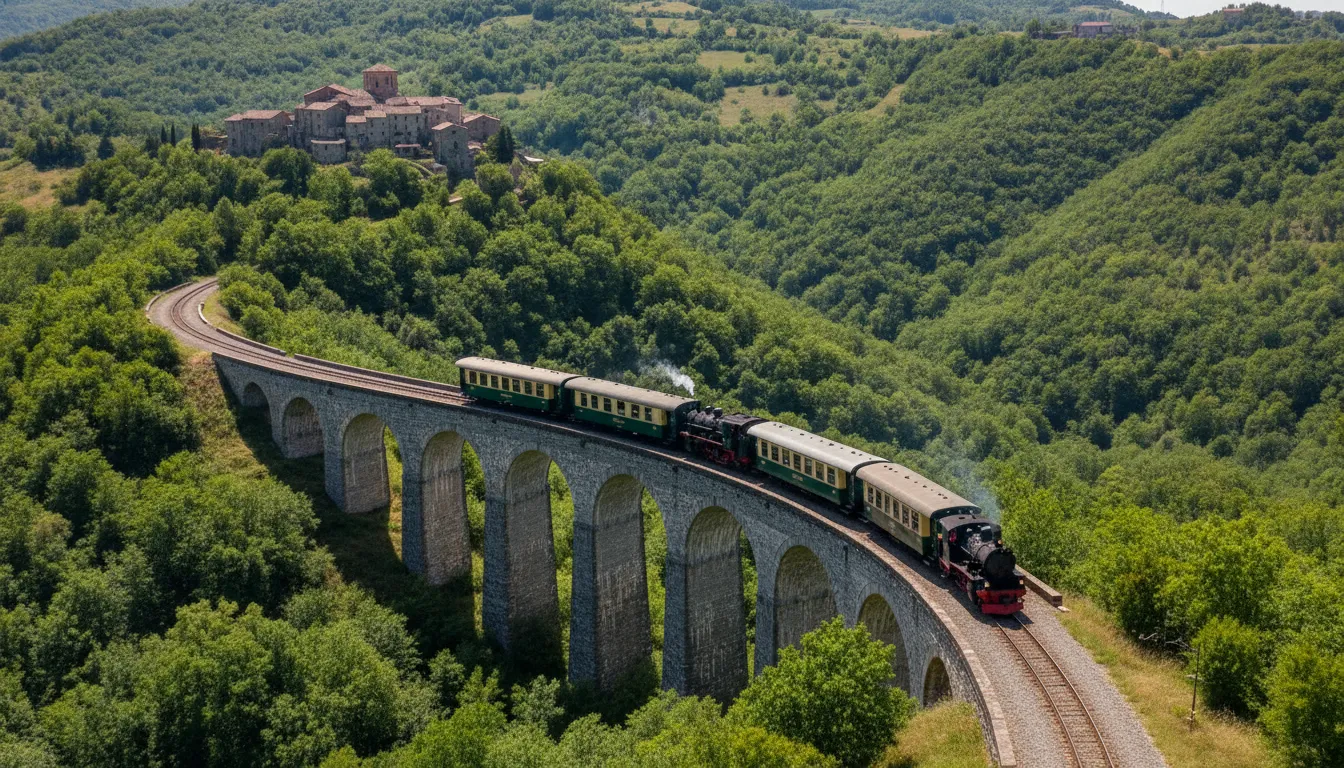 Abruzzo
Italy's Transiberian and the Villages of Abruzzo
Abruzzo · Sulmona, Pescocostanzo, Cocullo, Campo di Giove
A slow train through the wild heart of the Apennines
Explore the village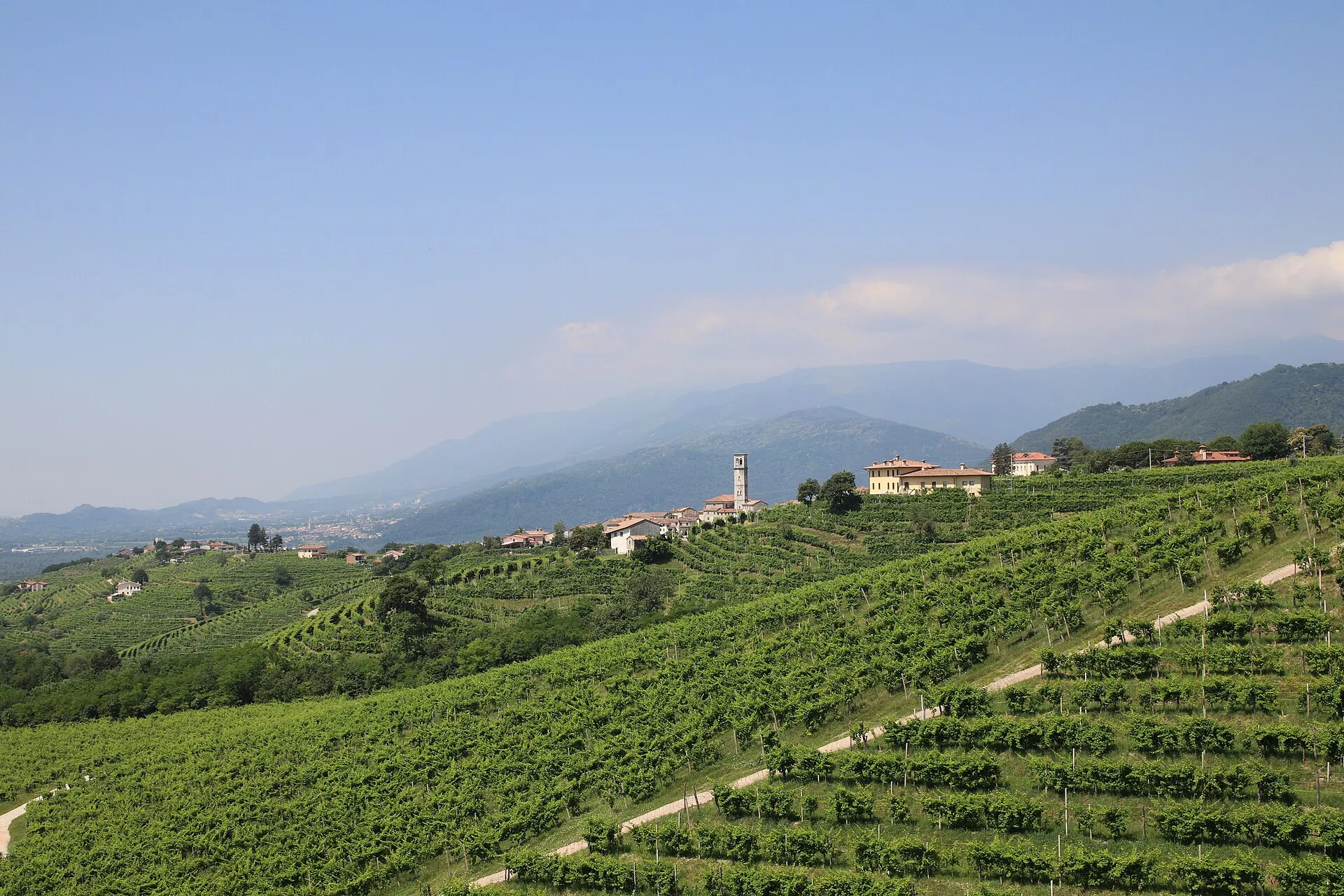 Veneto
Colline del Prosecco
Veneto · Valdobbiadene, Conegliano and the UNESCO Rive
Hills where the light of the Pre-Alps becomes wine
Explore the village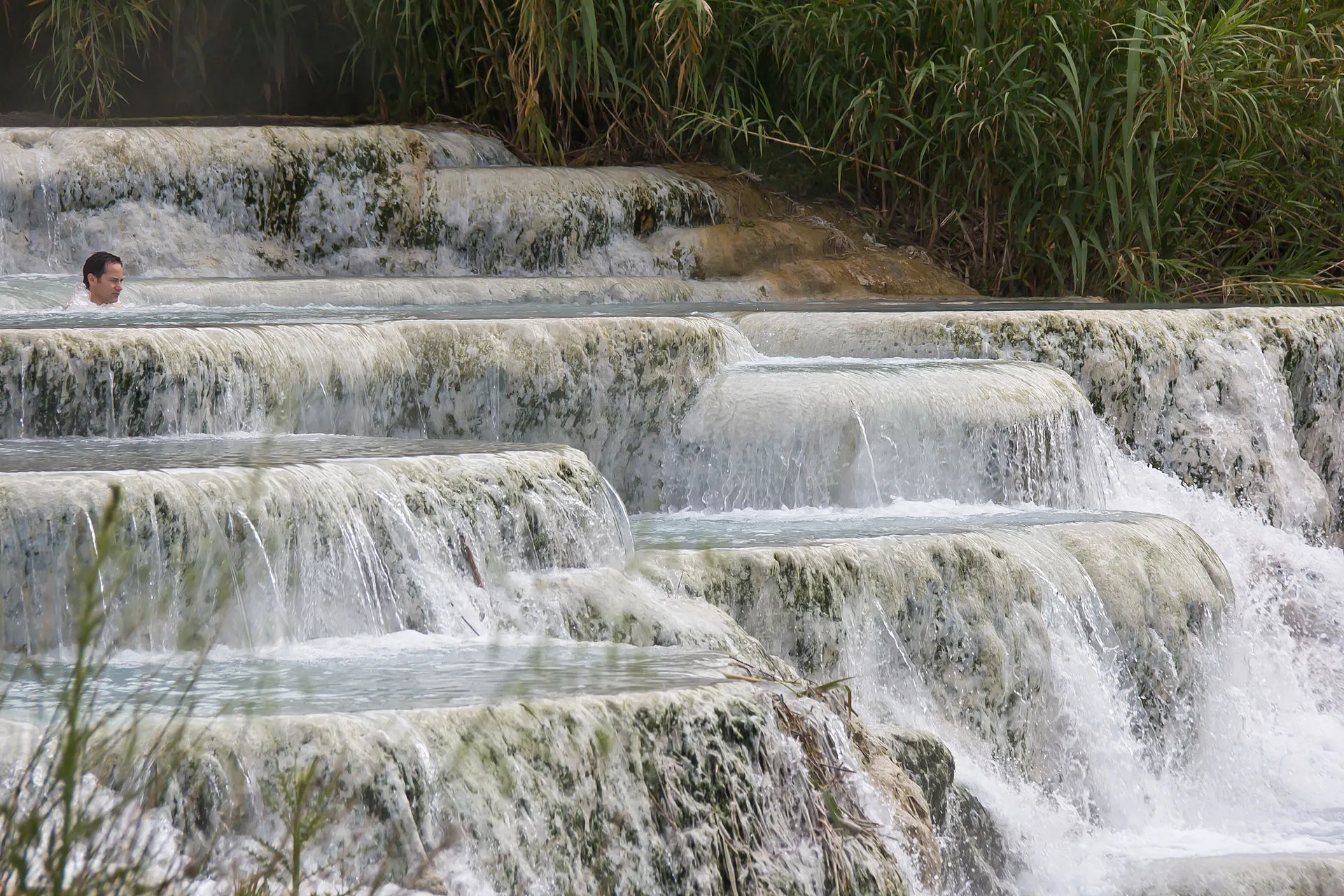 Tuscany
Saturnia and the Tuscan Maremma
Tuscany · Saturnia, Pitigliano, Sovana
Warm waters born from a thunderbolt and cities carved from tufa
Explore the villageReady to truly set off?
Choose the tour that calls you and sign up: the itinerary, the stories and the logistics are on us.