
Tuscany · Saturnia, Pitigliano, Sovana
Saturnia and the Tuscan Maremma
Warm waters born from a thunderbolt and cities carved from tufa
- Thermal baths
- Wine & food
- History & art
There is a Maremma that simmers and one that remembers. The waters of Saturnia rise in warm wisps of steam across the fields from a time before men had a name for them; not far away, Pitigliano, Sovana and Sorano cling to tufa cliffs as though they grew from the rock itself. This is not an itinerary of stops: it is a slow descent into the deep time of Tuscany.
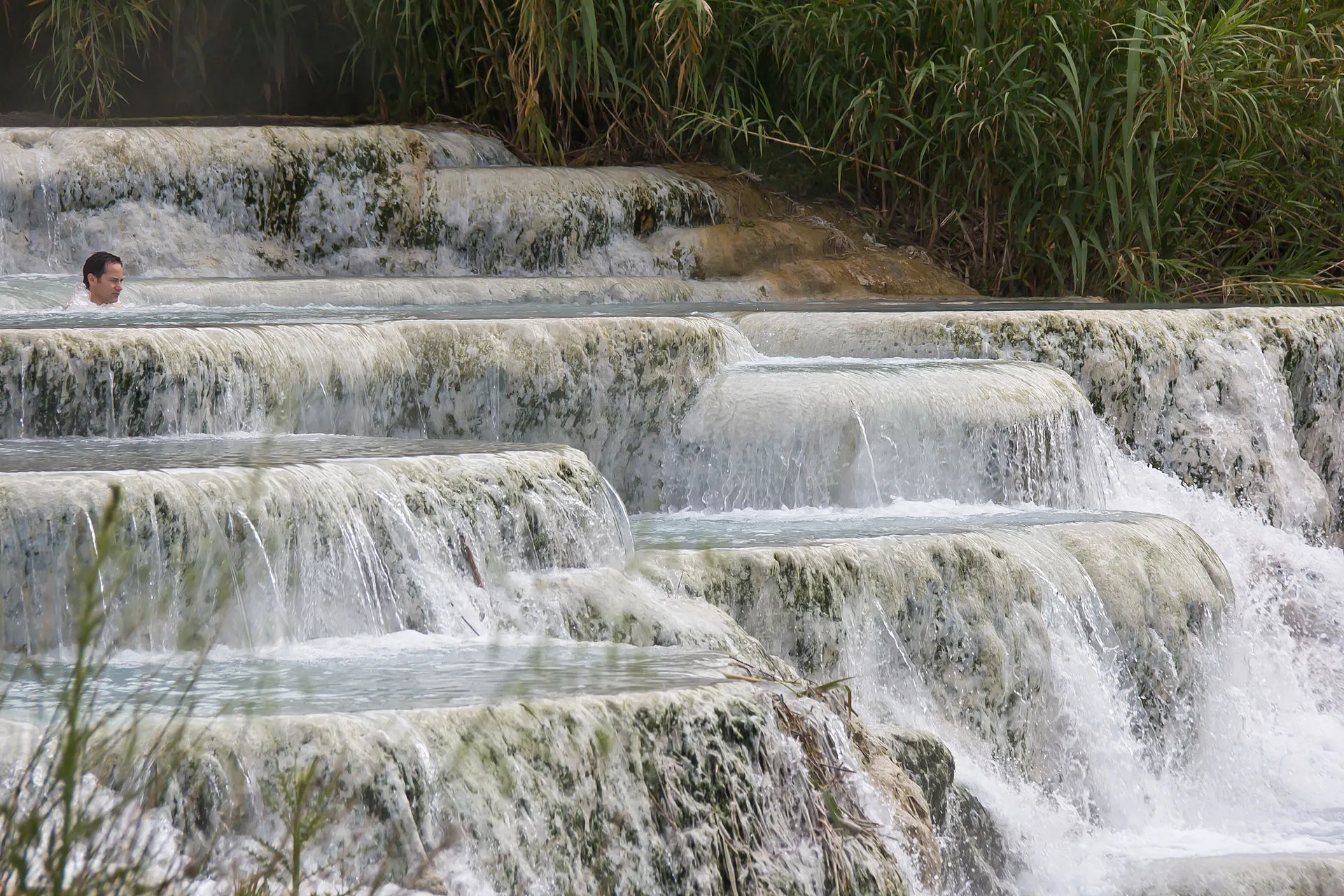
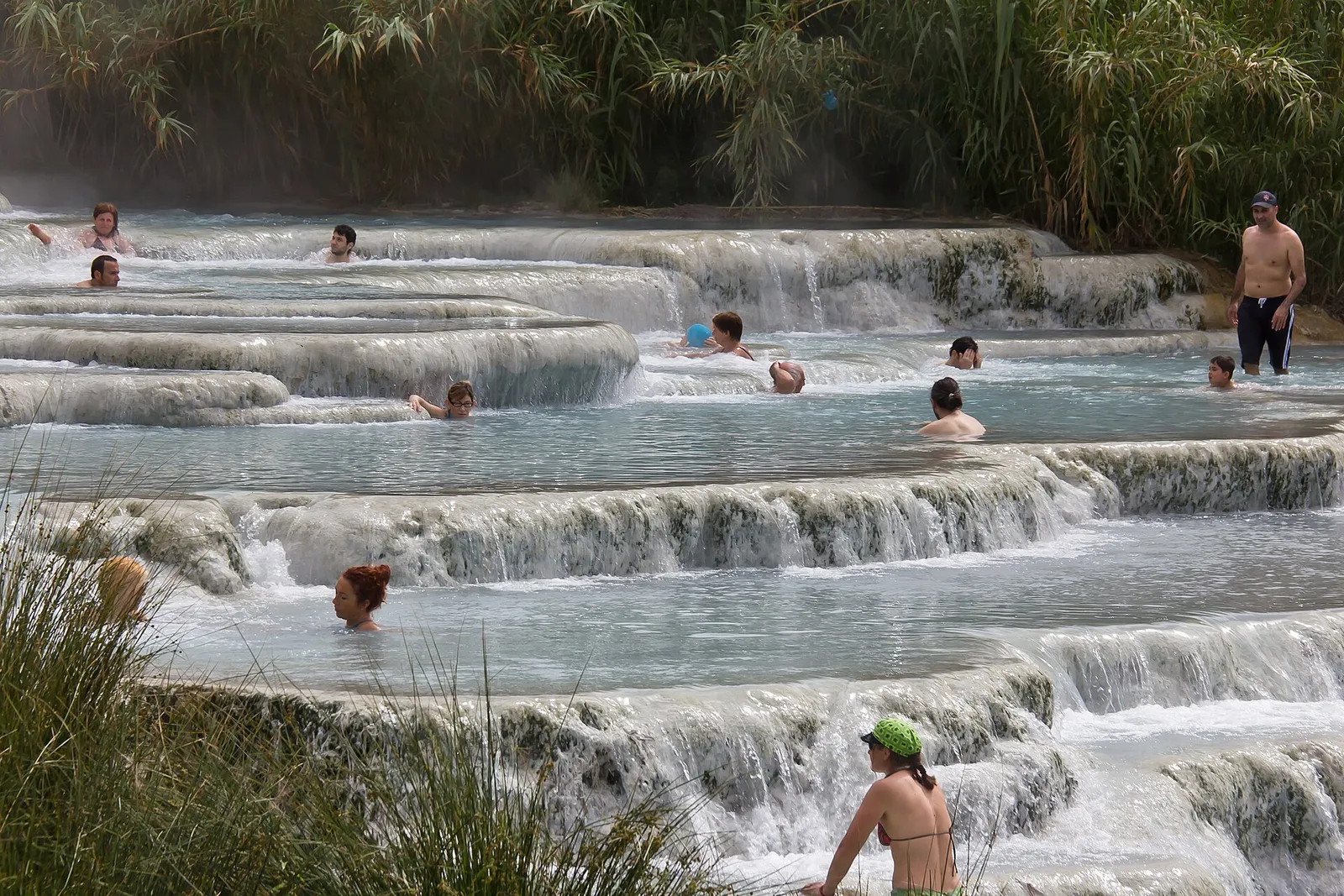
It begins with water. Legend has it that here, in this land of soft hills, the god Saturn — the old king dethroned from Olympus by his own son — wandered in exile across the peninsula until he came to rest in the Maremma. And it was here that the wrath of the gods was unleashed: a thunderbolt split the earth and from that wound warm, sulphurous waters began to flow, soothing the fury of men and beasts alike. Science calls it a thermal spring at 37.5 degrees; our tour leads, as the water slides over you at sunset, tell you the other version — the older one. The Cascate del Mulino are free and open day and night, all year round: in the evening, when the coaches have gone and only the steam rising into the darkness remains, you understand why the Etruscans and Romans considered this place sacred.
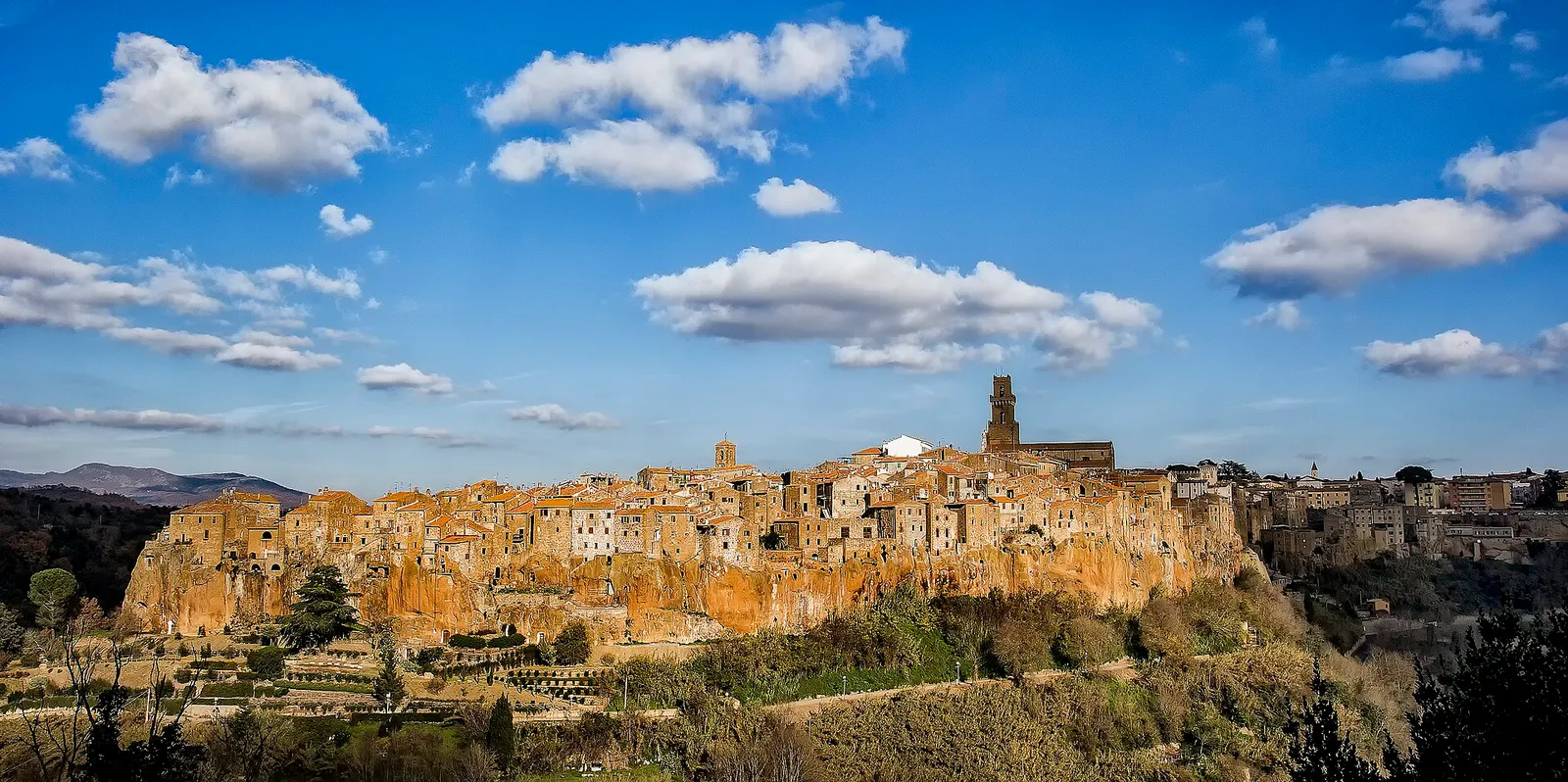
Then you climb toward the tufa. Pitigliano appears suddenly around a bend, suspended above the void on a spur of volcanic rock, its houses seeming to sprout from the cliff. It is known as «the Little Jerusalem»: from the late sixteenth century this village welcomed Jews fleeing Rome and the Papal States, and for centuries people lived here in peace. In the heart of the ancient ghetto you can still enter the sixteenth-century synagogue, and then descend, carved into the tufa, to the unleavened bread oven, the kosher wine cellar, the ritual bath, the slaughterhouse. This is a memory our tour leads do not recite: they let you touch it, stone by stone.
Finally, the silence of the Etruscans. A few kilometres away, Sovana guards one of the most solemn necropolises in all of Etruria — monumental tombs sculpted from the rock between the seventh and sixth centuries BC. The Tomba Ildebranda, dedicated to the Sovana-born Ildebrando who became Pope Gregory VII, is a temple hewn from stone. And between one village and the next run the Vie Cave: corridors up to twenty-five metres deep, cut by hand by the Etruscans into the heart of the tufa. Walking through them is like moving down a roofless nave, with walls rising vertically overhead: no one knows for certain why they were carved, and it is precisely that mystery that keeps them speaking.
Upcoming departures
Upcoming departures coming soon — write to us for dates and info.
What you'll live
The Cascate del Mulino at sunset
Travertine pools shaped by sulphurous water at 37.5°, free and open day and night: the steam rising into the darkness when everyone else has gone.
Pitigliano, the Little Jerusalem
The village suspended on tufa, the sixteenth-century synagogue and the ghetto chambers carved into the rock: the unleavened bread oven, the mikveh, the kosher cellar.
The Etruscan Vie Cave
Corridors up to twenty-five metres deep cut by hand into the tufa: walking through them is like moving through a mystery that has lasted two thousand five hundred years.
The necropolis of Sovana
Monumental tombs sculpted from stone, including the Tomba Ildebranda, dedicated to the pope born here: solemn Etruria hidden in the woodland.
Stories of the villages
Every village on the journey keeps a story. Here are the ones your tour lead will bring back to life.
 01
01Saturnia — The thunderbolt that gave birth to the waters
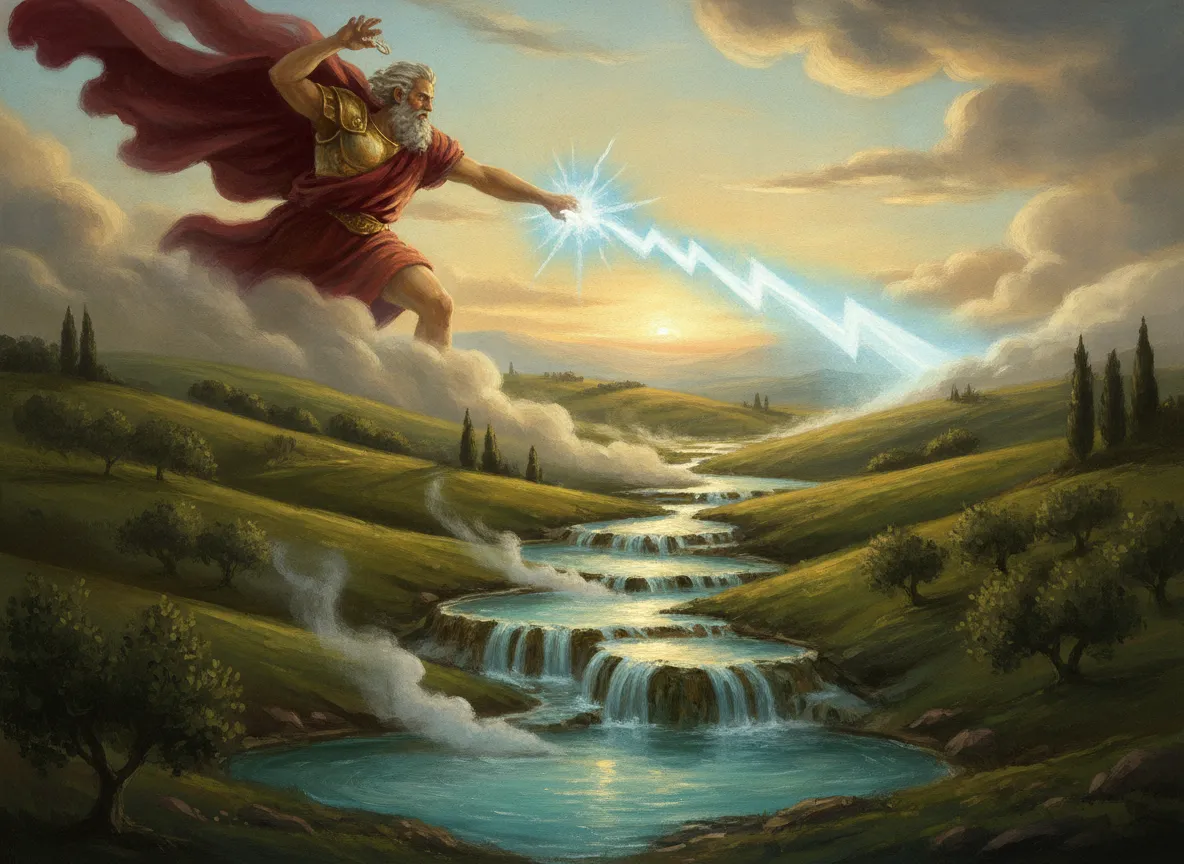
Myth tells us that the god Saturn, weary of watching men grow ever more warlike and cruel, hurled a thunderbolt of rage down upon the land of the Maremma. The bolt missed its mark, split the earth open, and from that wound a warm, sulphurous water began to flow: drinking it, so the story goes, men and beasts alike would calm their fury and find peace again. The Etruscans called the place Aurinia; it was the Romans who bound its name to the legend of the god and christened it Saturnia.
Today that water still descends at 37.5 degrees at the Cascate del Mulino, shaping travertine pools that are free and open day and night. Your tour lead brings you there at the quiet hour, when the coaches have gone: all that remains is the steam rising into the darkness, the scent of sulphur in the warm air and the murmur of water over stone steps. It is there, submerged to the neck beneath the stars, that you understand why this place has been sacred for three thousand years.
 02
02Pitigliano — The Little Jerusalem in the tufa
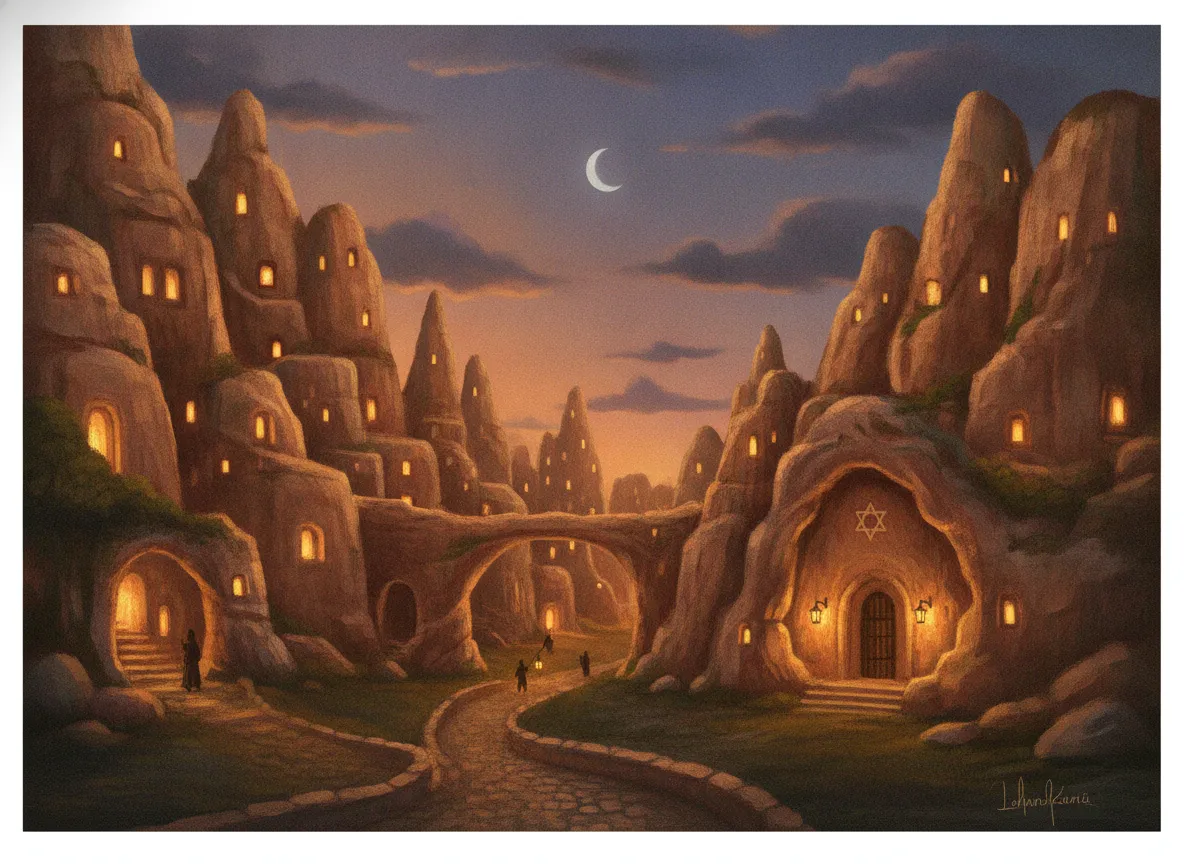
When, towards the end of the fifteenth century, Jews began to leave a Papal State that was growing hostile, many found refuge here, under the protection of the Orsini counts, on this spur of tufa far from the laws that elsewhere curtailed their freedom. For centuries, in this village suspended above the void, Christians and Jews lived side by side in peace, so much so that Pitigliano earned the name «Little Jerusalem». In the heart of the ancient ghetto the synagogue rose, and all around it the community carved its life into the rock itself.
Even today you descend, step by step, into the belly of the cliff: the unleavened bread oven, the ritual bath of the mikveh, the cellar where kosher wine is made, the dye works, the slaughterhouse. Your tour lead does not recite this history — they let you touch it with your hands on the cool tufa walls, while light from the windows filters down from above. It is a memory of tolerance sculpted in stone, one that has never been entirely extinguished here.
 03
03Sovana — The Vie Cave and the Tomba Ildebranda
From Sovana, around the year one thousand, a boy named Ildebrando set out, destined to ascend the throne of Saint Peter as Gregory VII and become one of the most powerful popes of the Middle Ages. His name is bound, many centuries later, to the most solemn tomb in the Etruscan necropolis: the Tomba Ildebranda, carved from the tufa between the third and second centuries BC as a true columned temple, its façade cut directly from the living rock. The Etruscans who built it remain faceless and nameless, and it is precisely for this reason that the monument never stops questioning those who arrive before it.
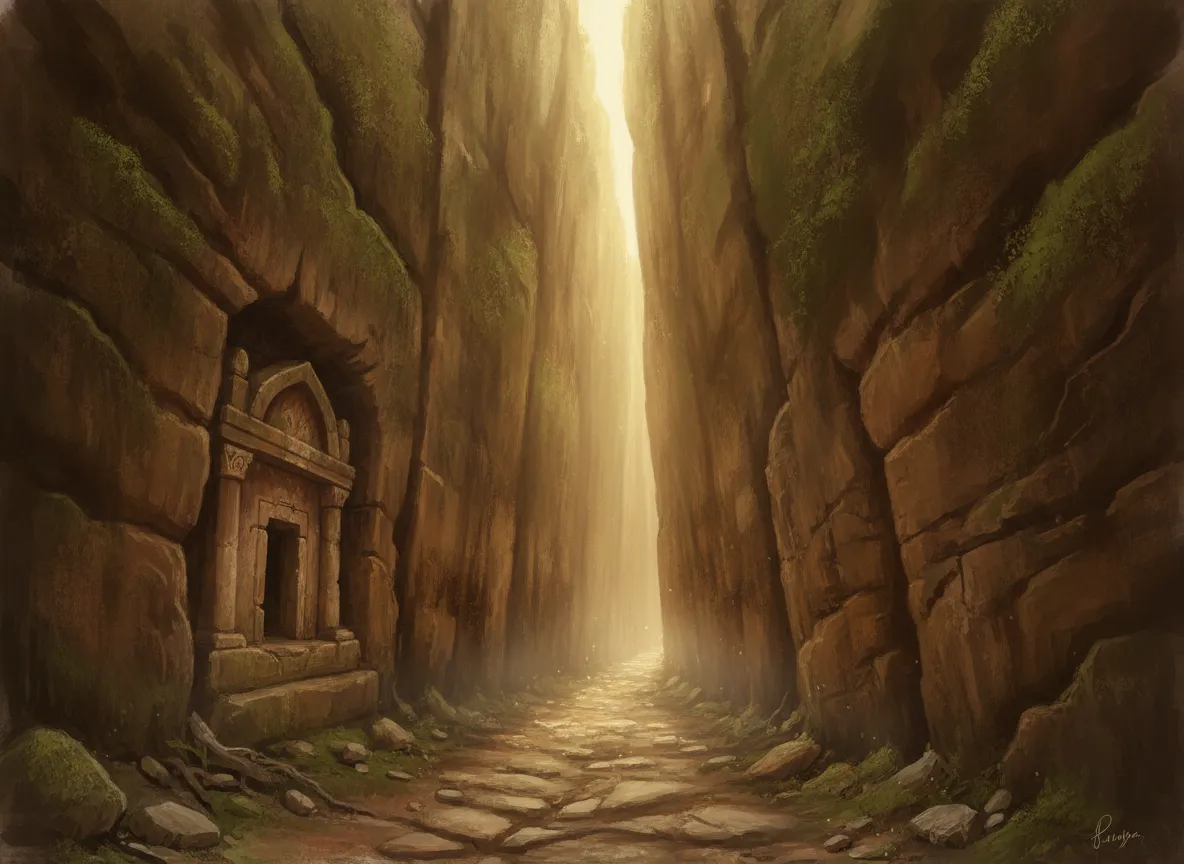
To reach it you walk the Vie Cave: corridors up to twenty-five metres deep, cut by hand by the Etruscans into the heart of the tufa. Your tour lead takes you through one on foot in the late afternoon, when the light enters at an angle and kindles the moss on the vertical walls. You walk through them as though down a roofless nave, in an ancient silence: no one knows for certain why they were carved, and it is that mystery which makes them unforgettable.
From the myth of Saturn to the Little Jerusalem
Etruscans, Romans and a Jewish community sheltered among the cliffs have layered a rare memory into this land of tufa: you move from the sacred waters of Saturnia to necropolises carved from the rock, all the way to the suspended ghetto of Pitigliano. These are the places your tour lead will let you touch with your own hands.
- 3rd–2nd century BC
The Tomba Ildebranda
At Sovana the Etruscans carve into the tufa the most monumental tomb of the necropolis — a columned temple dedicated, in its modern name, to Ildebrando di Sovana.
- 1073–1085
Ildebrando becomes pope
Ildebrando di Sovana ascends to the papal throne as Gregory VII: the small tufa village gives birth to one of the most powerful popes of the Middle Ages.
- 1569 and 1593
Jews find refuge
Expelled from the Papal States, many Jews settle in Pitigliano under the protection of the Orsini counts: the community of the future Little Jerusalem is born.
- 1598
The synagogue in the tufa
The synagogue of Pitigliano is built; beneath it are carved the unleavened bread oven, the ritual bath, the cellar and the kosher slaughterhouse.
- 1966
The Bianco di Pitigliano DOC
By decree of 28 March, Bianco di Pitigliano becomes one of the first Italian wines to receive the Denominazione di Origine Controllata, sixth in chronological order.
The Furore group tour — from 20 to 50 participants, on fixed calendar dates — treats Saturnia, Pitigliano and Sovana as the three movements of a single symphony, guided by a dedicated tour lead who accompanies the group through the hills of the Maremma. Shared transfers connect each stop with pauses at the right wineries and carefully chosen tables: you descend to the free thermal pools at the most favourable hour, you enter the ghetto of Pitigliano with someone who truly knows its stories, you walk a Via Cava on foot when the light cuts sideways across the tufa. There is time for a glass of Bianco di Pitigliano — one of the first wines in Italy to receive DOC status, in 1966 — drunk where it is born, and for the honest, unpretentious cuisine of the Maremma: acquacotta, tortelli and game.
Those seeking the full wellness experience can alternate the free cascades with the elegance of the Terme di Saturnia, with their pools and mud treatments, all coordinated by the tour lead within the group's shared agenda. At every stop the tour lead is someone born here or who has chosen to stay — someone capable of opening doors, and stories, that no printed guide has ever known. You sign up, you set off together, and you return with something that goes beyond photographs.
The journey map
When to go
What's included
- Dedicated storytelling tour lead
- Transfers on site included
- Selected charming places to stay
- Experiences and tastings on the programme
- Furore 24/7 assistance
Not included
- Return travel to the departure location
- Meals not indicated in the programme
- Tips and personal extras
- Travel insurance (optional)
Where you will sleep
We choose every place to stay by hand: no anonymous chains, but places with a soul, in the heart of the villages or looking out over the landscape.
Historic residences
Palaces and stone houses in the centre of the villages, among ancient walls and silence.
Boutique hotels
Small charming hotels, with a view, attentive service and an intimate atmosphere.
Farmhouses and wineries
Authentic hospitality among vines, olive trees and real tables, where they welcome you like home.
Your tour lead
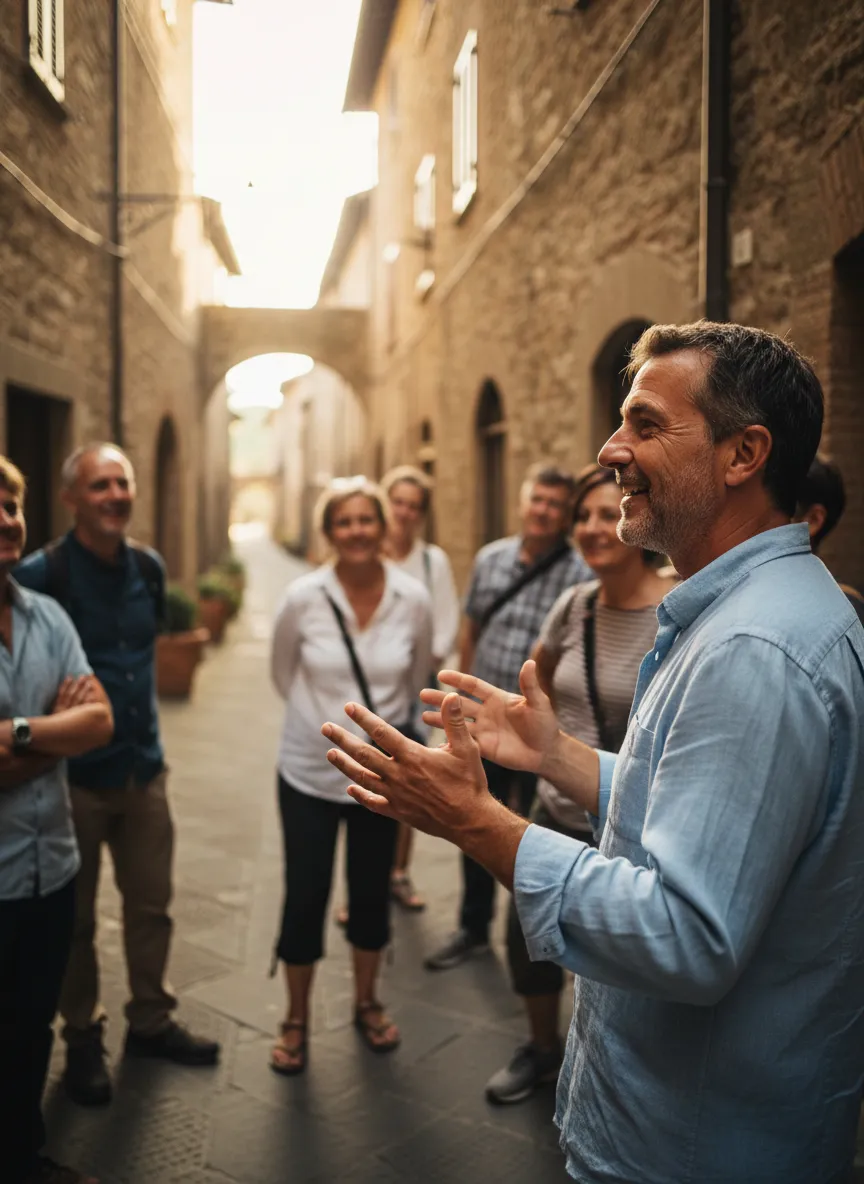
Not just any chaperone: a storyteller of the land, born here or who chose to stay. They know the true stories, the doors to open and the right rhythms. They are the person who turns a beautiful journey into an unforgettable memory.
The journey timeline
- Departure from Naples
- Day 1
Saturnia and the warm waters
Arrival in the tufa Maremma and a first immersion at the Cascate del Mulino during the quiet hour. A simple dinner with acquacotta and a glass of local wine.
- Day 2
Pitigliano, the Little Jerusalem
The village suspended on the cliff, the synagogue and the ghetto carved into the tufa; a tasting of Bianco di Pitigliano where it is born.
- Day 3
Sovana and the Vie Cave
The Etruscan necropolis and the Tomba Ildebranda in the woodland; in the afternoon, a Via Cava walked on foot when the light enters at an angle.
- Day 4
Sorano, Vitozza and wellbeing
Sorano perched on its rock and the cave settlement of Vitozza; a farewell among mud treatments and pools at the Terme di Saturnia.
- Return to Naples
Frequently asked
Are the Cascate del Mulino really free and open at night?
Yes: the free thermal pools of Saturnia are accessible at no charge, day and night, all year round. The tour lead brings the group at the most favourable hours, away from the crowds, and the full experience of the Terme di Saturnia is also included.
How many days does the Saturnia, Pitigliano and Sovana tour last?
The tour covers 3–5 days, allowing you to enjoy the thermal springs, the tufa towns and the necropolis at a relaxed pace, with group transfers, meals and wine tastings along the way.
How does booking the tour work?
The tour departs on fixed dates published in the Furore calendar. Simply choose your date, sign up and complete payment: the tour lead and group logistics are already included.
What makes Pitigliano special?
It is carved from tufa and holds an extraordinary Jewish heritage — the synagogue and the ghetto, which gave rise to the name «Little Jerusalem» — brought to life by a tour lead who truly knows those stones.
More villages to discover
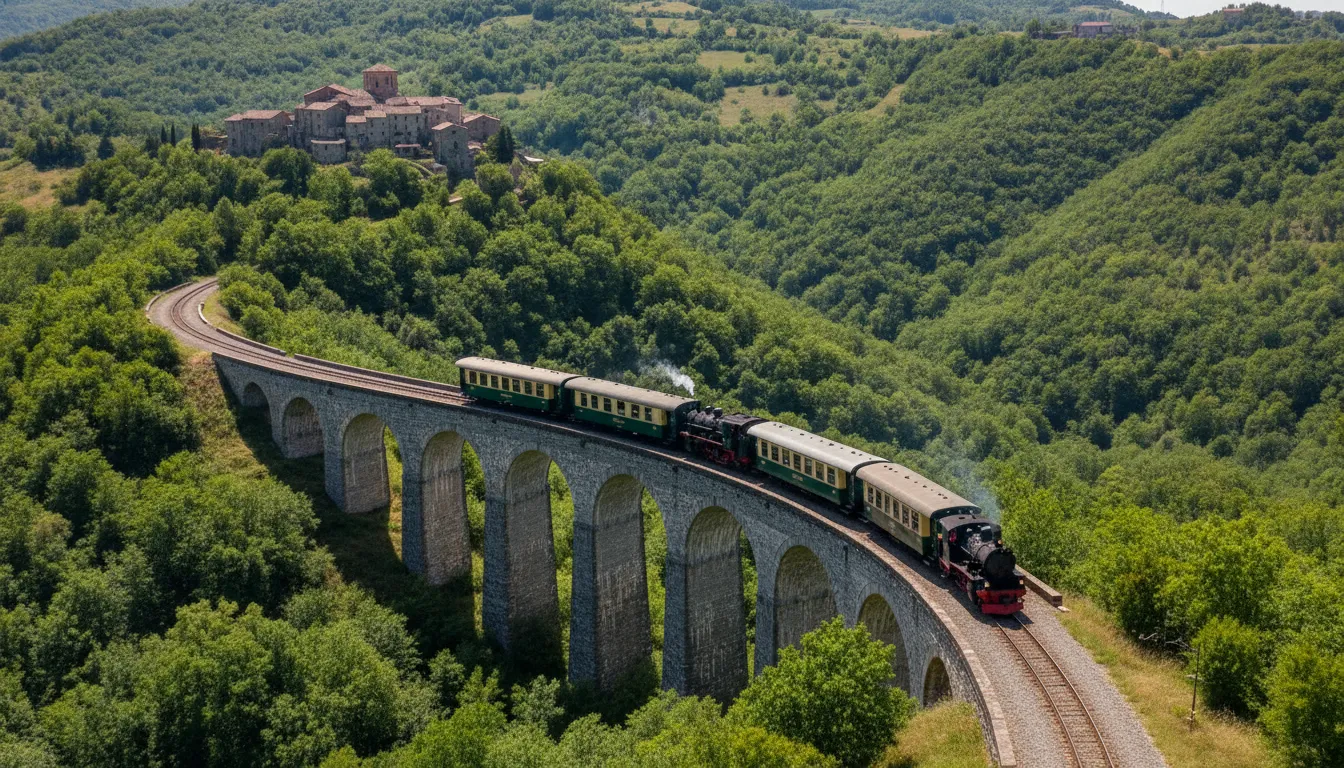 Abruzzo
Italy's Transiberian and the Villages of Abruzzo
Abruzzo · Sulmona, Pescocostanzo, Cocullo, Campo di Giove
A slow train through the wild heart of the Apennines
Explore the village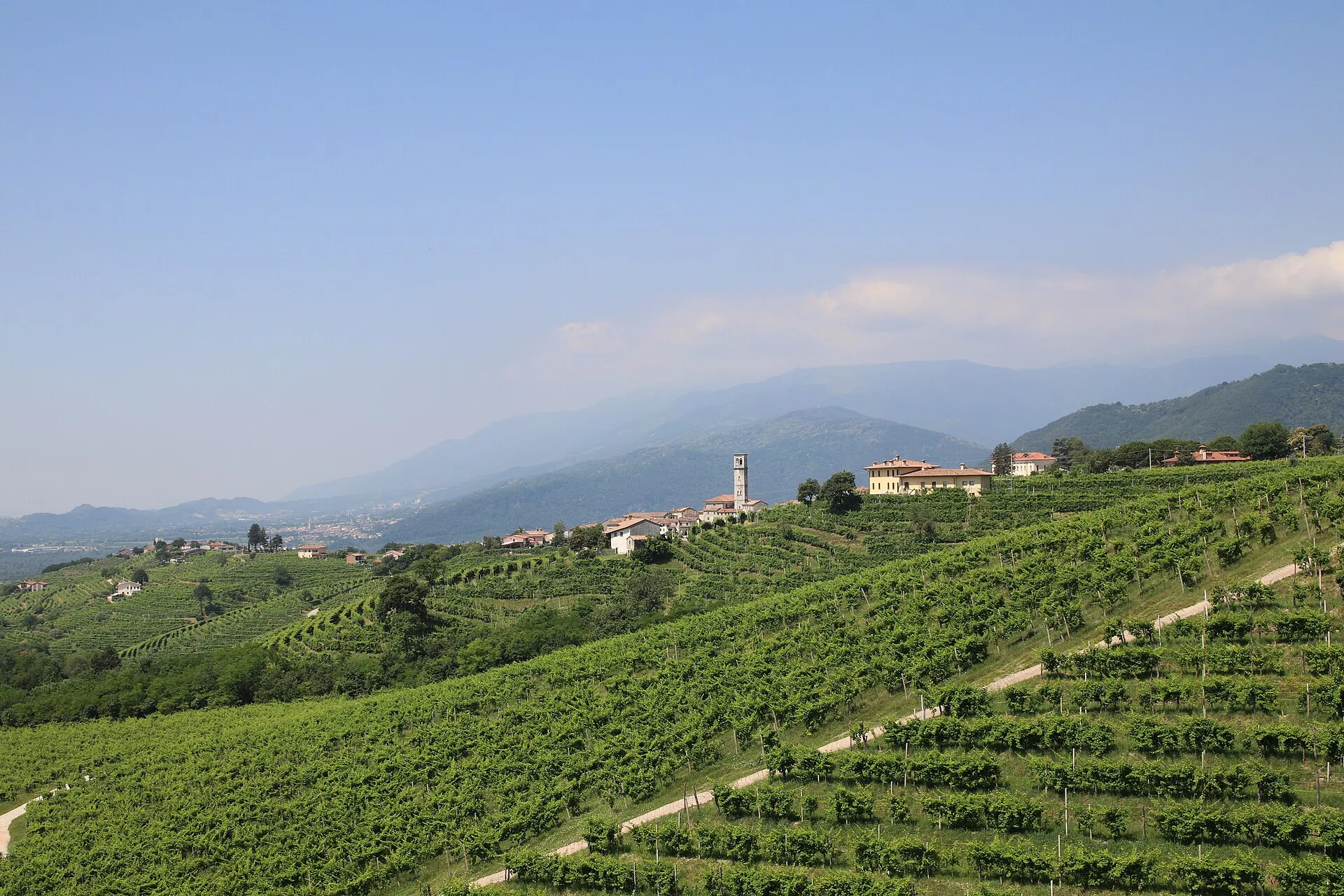 Veneto
Colline del Prosecco
Veneto · Valdobbiadene, Conegliano and the UNESCO Rive
Hills where the light of the Pre-Alps becomes wine
Explore the village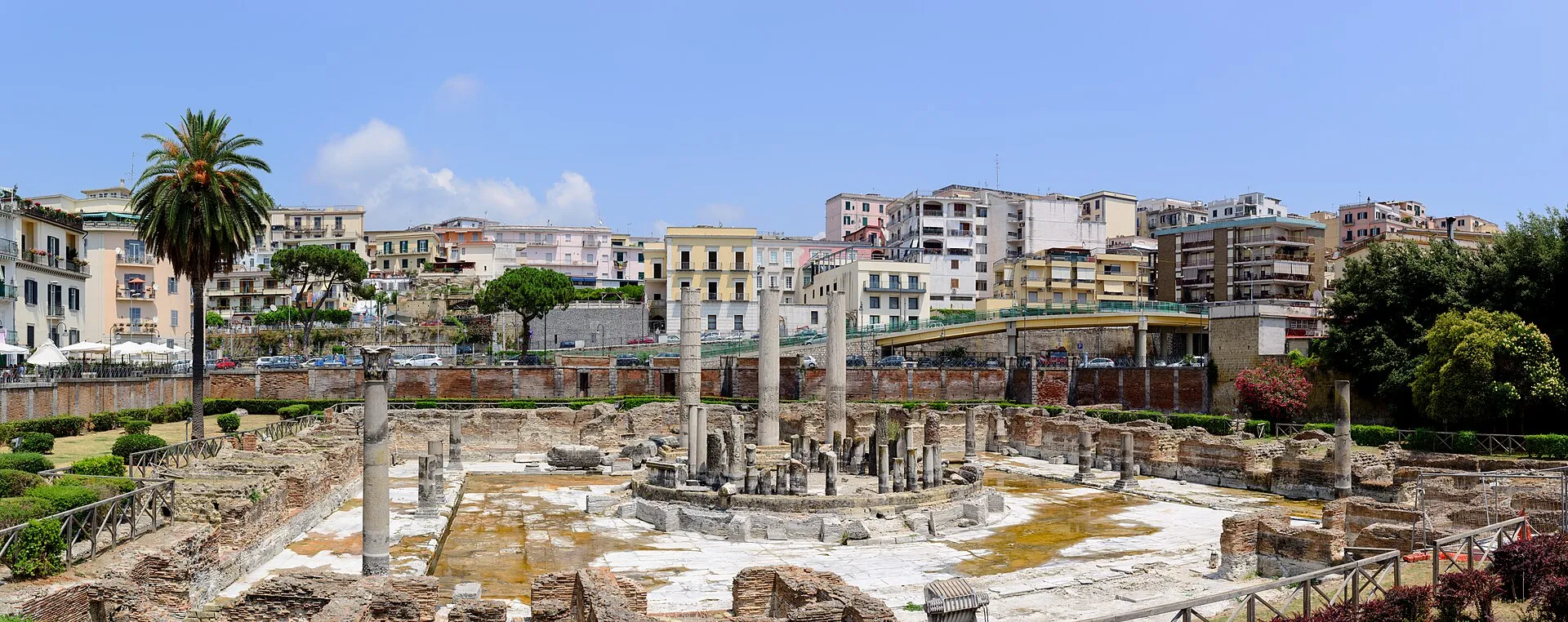 Campania
Rione Terra and the Campi Flegrei
Campania · Pozzuoli, Cuma, Baia
The land that burns, breathes and keeps the oracles
Explore the villageReady to truly set off?
Choose the tour that calls you and sign up: the itinerary, the stories and the logistics are on us.