
Veneto · Valdobbiadene, Conegliano and the UNESCO Rive
Colline del Prosecco
Hills where the light of the Pre-Alps becomes wine
- Wine & food
- Romantic
- History & art
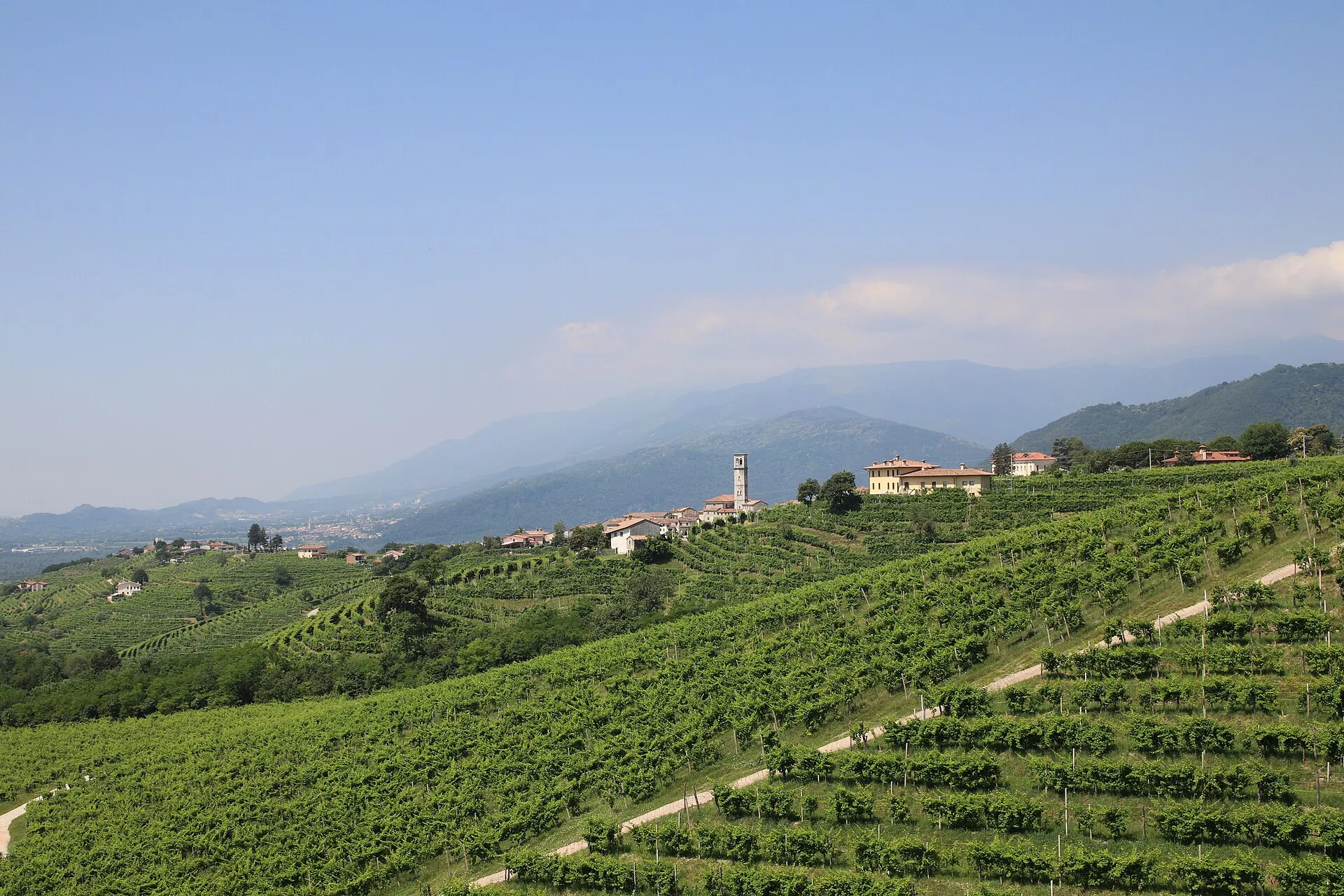
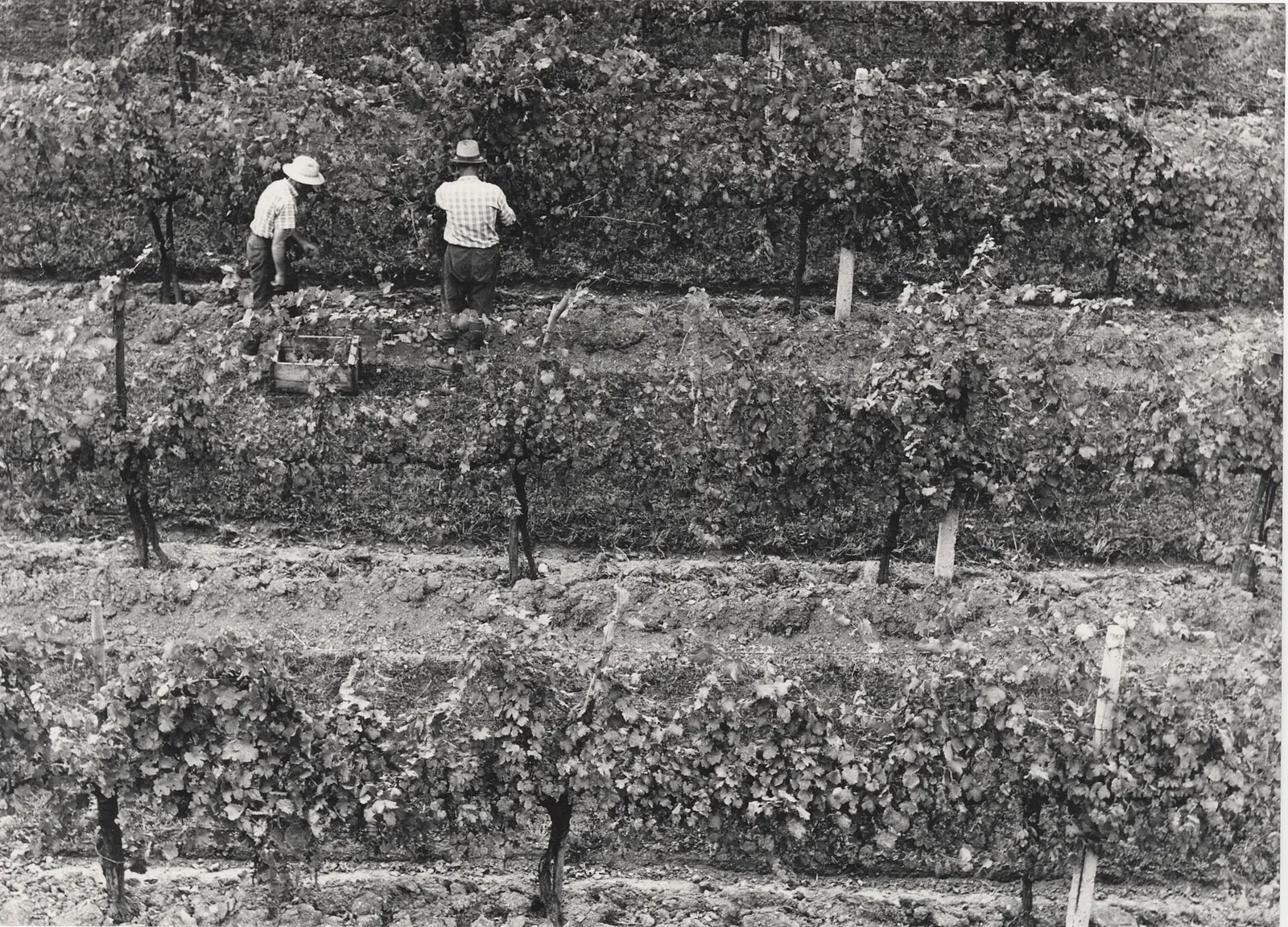
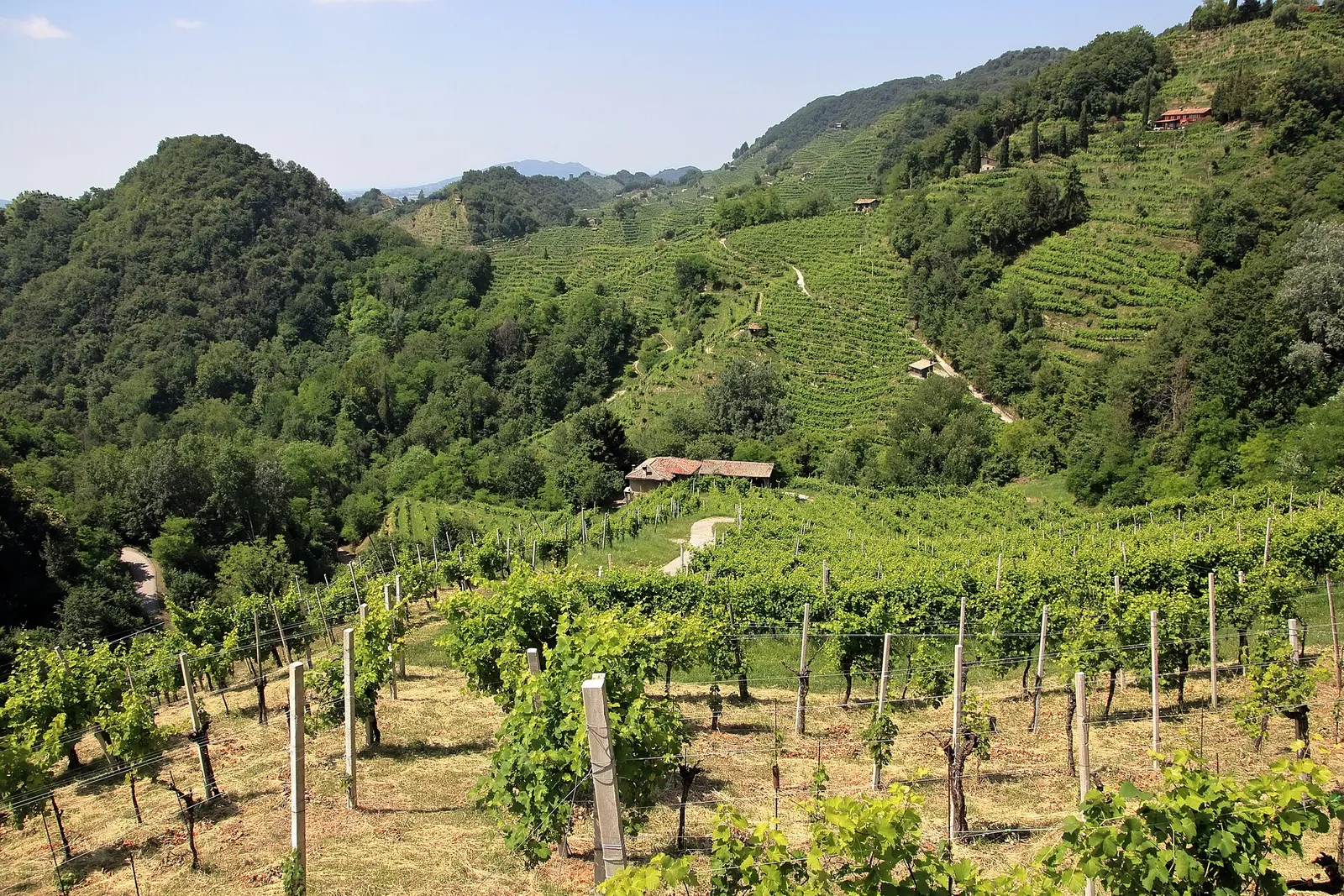
A green sea of combed rows on the steep backs of the hills, between Conegliano and Valdobbiadene. A UNESCO World Heritage Site since 2019, this is a landscape no machine can work: here the steepest vineyards — the «rive» — are still harvested by hand alone. This is not a trip between wineries; it is the story of a territory passed down from generation to generation.
They call them «whale-back hills», and when you climb them you understand why. The rows run perpendicular to the slope, held in place by the «ciglioni» — grass terraces shaped by hand to keep the soil from slipping — and draw a chessboard that changes colour with the seasons. Our tour leads stop you in front of a «riva» that plunges at an 80% gradient and explain «heroic viticulture»: no tractors, no shortcuts, only legs, harvest baskets and backs bent under the sun. That is why, in 2019, UNESCO inscribed these hills as a cultural landscape, the fruit of centuries of dialogue between people and a land that refused to be tamed.
Then there is Cartizze, the secret heart. Just one hundred and seven hectares, tucked between the steepest hills of San Pietro di Barbozza, Santo Stefano and Saccol: they call it the «golden pentagon» of Prosecco. Clay, moraine and sandstone blend in a gentle microclimate, and from that small patch of vineyard comes the most coveted cru of all. We take you right up there, where a winemaker we know opens the family cellar and pours, in the shade of the pergola, the wine of a «riva» that still bears his grandfather's name.
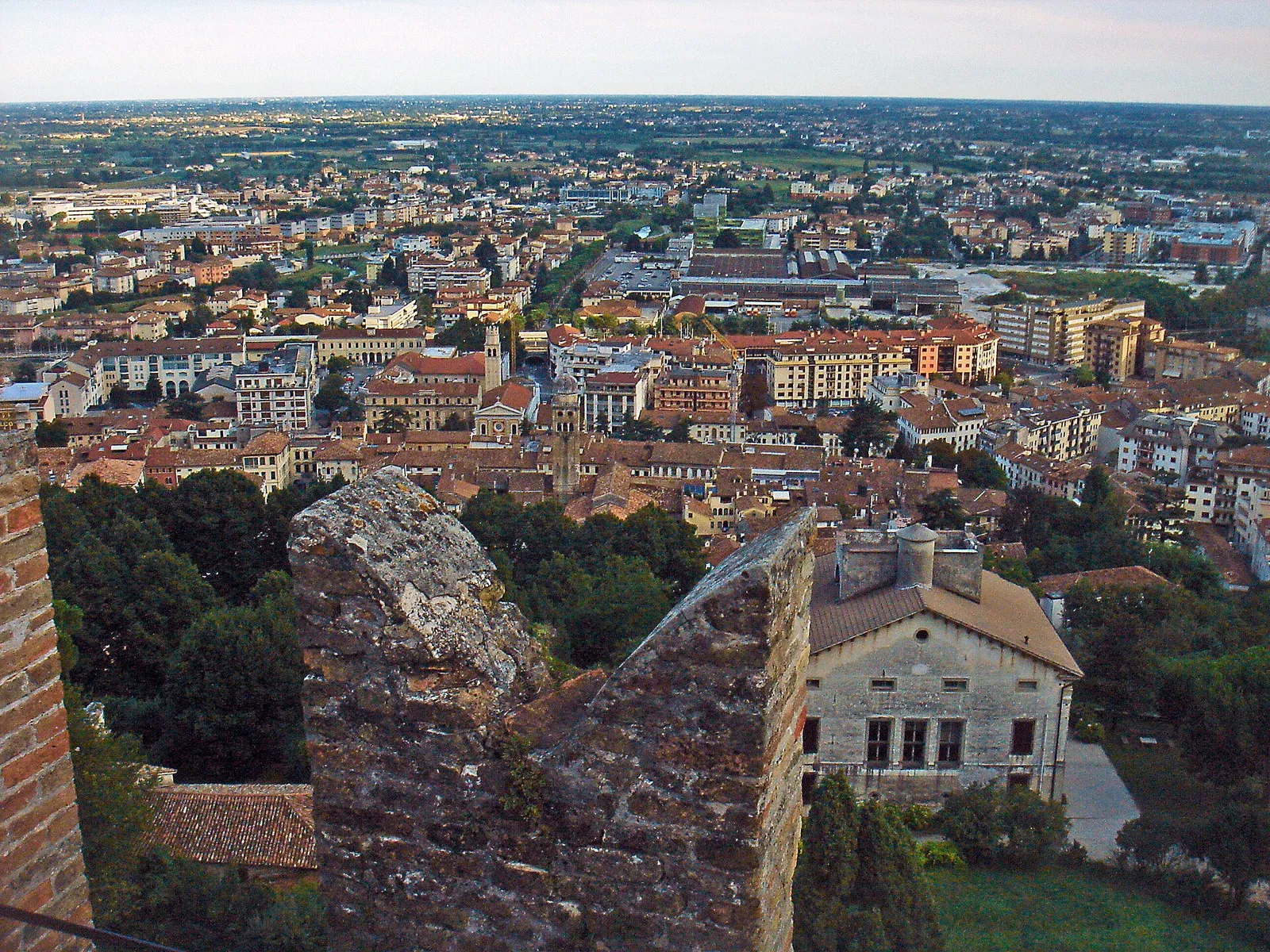
Conegliano is the noble gateway to all of this. Above the town stands the castle, a stone balcony from which the eye sweeps from the Dolomites to the plain; inside the Duomo hides the Sala dei Battuti, a hall frescoed from floor to ceiling — a sixteenth-century cycle that served as a «painted Bible» for the confraternity. And behind the apse lived Cima da Conegliano, the painter who placed these very hills in his backgrounds five centuries before they became a heritage of the world.
Upcoming departures
Upcoming departures coming soon — write to us for dates and info.
What you'll live
The hand-harvested rive
Nearly vertical vineyards, up to 80% gradient, where the harvest is still gathered by hand alone: the true face of heroic viticulture.
The Cartizze pentagon
One hundred and seven hectares between San Pietro di Barbozza and Saccol: the most precious Prosecco cru, tasted where it is born, with the winemaker.
The Sala dei Battuti in Conegliano
A hall frescoed from floor to ceiling inside the Duomo — a masterpiece of the Venetian Renaissance that few travellers ever discover.
An ombra in the osteria
The Venetian ritual of a glass of wine among friends, in an old village osteria: not a postcard moment, but an everyday gesture.
Stories of the villages
Every village on the journey keeps a story. Here are the ones your tour lead will bring back to life.
 01
01Valdobbiadene — The golden pentagon of Cartizze
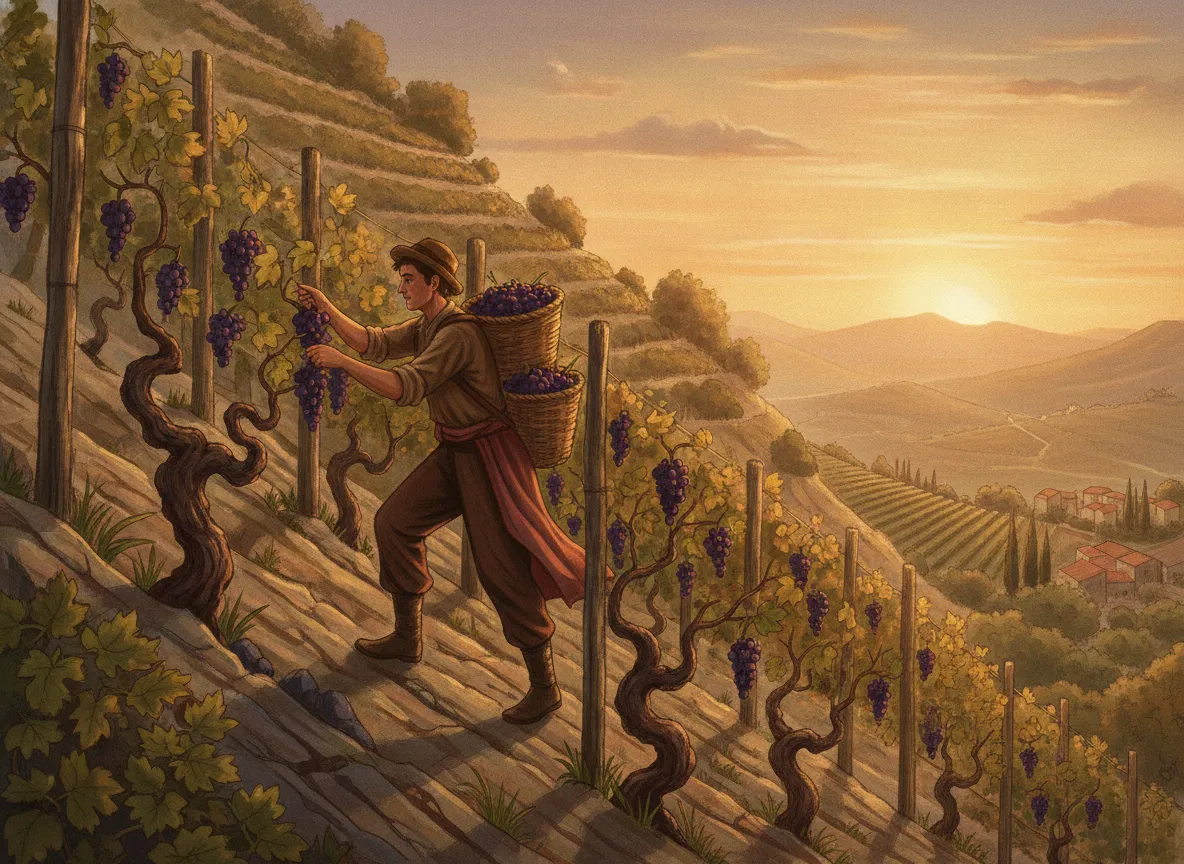
Just one hundred and seven hectares, nestled among the steepest hills of San Pietro di Barbozza, Santo Stefano and Saccol: seen from above it traces a pentagon, which is why they call it the «golden pentagon» of Prosecco. It is the most coveted patch of vineyard in Italy, where clay, moraine and sandstone blend in a gentle microclimate and from that small plot comes the most sought-after cru of all. But it is the «rive» that tell the true story of this place: slopes that plunge to 80%, where no tractor can climb and the harvest is still done only by hand, with baskets and bent backs. They call it «heroic viticulture» and it is no exaggeration: here a single hectare demands more than a thousand hours of labour, against the thirty or forty required on the plain.
Your tour lead takes you up along the Anello del Prosecco, the path that climbs into the heart of Cartizze, to where a winemaker we know opens the family cellar. In the shade of the pergola he pours the wine of a «riva» that still bears his grandfather's name, and as the air smells of must and cut grass you understand that every bubble is the distillation of a labour spanning generations.
 02
02Conegliano — The painter Cima and the Sala dei Battuti
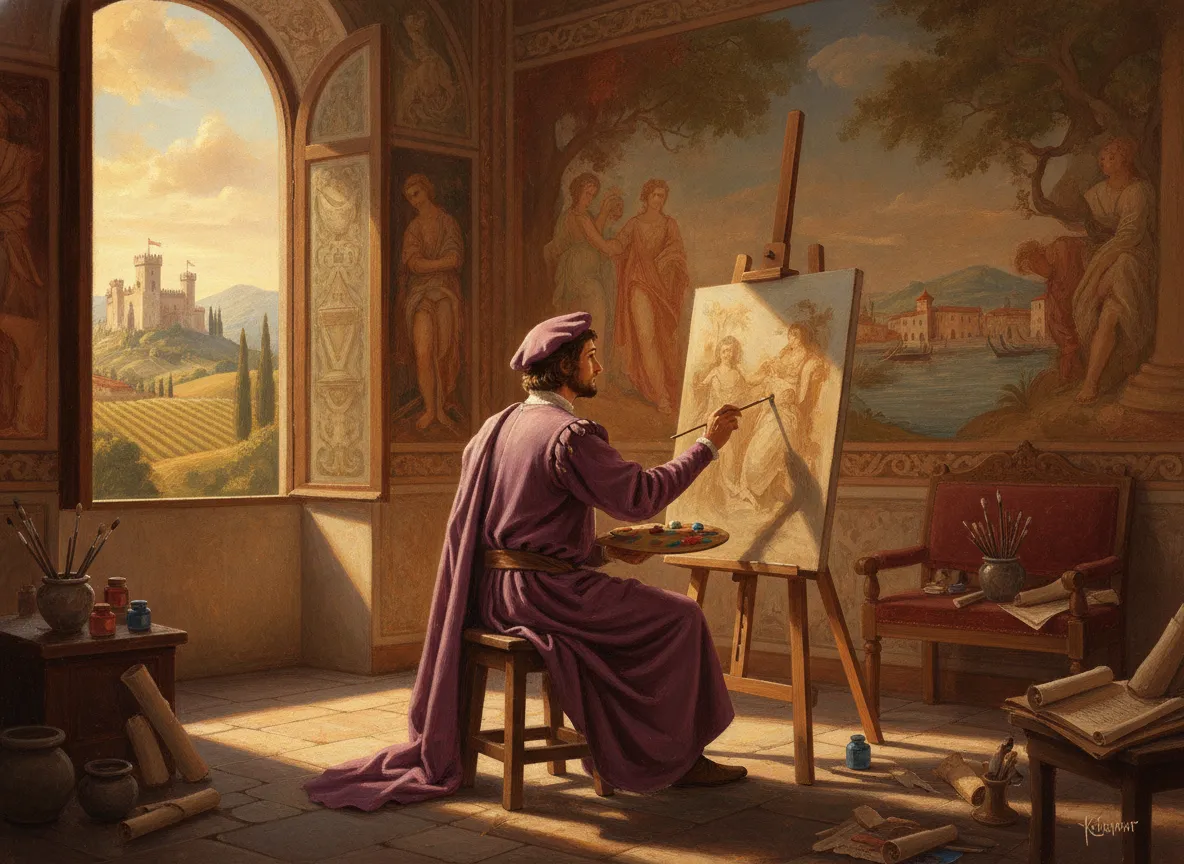
Behind the apse of the Duomo, in a narrow house among the alleyways, Giovanni Battista Cima was born around 1459 — known to the world as Cima da Conegliano. A master of the Venetian school, he was among the first to open airy backgrounds in his paintings: and in those distant vistas, behind his Madonnas, he placed these very hills — the gentle ridges, the paths, the clear light of the Pre-Alps — five centuries before UNESCO declared them a heritage of the world. One of his altarpieces from 1493 still watches over the Duomo's altar, serene as a spring morning.
And right there, above the church portico, hides the secret that few travellers ever find: the Sala dei Battuti, the confraternity hall frescoed from floor to ceiling. Twenty-seven panels, a «painted Bible» that ran along the walls for those who could not read. Your tour lead opens that door in silence, and for a moment you stand alone, beneath centuries of colour, in the city that gave birth to a painter of light.
 03
03UNESCO Hills — The «whale backs» and the ombra de vin
They call them «whale-back hills», and when you climb them you understand why: green ridges rising from the plain like sleeping cetaceans, with rows running perpendicular to the slope and the «ciglioni» — grass terraces shaped by hand since the 1600s — holding the soil in place. This is not nature; it is culture: a chessboard drawn by centuries of bent backs, changing colour with every season. That is why, on 7 July 2019, UNESCO inscribed the Colline del Prosecco di Conegliano e Valdobbiadene as a cultural landscape, the fruit of a stubborn dialogue between people and a land that refused to be tamed.
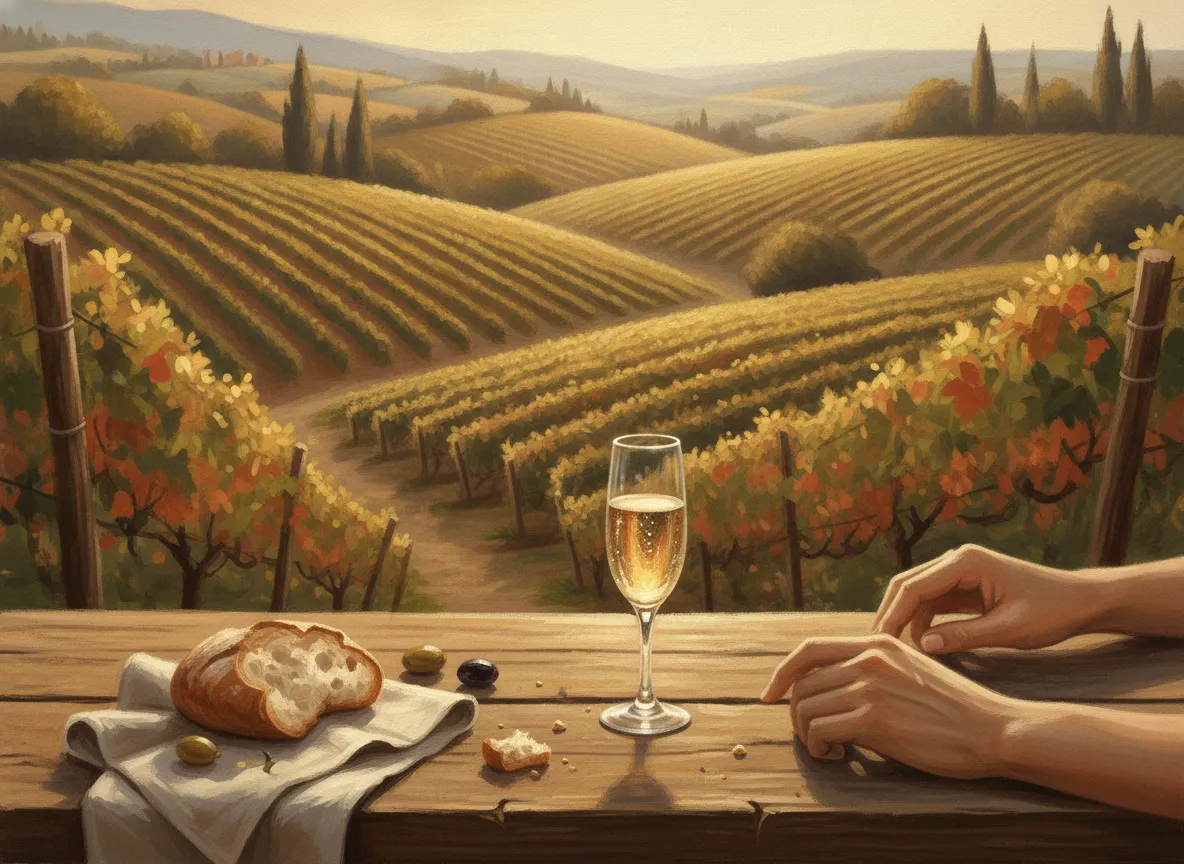
Down in the valley, where the landscape ends and village life begins, there is the ritual that stitches every day together: the «ombra de vin». A glass of white at the osteria counter, a few words exchanged, time slowing down — said to have begun with the habit of drinking in the shadow of the bell tower, moving with the sun to keep the wine cool. Your tour lead takes you there at the right hour, when the locals come in after work: you raise your glass, and that chessboard of hills suddenly feels like home.
Hills written by hand, century after century
This landscape is not nature — it is culture: grass terraces, vertical rows and a winemaking tradition that from Conegliano taught the rest of Italy. These are the milestones your tour lead will recount among the vines.
- 17th century
The ciglioni take shape
From the 1600s, farmers shaped the grass terraces — the «ciglioni» — by hand, drawing the chessboard of vines that still defines the hills today.
- 1876
The Enological School of Conegliano
By Royal Decree, Italy's first enological school (and Europe's first) was founded — later named after G.B. Cerletti, its first director: the birthplace of modern wine culture.
- late 19th century
The bellussera
The «bellussera» training system spread, with canes fanned out like a wheel on wooden stakes: an aesthetic signature that has shaped the face of the hills.
- 1966
Italy's first wine road
On 10 September, the «Strada del vino bianco» was inaugurated in Conegliano: Italy's first wine itinerary and the model for every wine road that followed.
- 2019
World Heritage Site
On 7 July, in Baku, UNESCO inscribed the Colline del Prosecco di Conegliano e Valdobbiadene as a cultural landscape: Italy's 55th World Heritage Site.
The Furore group tour — from 20 to 50 participants, on fixed calendar dates — travels the Strada del Prosecco, Italy's first «wine road», established in Conegliano in 1966, aboard dedicated coaches with stops at wineries selected by the team. You enter places where work is still done by hand, walk among the rows with the people who prune them, and lunch in osterie where the «ombra de vin» is not folklore but a daily ritual: a glass, a few words, time slowing down. Tables are arranged in advance for the group, so every stop is already ready to welcome you.
Every stage is led by a dedicated Furore tour lead, joined by local voices — winemakers, innkeepers, people born among these vines or who have chosen to stay. They are the ones who open doors no printed guide knows: the barrel room behind the house, the osteria counter at the right hour, the riva from which you watch the sunset over the Pre-Alps. You join the tour by choosing a date from the calendar and setting off together: the group is the heart of the experience.
The journey map
When to go
What's included
- Dedicated storytelling tour lead
- Transfers on site included
- Selected charming places to stay
- Experiences and tastings on the programme
- Furore 24/7 assistance
Not included
- Return travel to the departure location
- Meals not indicated in the programme
- Tips and personal extras
- Travel insurance (optional)
Where you will sleep
We choose every place to stay by hand: no anonymous chains, but places with a soul, in the heart of the villages or looking out over the landscape.
Historic residences
Palaces and stone houses in the centre of the villages, among ancient walls and silence.
Boutique hotels
Small charming hotels, with a view, attentive service and an intimate atmosphere.
Farmhouses and wineries
Authentic hospitality among vines, olive trees and real tables, where they welcome you like home.
Your tour lead
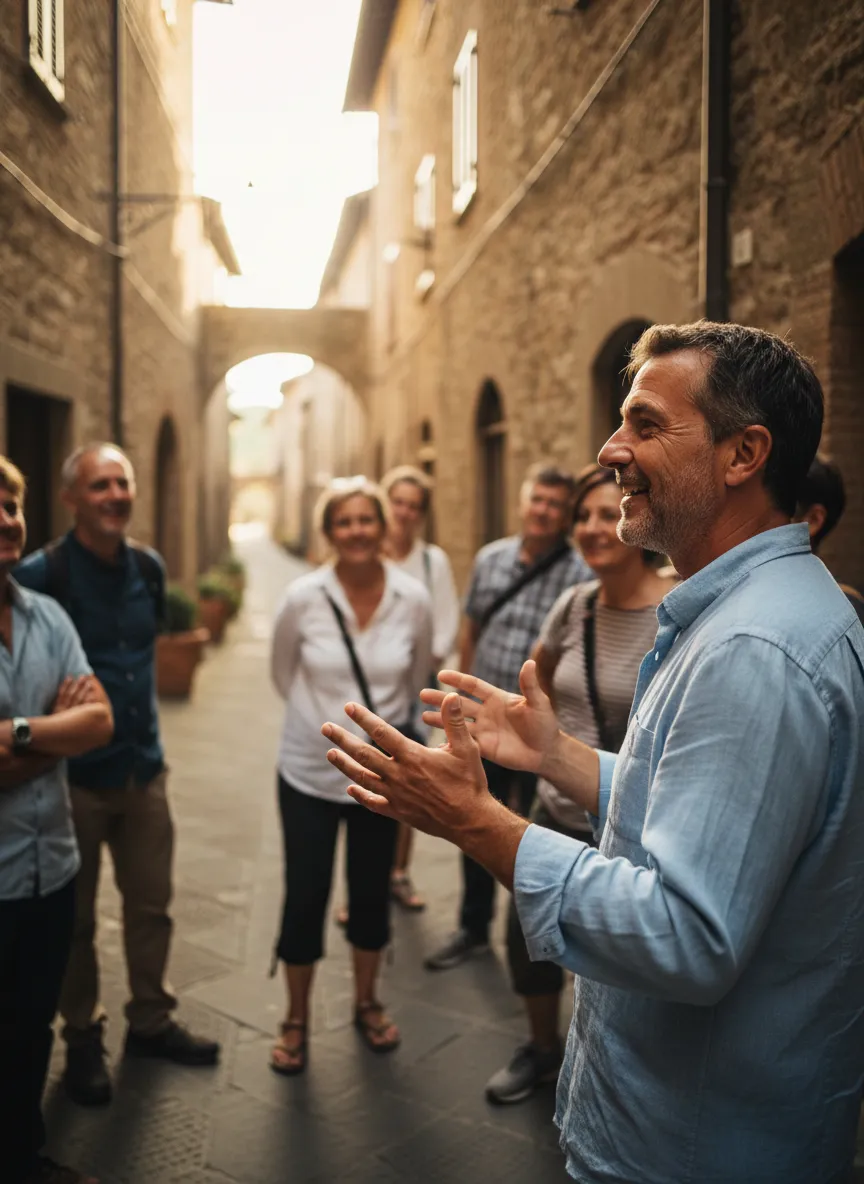
Not just any chaperone: a storyteller of the land, born here or who chose to stay. They know the true stories, the doors to open and the right rhythms. They are the person who turns a beautiful journey into an unforgettable memory.
The journey timeline
- Departure from Naples
- Day 1
Conegliano, the noble gateway
Arrival, ascent to the castle with views from the Dolomites to the plain, the Duomo and the Sala dei Battuti. Dinner among the flavours of the Marca Trevigiana.
- Day 2
The Strada del Prosecco
Private transfer through the hill villages, a stop at a family winery and lunch at an osteria with the first ombra de vin.
- Day 3
Cartizze and the rive
Valdobbiadene, San Pietro di Barbozza and the golden pentagon: a walk among the rows with the winemaker and a sunset tasting of the cru.
- Day 4
Hands and crafts
A behind-the-scenes morning with those who work the vineyard by hand; a final panoramic toast before the journey home.
- Return to Naples
Frequently asked
What is the best time to visit the Colline del Prosecco?
Spring, when the hills are in bloom and wine exhibitions are held, and early autumn (September) during the harvest: magnificent light and lively hills without the crowds.
How many days do you need for Conegliano and Valdobbiadene?
We recommend 4–5 days to explore the hills at a leisurely pace, between wineries, villages and osterie, without stressful transfers and with plenty of time at the table.
Who is this group tour suited to?
Anyone who loves wine, landscape and Venetian culture: the tour welcomes all kinds of travellers, from Prosecco newcomers to seasoned enthusiasts, in a group of 20 to 50 people on fixed calendar dates.
Do you really meet the producers?
Yes: the heart of the journey is stepping into the right cellars and walking among the vines with the people who tend them by hand — not a standard visit, but a genuine encounter.
More villages to discover
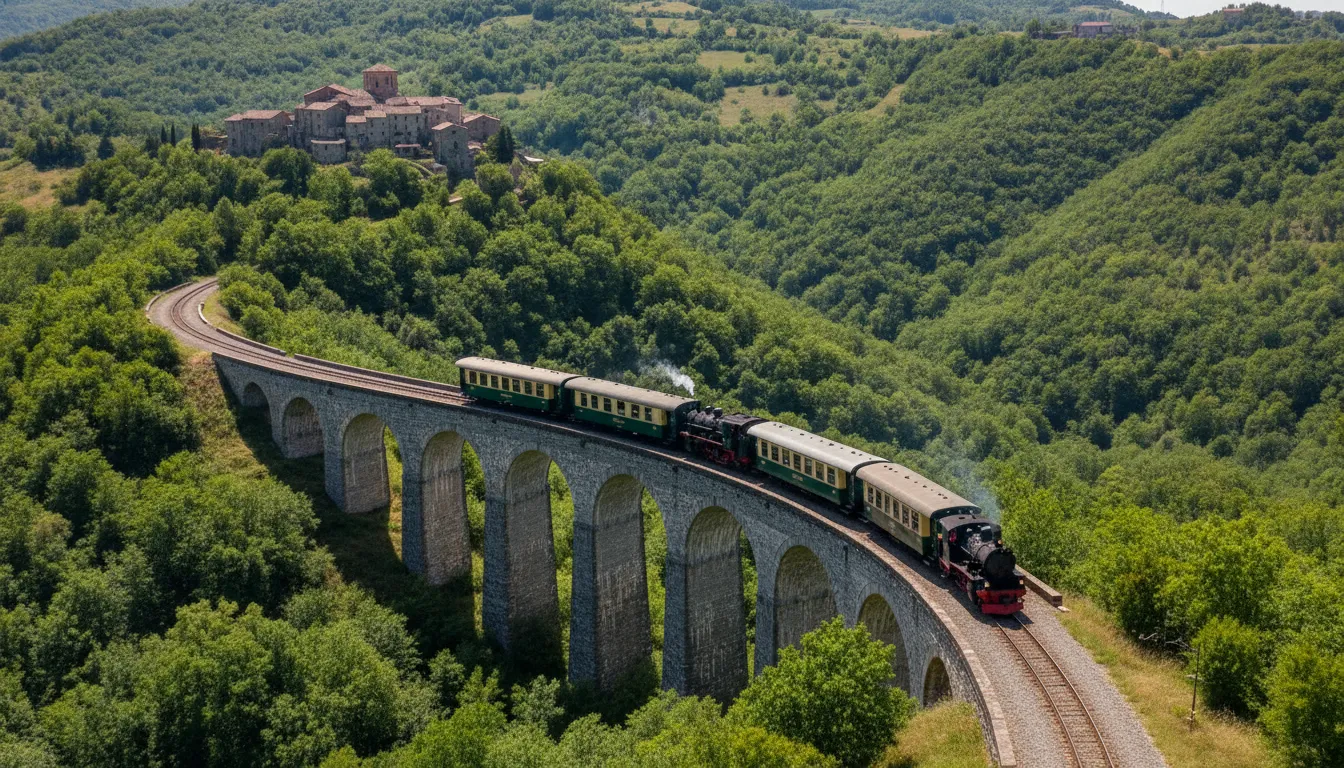 Abruzzo
Italy's Transiberian and the Villages of Abruzzo
Abruzzo · Sulmona, Pescocostanzo, Cocullo, Campo di Giove
A slow train through the wild heart of the Apennines
Explore the village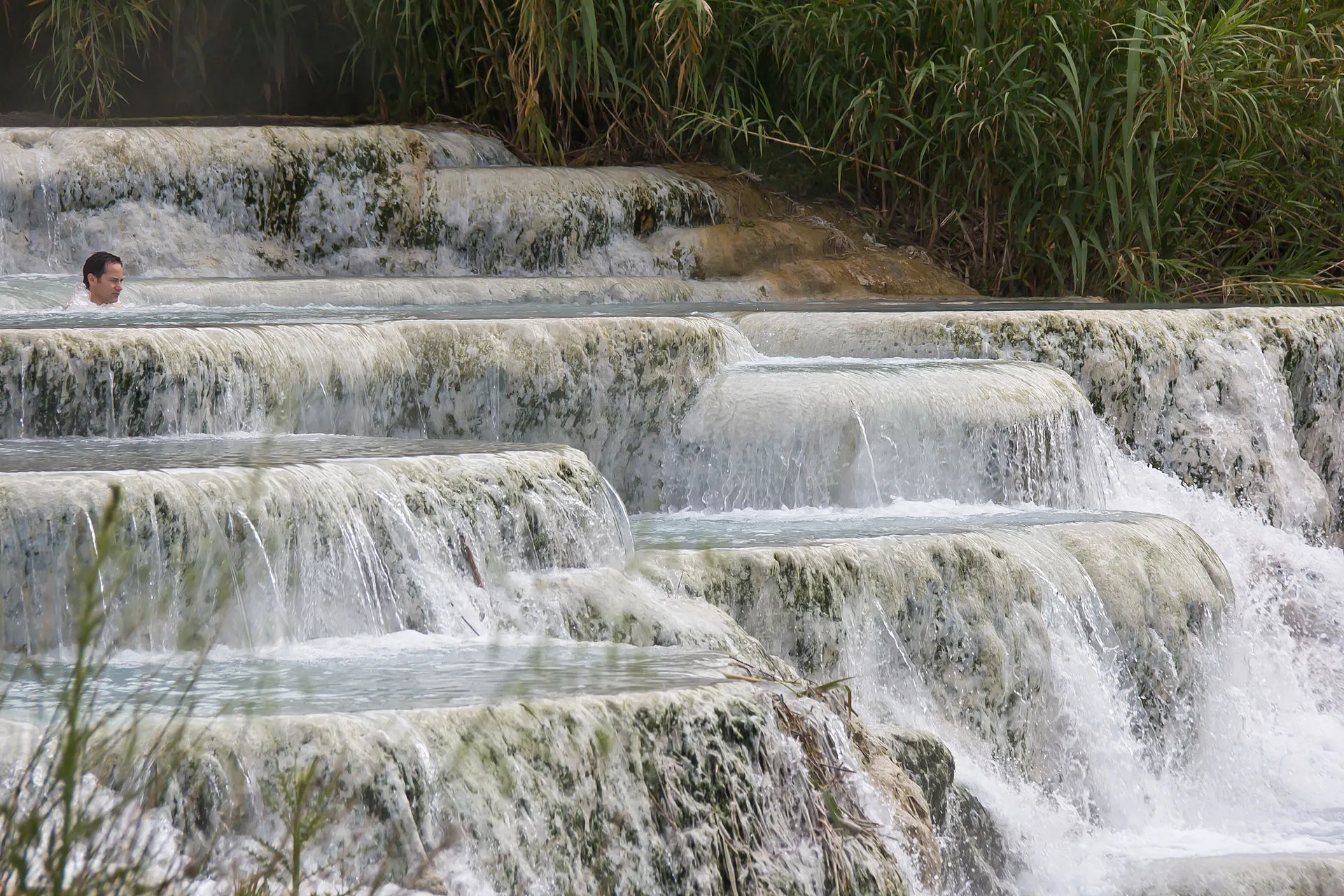 Tuscany
Saturnia and the Tuscan Maremma
Tuscany · Saturnia, Pitigliano, Sovana
Warm waters born from a thunderbolt and cities carved from tufa
Explore the village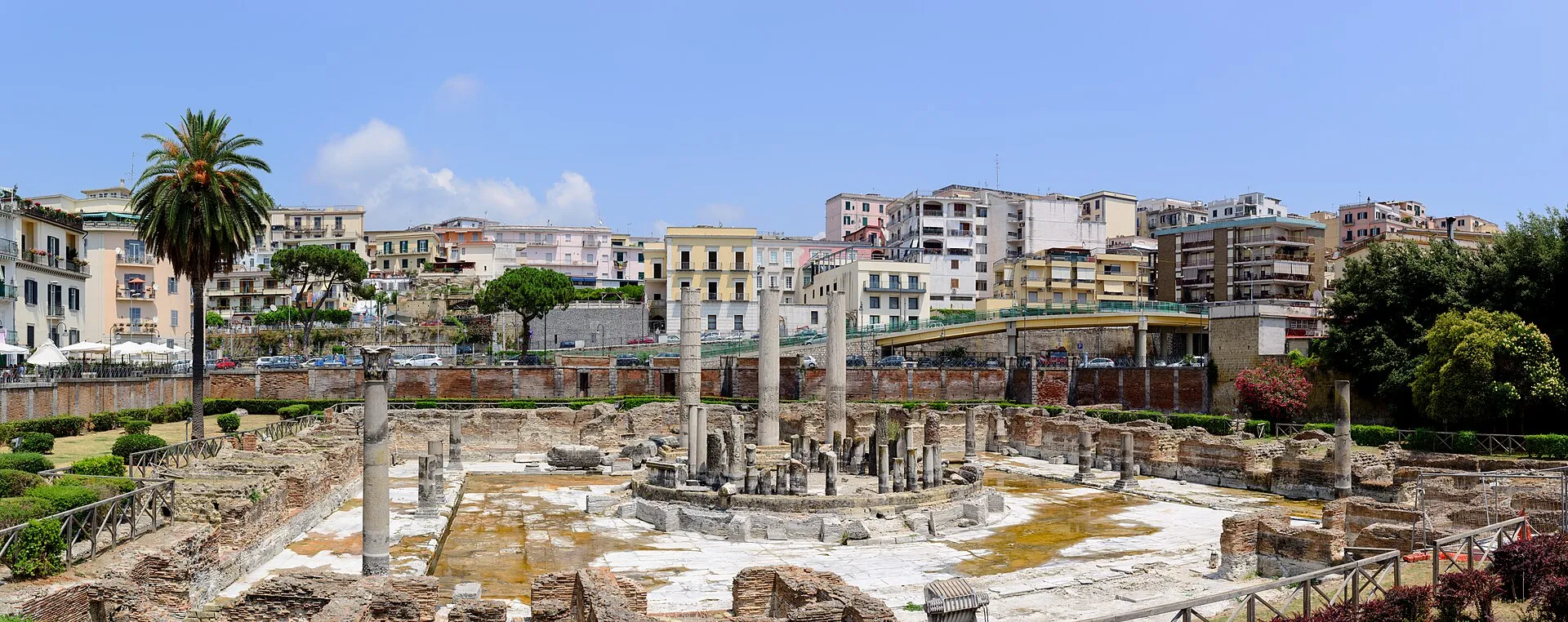 Campania
Rione Terra and the Campi Flegrei
Campania · Pozzuoli, Cuma, Baia
The land that burns, breathes and keeps the oracles
Explore the villageReady to truly set off?
Choose the tour that calls you and sign up: the itinerary, the stories and the logistics are on us.