
Sardinia · Baunei, Golfo di Orosei
Golfo di Orosei and Baunei
Coves reachable only on foot or by sea, where the shepherds' land drops sheer into turquoise water
- Sea & islands
- Hiking
- Nature
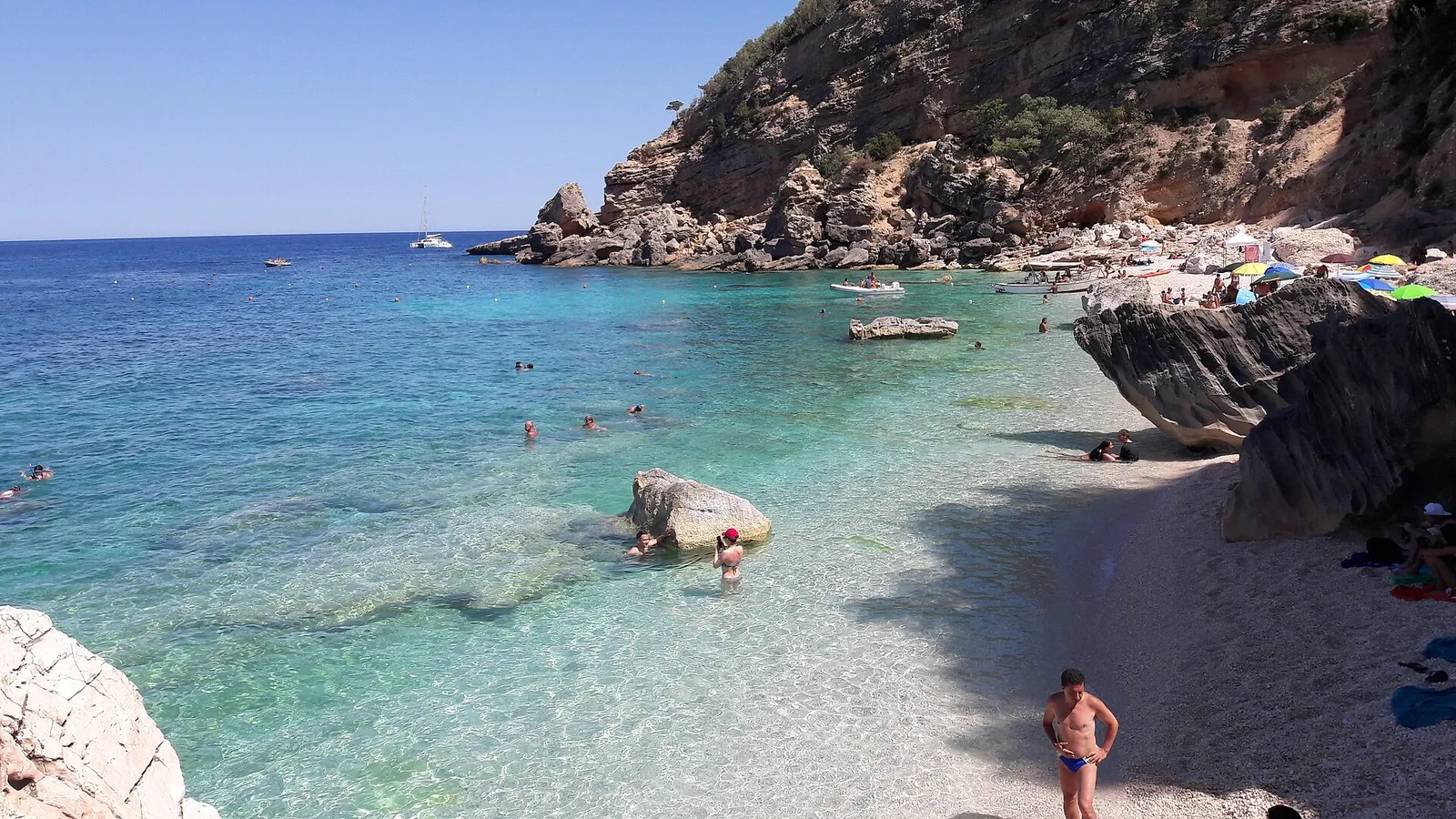
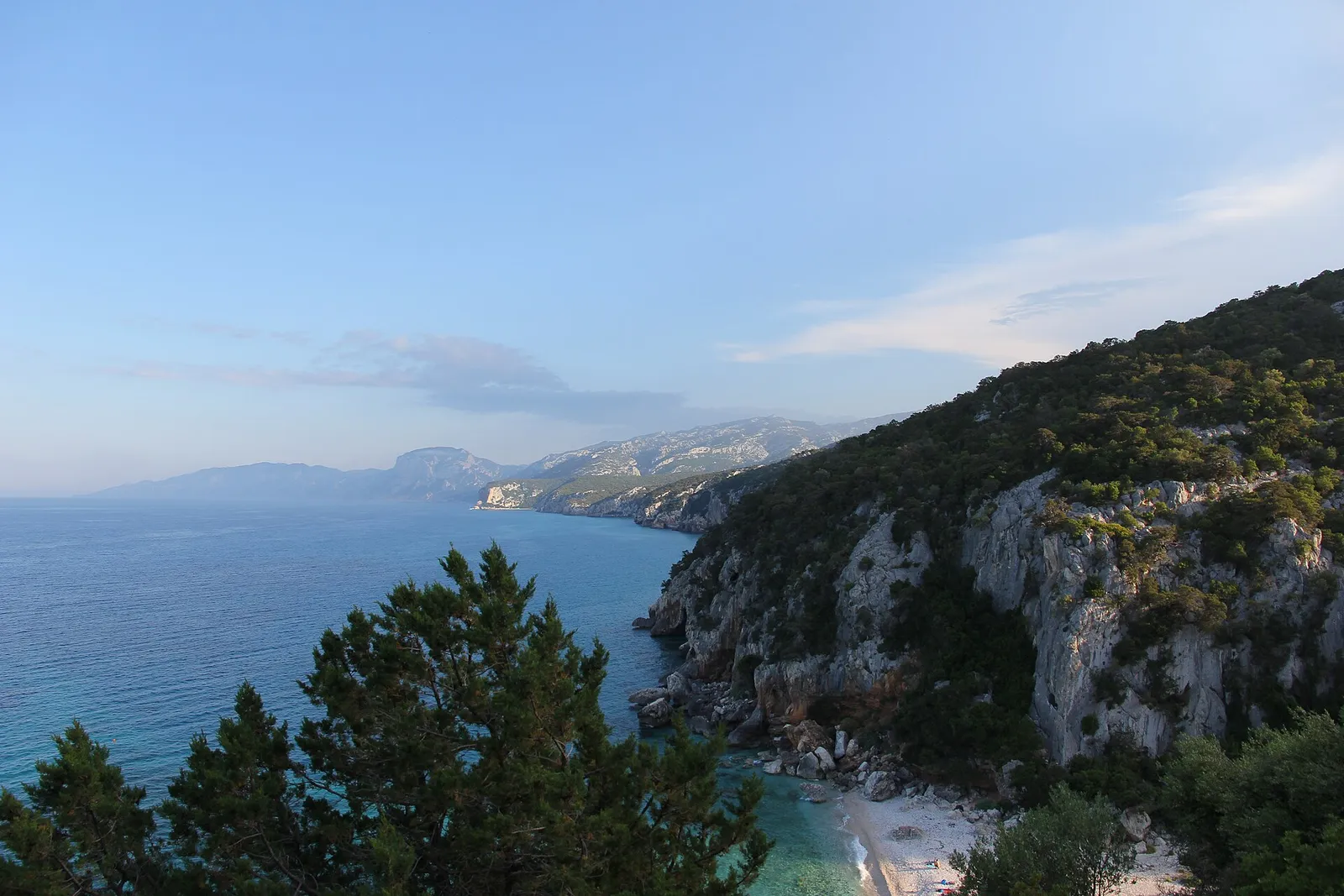
Here Sardinia refuses to surrender to roads. Above Baunei stretches the limestone Supramonte of the shepherds; below, a cliff face kilometres long plunges onto coves of white pebbles — Goloritzé, Mariolu, Biriola, Sisine, Luna — that no car can reach. This is not a postcard beach: it is a fragile place that must be earned on foot, and one that reveals itself best to those who arrive prepared and aware.
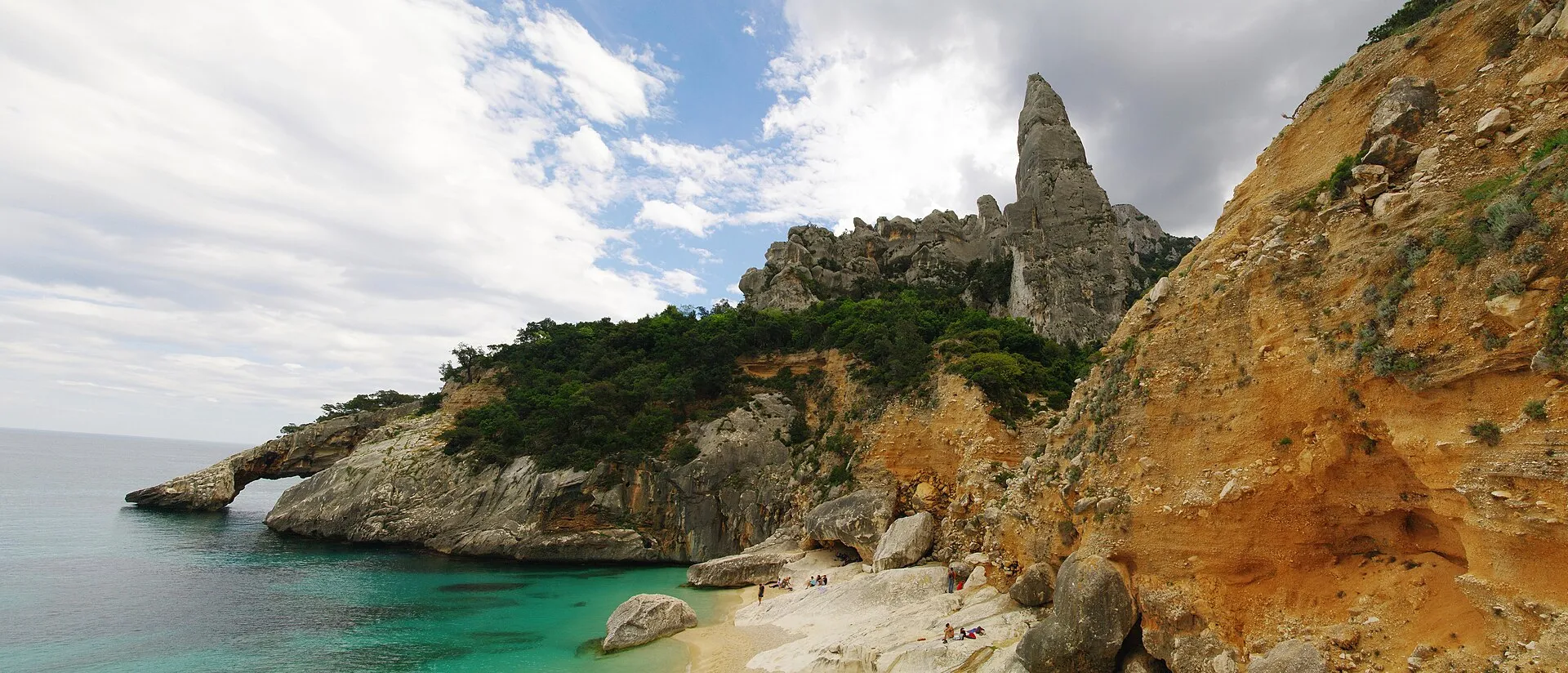
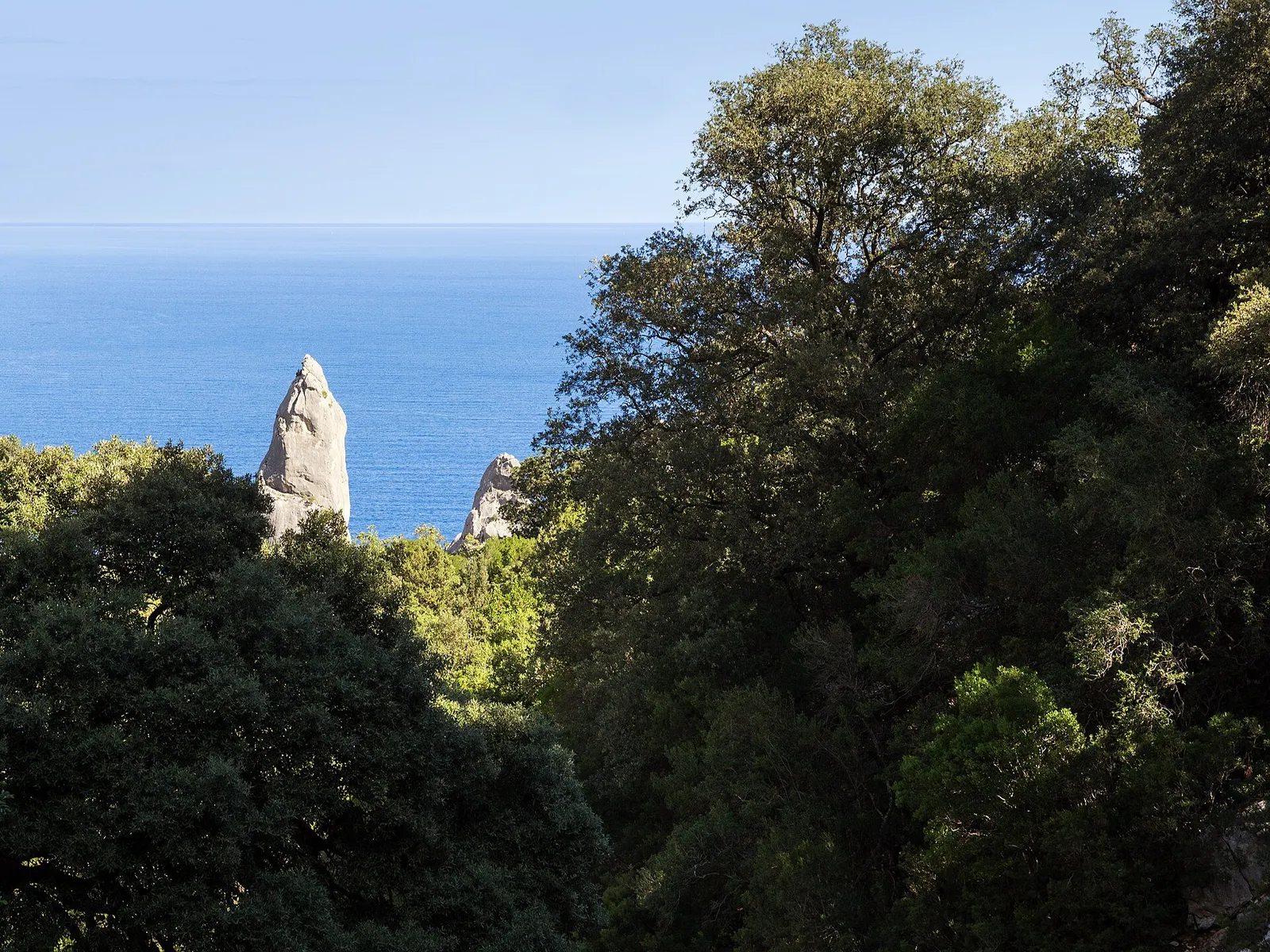
You do not stumble upon Cala Goloritzé by accident. The beach that everyone photographs today did not exist before 1962: that year, after the most intense rainfall ever recorded on the island, karstic water carved through the rock until an entire wall collapsed into the sea, leaving behind white pebbles and a limestone pinnacle 143 metres tall — Monte Caroddi — pointing skyward like a natural bell tower. Beside it, the stone arch is all that remains of a sunken sea cave. Our tour leads tell you the story up there, on the path descending from the Altopiano del Golgo: you understand that this turquoise is young, that the mountain made it and could unmake it.
Above the coves lies a world that few people notice: the Altopiano del Golgo, four hundred metres up, where goats, donkeys and pigs raised by the shepherds of Baunei roam free. Here opens Su Sterru, a chasm 270 metres deep — the deepest single-chamber abyss in Europe — which for centuries was said to be the lair of a serpent, until in the seventeenth century the shepherds built the small rural church of San Pietro beside it to drive away the threat. It is a severe and sacred landscape of holm-oak woods, stone sheepfolds and silence.
Then there is the great crossing: the Selvaggio Blu, conceived in the 1980s by alpinists Mario Verin and Peppino Cicalò by following the passages that charcoal-burners and shepherds had opened through the cliffs. Around fifty kilometres from Pedra Longa to Cala Sisine, with abseils, exposed ledges and more than three thousand metres of elevation change: it is considered the most demanding trek in Italy. We do not propose it to everyone — but we take you through its most beautiful stretches, accompanied by those who know every rock by heart.
Upcoming departures
Upcoming departures coming soon — write to us for dates and info.
What you'll live
Cala Goloritzé and the Aguglia
Reached only on foot from the Golgo: white pebbles, the stone arch and the 143-metre pinnacle born from a 1962 rockfall.
The coves by gozzo
Mariolu, Biriola, Sisine and Luna touched from the water, with the first boats of the morning and capped numbers to respect the places.
Altopiano del Golgo & Su Sterru
The shepherds' plateau at 400 metres: free-roaming flocks, the church of San Pietro and the deepest chasm in Europe.
Selvaggio Blu, the finest stretches
Tastes of the legendary crossing — suspended ledges, rope descents and sea dropping sheer below — guided by those who know every passage.
Stories of the villages
Every village on the journey keeps a story. Here are the ones your tour lead will bring back to life.
 01
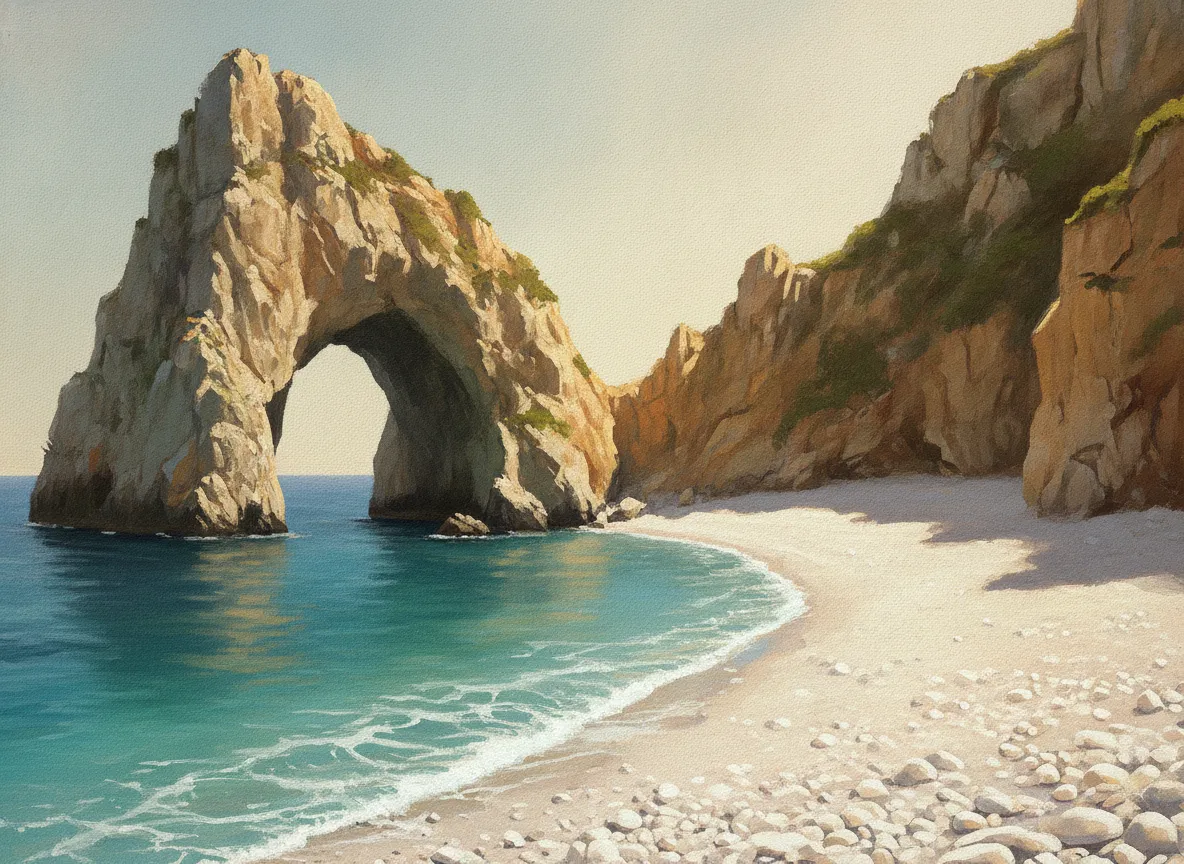
01Cala Goloritzé — The rockfall that invented a beach
The beach that everyone photographs today did not exist before 1962. That year, after some of the most intense rainfall ever recorded on the island, water seeping into the limestone carved through the mountain until an entire wall collapsed into the sea: from the disaster came the white pebbles of Cala Goloritzé, and a rock pinnacle around 143 metres tall was left standing — the Aguglia, Monte Caroddi — pointing skyward like a natural bell tower. Beside it, the stone arch is all that remains of a sunken sea cave.
Your tour lead tells you the story up there, on the path descending from the Altopiano del Golgo, before the first gozzo arrives along the coast. When you put your feet in the water and look up at the Aguglia, you understand something the postcards never say: this turquoise is young, the mountain drew it in a single night of rain, and that is precisely why it deserves to be treated with respect.
 02
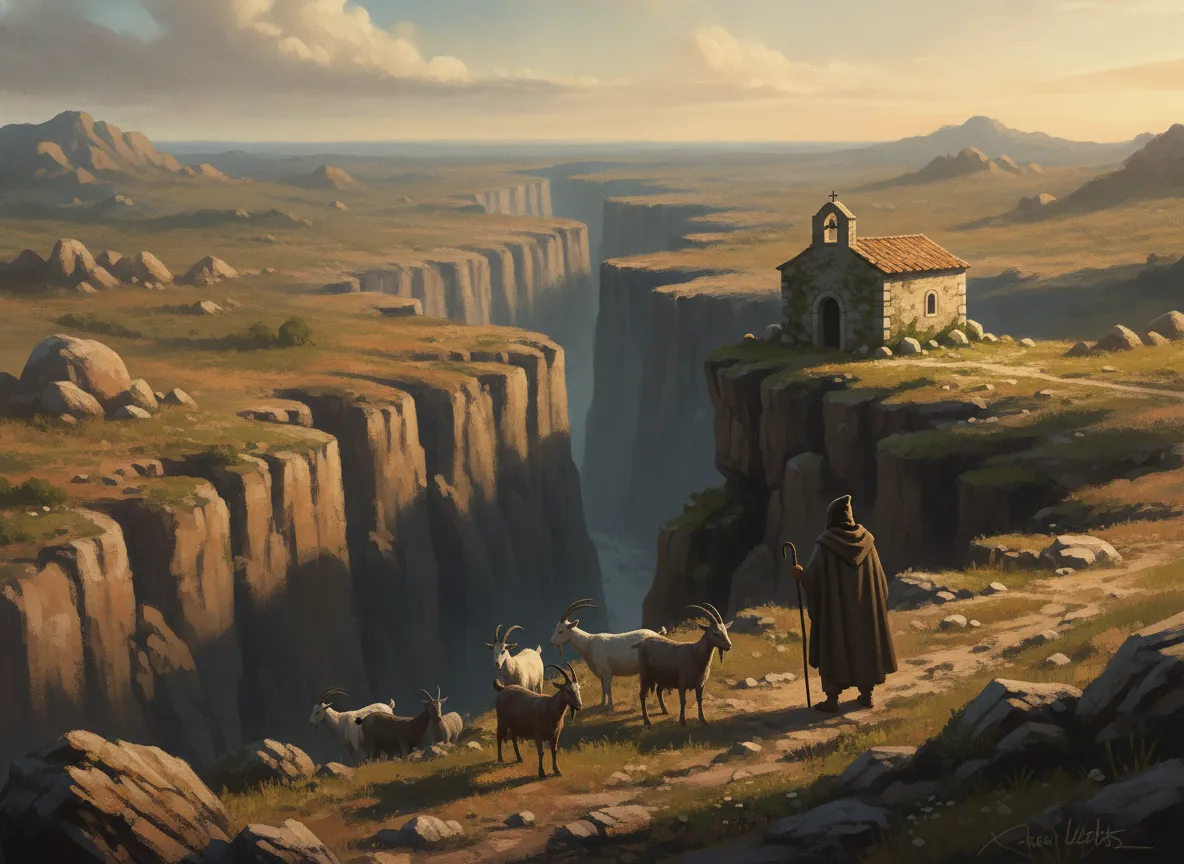
02Altopiano del Golgo — The chasm and the shepherds' church
Four hundred metres above the coves opens a world that few people notice: the Altopiano del Golgo, where among holm-oak woods and stone sheepfolds, goats, donkeys and pigs raised by the shepherds of Baunei roam free. Here the earth opens into Su Sterru, a karstic chasm around 270 metres deep, the deepest single-chamber abyss in Europe. For centuries it was said to be the lair of a monstrous serpent, until the shepherds raised the small rural church of San Pietro beside it, standing guard with faith over a hole that seemed to plunge into the unknown.
It is a severe and sacred landscape of silence, wind and stone. Your tour lead takes you among the sheepfolds in the early morning, when the sun cuts low through the holm oaks and the scent of myrtle rises from the ground: you sit with those who have raised these animals all their lives, and you understand that the coves down below are only the last step of a civilisation that lives up high, among the rocks.
 03
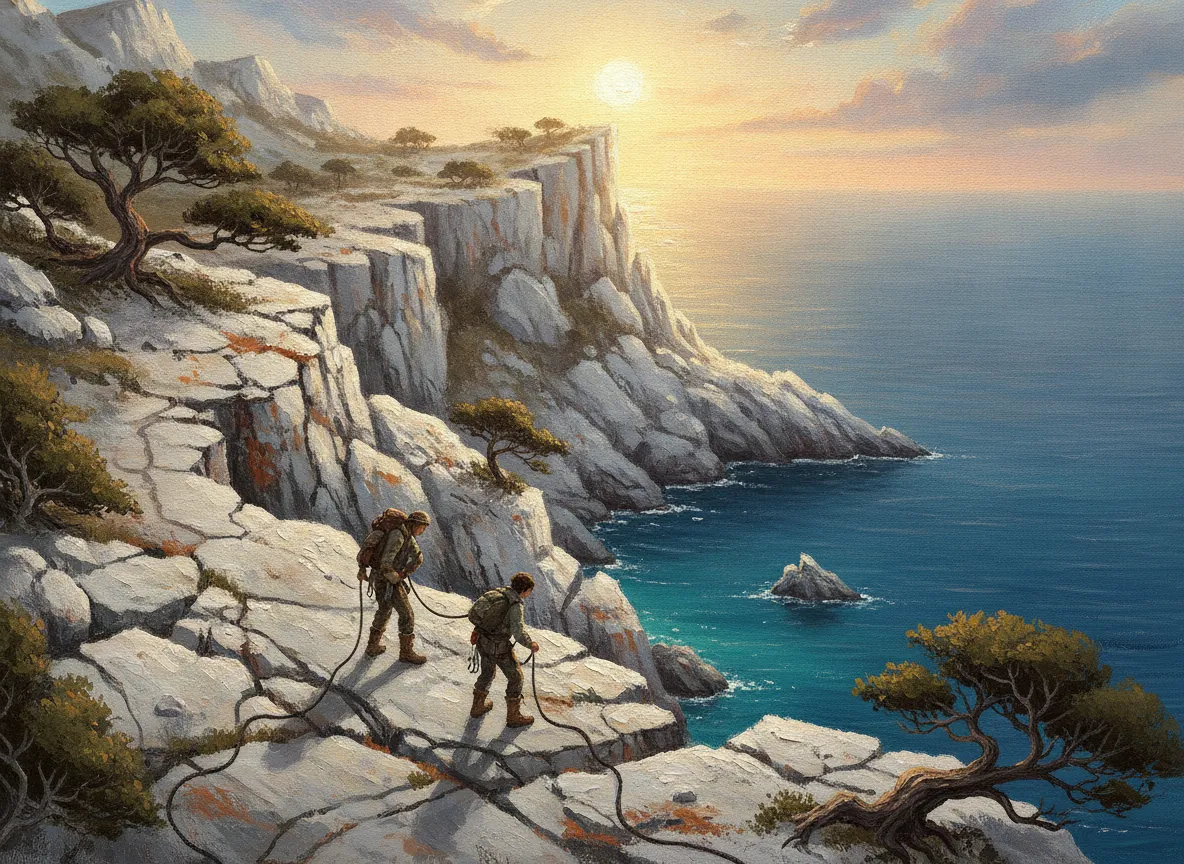
03Selvaggio Blu — The hardest trail in Italy
In the 1980s, alpinists Mario Verin and Peppino Cicalò had an almost audacious idea: to link the coast of the Golfo di Orosei on foot by following the passages that charcoal-burners and shepherds had opened through the cliffs. So was born the Selvaggio Blu, around fifty kilometres from Pedra Longa to Cala Sisine, with abseils, ledges exposed above sheer drops to the sea and more than three thousand metres of total elevation change. It is considered the most demanding trek in Italy: not a path, but a crossing earned step by step.
We do not propose it to everyone, and we say so honestly. But we take you through its most beautiful stretches, with those who know every rock by heart, down to a small cove that no road can reach. When you descend a rock face and then, suddenly, the turquoise sea opens beneath your feet, sheepfolds and unreachable coves cease to be words: they become the only thing that exists, there, in front of you.
A young coastline, shaped by water and shepherds
Here history is both geological and human: the rock carved the coves in very recent times, and people made them reachable only on foot or by sea. These are the milestones your tour lead will bring to life.
- 1962
The rockfall that created Goloritzé
After exceptional rainfall, a limestone wall collapses into the sea: the white pebbles of Cala Goloritzé are born and the Aguglia (Monte Caroddi), around 143 metres tall, remains standing.
- 1980s
The Selvaggio Blu is born
Alpinists Mario Verin and Peppino Cicalò map the crossing by following the passages of charcoal-burners and shepherds: from Pedra Longa to Cala Sisine, today the most demanding trek in Italy.
- 1993
The Aguglia as a climbing wall
The opening of the route «Sinfonia dei Mulini a Vento» establishes the Goloritzé pinnacle as one of the most coveted climbing destinations in the Mediterranean.
- 1995
Goloritzé as a natural monument
The Sardinian Region protects Cala Goloritzé, the Aguglia and the arch as a natural monument: capped access to safeguard a fragile place.
- Today
The shepherds as guardians of the Golgo
The shepherds' cooperative of Baunei manages the Altopiano del Golgo and access to the coves, combining free-range grazing, hospitality and stewardship of the land.
The Furore group tour — from 20 to 50 participants, on fixed calendar dates — is built around a rule we share with those who live here: the place comes before us. The coves of Baunei have capped entry numbers and mandatory booking; Goloritzé can only be reached on foot from the Golgo, while the others are approached by sea on the traditional gozzi that depart from Santa Maria Navarrese. The group moves with organised transfers, choosing the right hours — dawn on the trail, the first gozzo before the crowds — and working alongside the shepherds' cooperative that watches over the plateau. Access bookings for all capped sites are handled entirely by Furore.
Each stage has its own local tour lead: shepherds, guides and people from Baunei who open sheepfolds and kitchens that no printed guidebook knows. It is at the table that the day closes: su porceddu slow-cooked over myrtle, culurgiones sealed in the ear-of-wheat fold — the island's sign of abundance and protection — pane carasau and a pecorino that tastes of the salted herbs of the Supramonte. You join the tour by choosing a date from the calendar and setting off together: the Furore tour lead accompanies the group for the entire journey.
The journey map
When to go
What's included
- Dedicated storytelling tour lead
- Transfers on site included
- Selected charming places to stay
- Experiences and tastings on the programme
- Furore 24/7 assistance
Not included
- Return travel to the departure location
- Meals not indicated in the programme
- Tips and personal extras
- Travel insurance (optional)
Where you will sleep
We choose every place to stay by hand: no anonymous chains, but places with a soul, in the heart of the villages or looking out over the landscape.
Historic residences
Palaces and stone houses in the centre of the villages, among ancient walls and silence.
Boutique hotels
Small charming hotels, with a view, attentive service and an intimate atmosphere.
Farmhouses and wineries
Authentic hospitality among vines, olive trees and real tables, where they welcome you like home.
Your tour lead
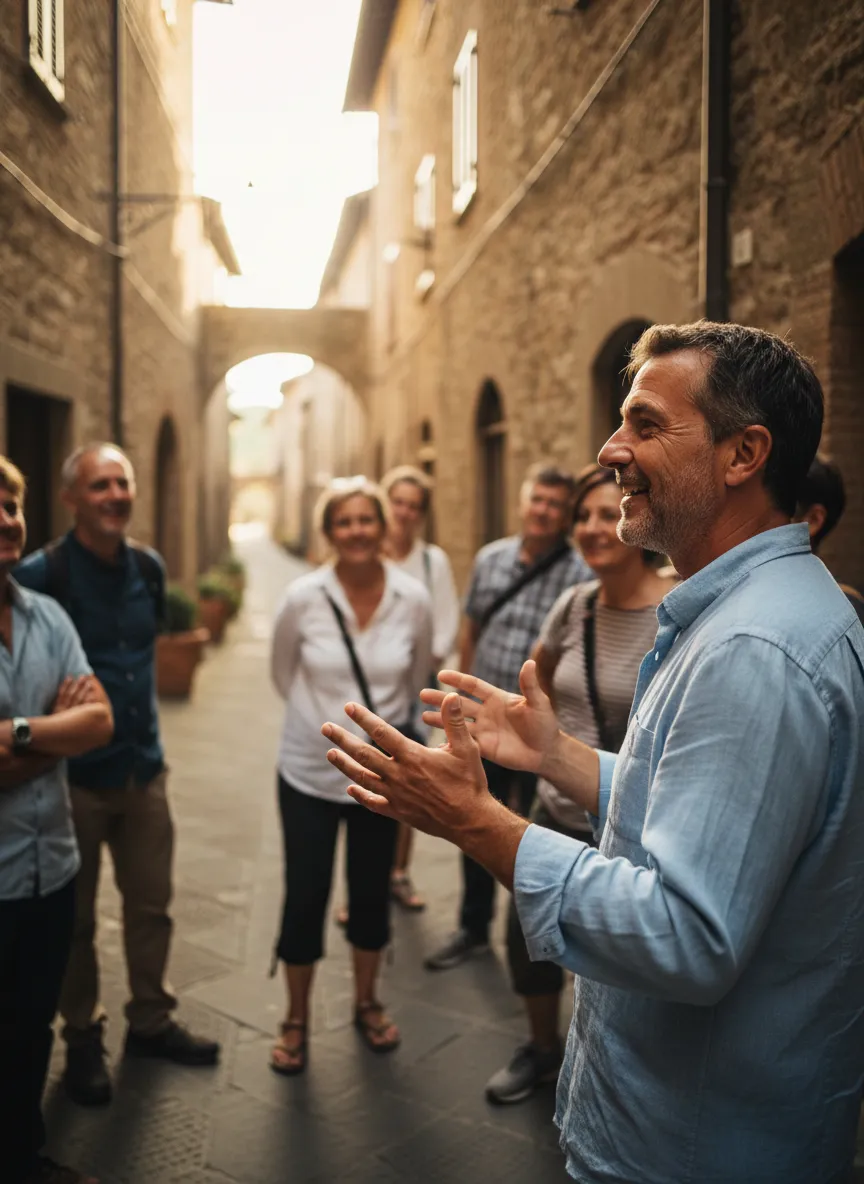
Not just any chaperone: a storyteller of the land, born here or who chose to stay. They know the true stories, the doors to open and the right rhythms. They are the person who turns a beautiful journey into an unforgettable memory.
The journey timeline
- Departure from Naples
- Day 1
Baunei and the Golgo
Arrival in Baunei, ascent to the Altopiano del Golgo through sheepfolds and holm-oak woods, the church of San Pietro and the Su Sterru chasm. Dinner with the shepherds, featuring su porceddu.
- Day 2
On foot to Goloritzé
Dawn descent along the Golgo trail to Cala Goloritzé, the Aguglia and the arch; a swim and unhurried time before the climb back up, with a packed lunch of local produce.
- Day 3
The coves by sea
By gozzo from Santa Maria Navarrese among Mariolu, Cala dei Gabbiani, Biriola and Sisine, with swimming stops and sea caves, far from the large tourist boats.
- Day 4
Cala Luna and the flavours of the Supramonte
The final cove, Cala Luna with its caves; return journey and a farewell table of culurgiones, pane carasau and pecorino from the hinterland.
- Return to Naples
Frequently asked
What is the best time to visit the Golfo di Orosei and Baunei?
Late spring (May–June) and early autumn (September–early October): the sea is already warm, the trails are walkable and the coves are far less crowded than in high season.
Do you need to book in advance to visit the coves of Baunei?
Yes. Access to Cala Goloritzé and landing at the other coves are capped with mandatory booking: Furore handles everything for the entire group, at the right times and within the access limits.
Do I need to be fit? Does the tour include the Selvaggio Blu?
Goloritzé requires a trek of around 3.5 km with some elevation gain. The full Selvaggio Blu is for experienced trekkers only; the tour offers its most beautiful stretches, calibrated to the group's pace and led by the tour lead.
How do you reach the coves — on foot or by boat?
Goloritzé on foot from the Golgo only; Mariolu, Biriola, Sisine and Luna by gozzo from Santa Maria Navarrese. All transfers are organised by Furore for the entire group, without large tourist vessels.
More villages to discover
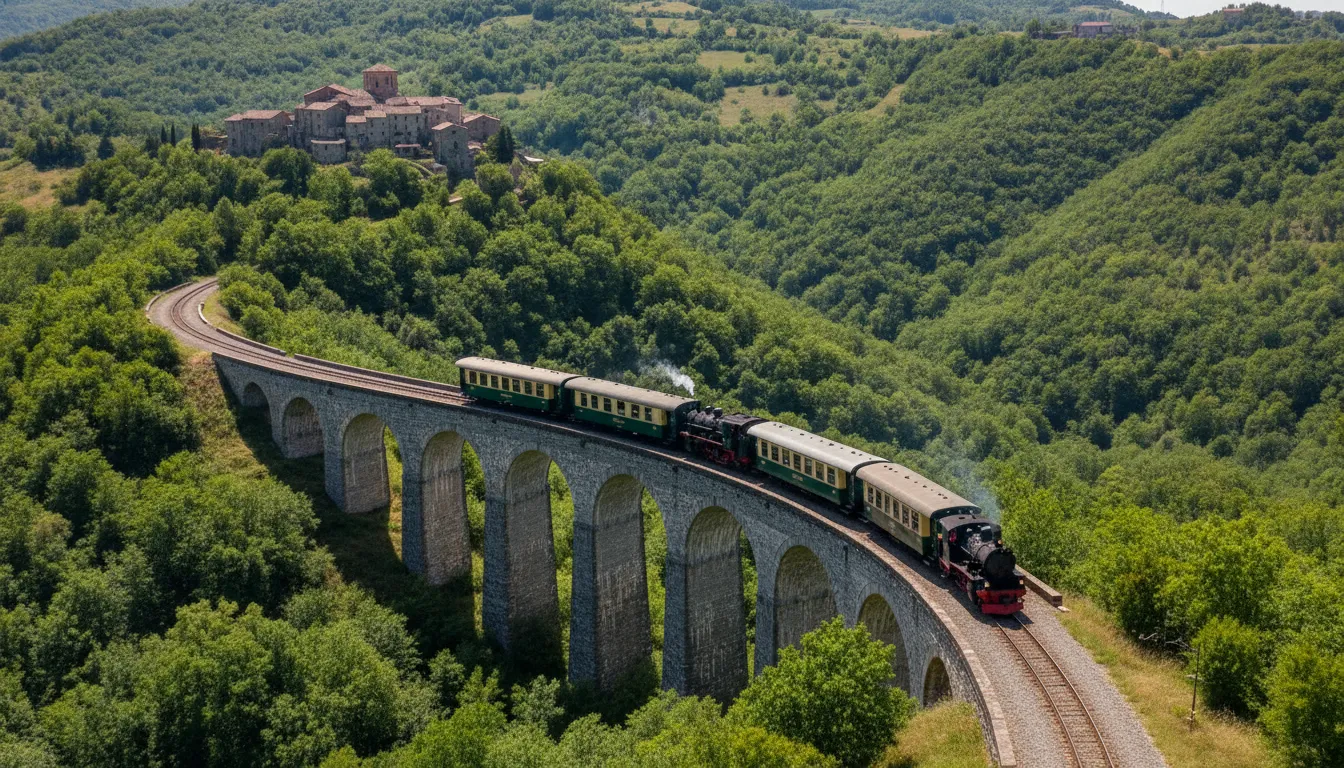 Abruzzo
Italy's Transiberian and the Villages of Abruzzo
Abruzzo · Sulmona, Pescocostanzo, Cocullo, Campo di Giove
A slow train through the wild heart of the Apennines
Explore the village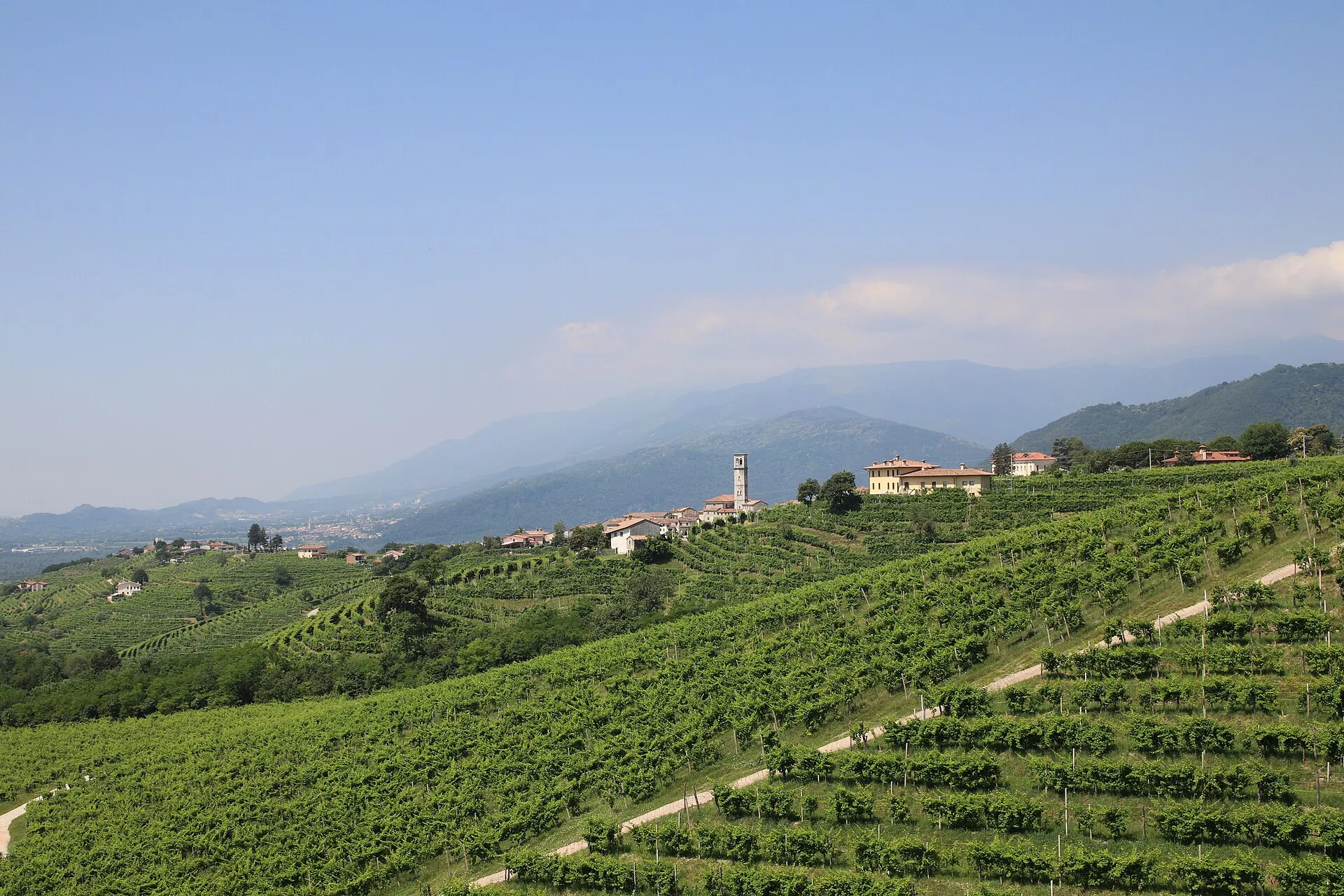 Veneto
Colline del Prosecco
Veneto · Valdobbiadene, Conegliano and the UNESCO Rive
Hills where the light of the Pre-Alps becomes wine
Explore the village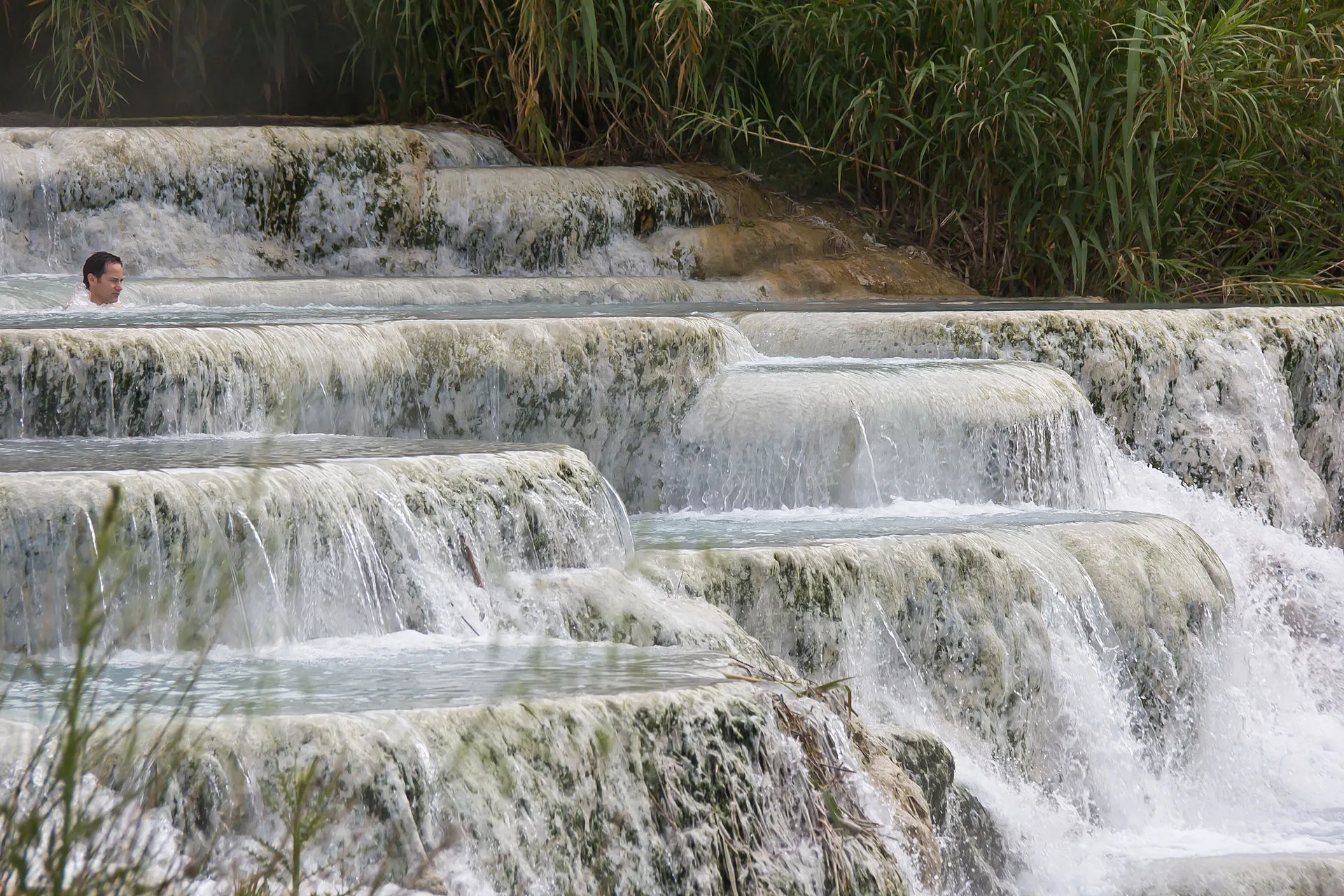 Tuscany
Saturnia and the Tuscan Maremma
Tuscany · Saturnia, Pitigliano, Sovana
Warm waters born from a thunderbolt and cities carved from tufa
Explore the villageReady to truly set off?
Choose the tour that calls you and sign up: the itinerary, the stories and the logistics are on us.