
Campania · Ischia, Procida
Ischia and the Gulf
The green island where the water burns and the sunset turns red
- Sea & islands
- Thermal baths
- Romantic
An hour by sea from Naples, Ischia is an island that smoulders quietly from below: thermal waters the Greeks believed divine, a castle on a rock, a fishermen's village with no cars. Nearby, Procida with its pastel colours. For us this is not an excursion: it is our home, in the Gulf of Naples.
Ischia is the oldest Greek colony in the Western world, and you feel it as you walk. When sailors from Euboea landed here around 750 BC, they called the island Pithecusae and immediately understood one thing: from the earth rose a warmth that spoke of wonder. It was in a tomb at Lacco Ameno that the Nestor Cup was found — a wine cup with three incised lines, among the oldest writings in the Greek alphabet we possess — promising whoever drinks from it the desire of «Aphrodite of the beautiful crown». Our tour leads take you before that cup, at the Museo di Villa Arbusto, and tell you why an island of boiling water was already speaking of love.
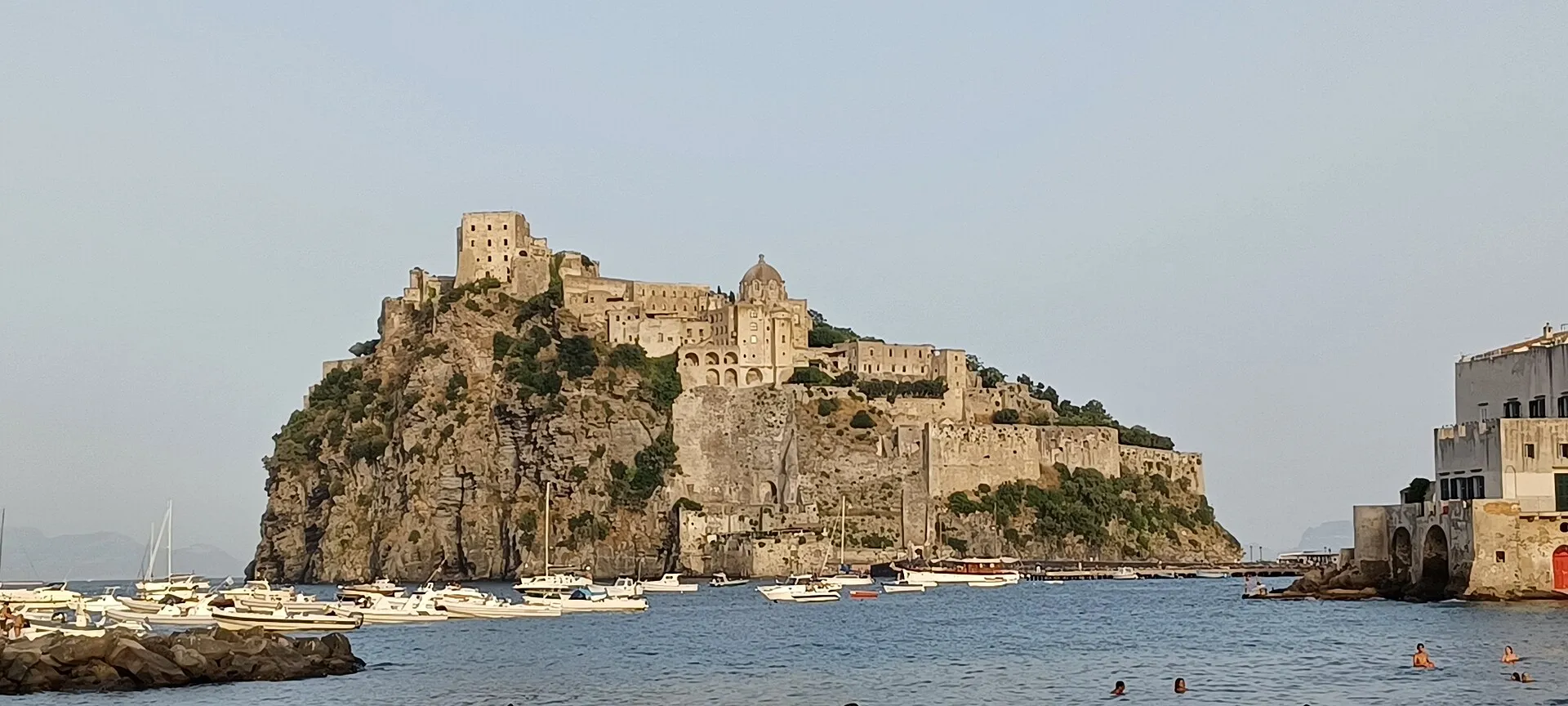
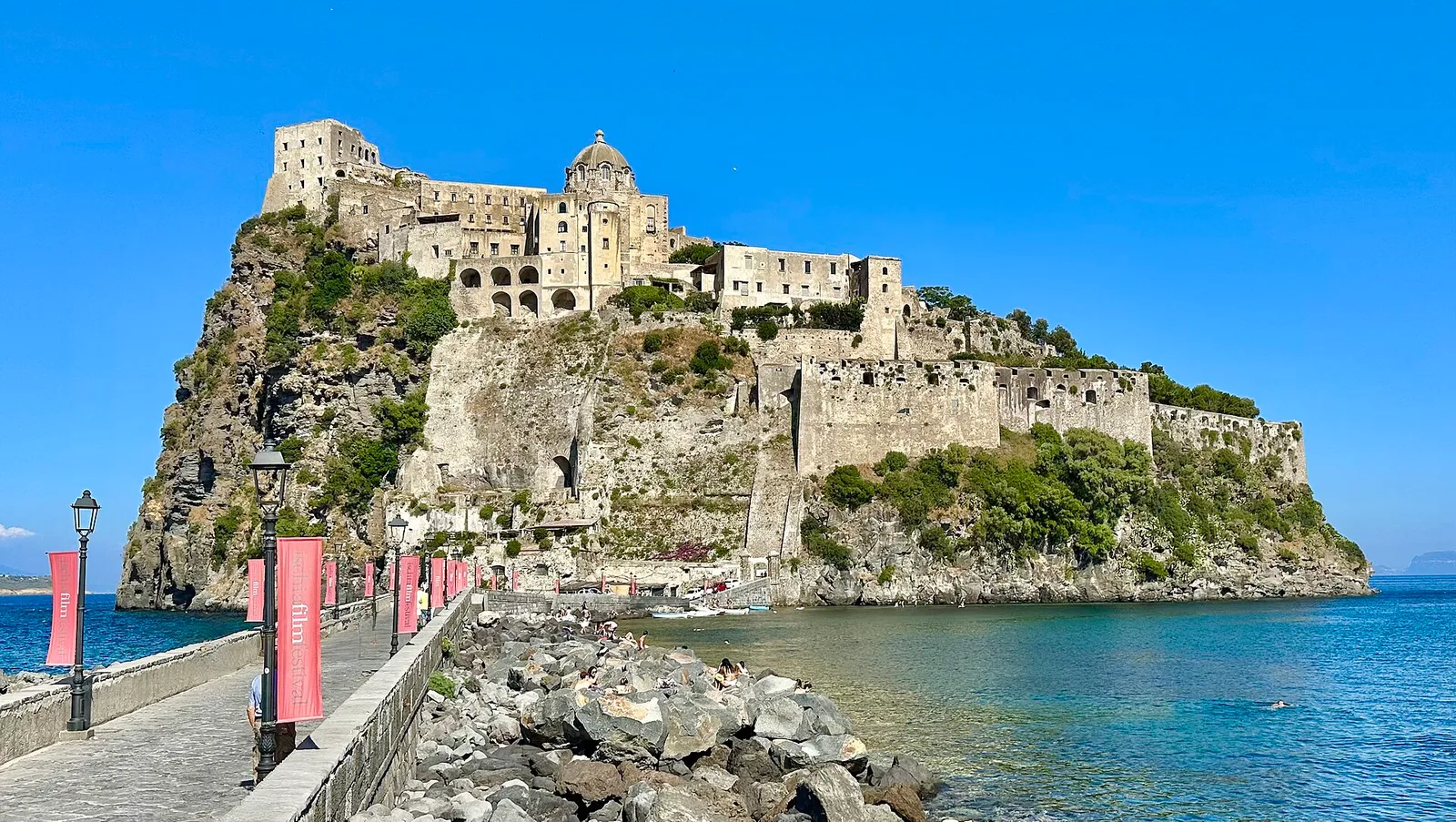
The Castello Aragonese is the stern face of this story. It rises on a crag of green tuff, the «insula minor», separated from the main island by an eruption two thousand years ago and later reunited by a stone bridge more than two hundred metres long. Alfonso of Aragon rebuilt it in imposing form in 1441, and for centuries it sheltered an entire island from pirate raids: within its walls lived thousands of families, convents, thirteen churches. We take you up slowly, through the Clarisse garden and the terraces dropping sheer to the sea, until beneath you there is only the Gulf and you understand that certain stones still protect.
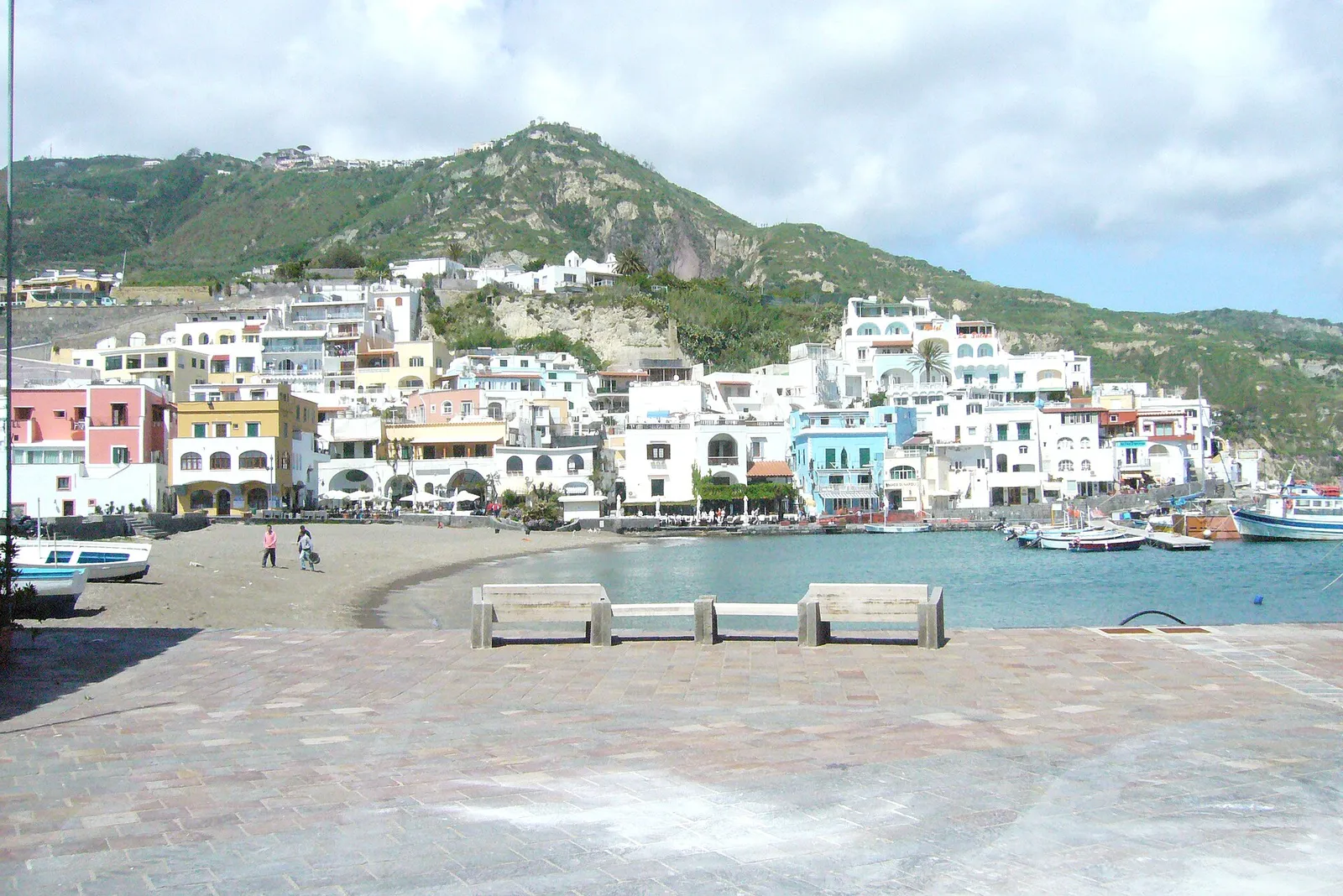
Then there is Sant'Angelo, and here the island becomes a whisper. It is a fishermen's village where cars are not allowed: you leave everything above and walk down to the little square, while from the small harbour a narrow strip of sand leads to the Torre, the rock that closes the bay. Behind it, the Maronti beach and the fumaroles: spots where volcanic steam rises from the sand so hot that fishermen have always cooked fish buried beneath it. We show you this at sunset, when the husbands bring the boats back and the village becomes, for an hour, exactly what it was a hundred years ago.
Upcoming departures
Upcoming departures coming soon — write to us for dates and info.
What you'll live
The Castello Aragonese on the rock
A fortress on an islet of green tuff, reached by a stone bridge: terraces dropping sheer to the Gulf and centuries of refuge from pirates.
Sant'Angelo without cars
The island's most gentle fishermen's village, the strip of sand towards the Torre and the Maronti fumaroles, where steam rises hot from the sand.
Thermal baths in the green, by the sea
The Giardini Poseidon in the bay of Citara or Negombo at San Montano: volcanic waters between 28 and 40 degrees, an unmissable stop in the group itinerary.
The sunset at the Soccorso
The white church of Forio suspended over the water, blazing red at sunset, after the musical gardens of La Mortella.
Stories of the villages
Every village on the journey keeps a story. Here are the ones your tour lead will bring back to life.
 01
01The Castello Aragonese — The poetess on the rock
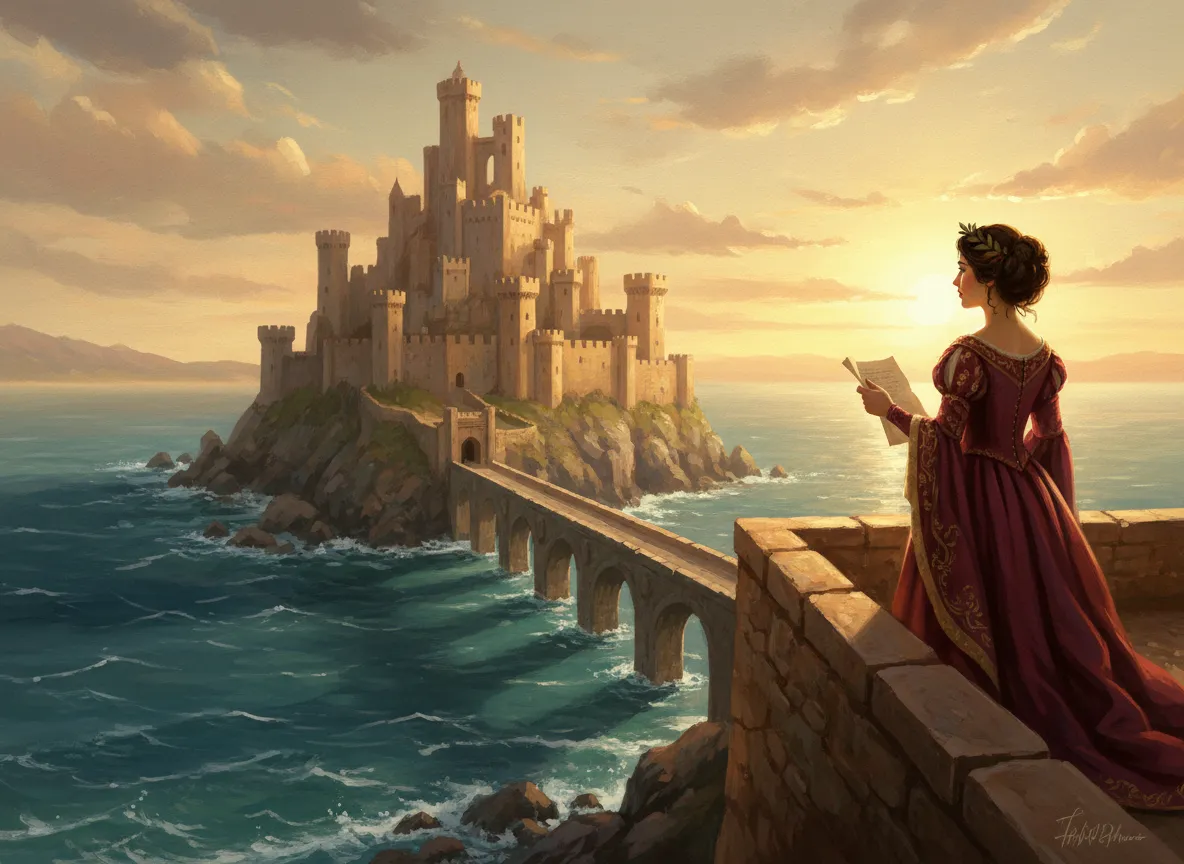
On a crag of green tuff, separated from the island by an eruption two thousand years ago and stitched back to the mainland by a stone bridge more than two hundred metres long, an entire fortress community once kept watch: 1,892 families, thirteen churches, the convent of the Clarisse, a bishop and a garrison, safe from pirate raids. Alfonso of Aragon made it a fortress in the fifteenth century, but its most secret heart belongs to a woman: Vittoria Colonna, the greatest poetess of the Italian Renaissance, who lived here from 1501 to 1536.
Within these walls she married Fernando d'Avalos and, widowed, turned the castle into a gathering place for artists and poets: Michelangelo wrote her sonnets and verses of love. Your tour lead takes you up slowly, through the Clarisse garden and the terraces dropping sheer to the sea, until beneath your feet there is nothing but the Gulf: it is there, where the wind still carries the smell of salt, that you understand why certain verses could only have been born on a rock suspended between sky and water.
 02
02Pithecusae and the Nestor Cup — The first words of the West
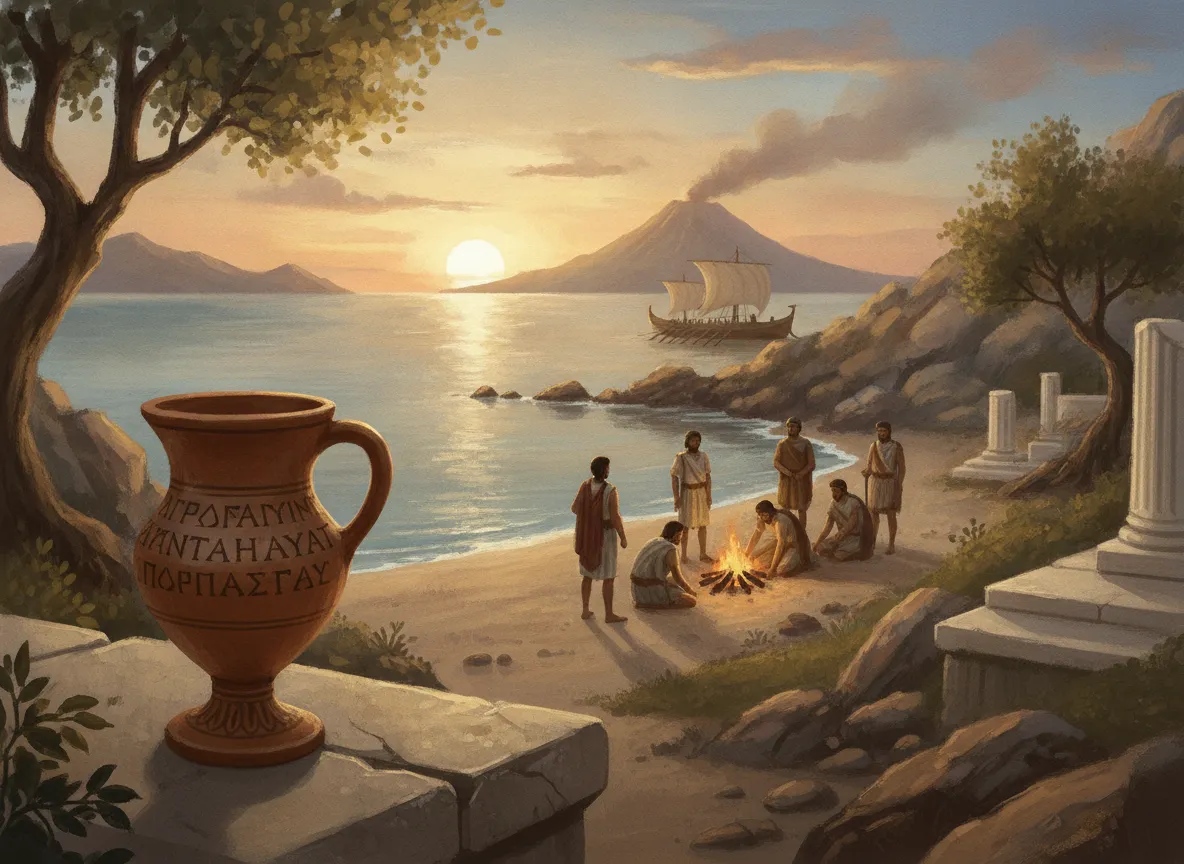
Around 750 BC, sailors who had come from Euboea landed on this island and called it Pithecusae: it was the first permanent Greek settlement in Italy, a trading post where Greeks, Etruscans and Phoenicians lived side by side and from which the alphabet spread throughout the Western world. In a tomb in the necropolis of San Montano, at Lacco Ameno, the archaeologist Giorgio Buchner found a small wine cup — a kotyle barely ten centimetres wide — with three lines incised from right to left: one of the oldest Greek writings we possess, and the first fragment of poetry to have reached us.
The verses promise whoever drinks from that cup the desire of «Aphrodite of the beautiful crown». Consider this: on an island of boiling water, even before Cumae and Rome, someone was already writing of love. Your tour lead takes you before that cup at the Museo di Villa Arbusto, and in that silent glass case you feel that Italy, and its words, were born right here.
 03
03The Giardini La Mortella — The garden born from a passion
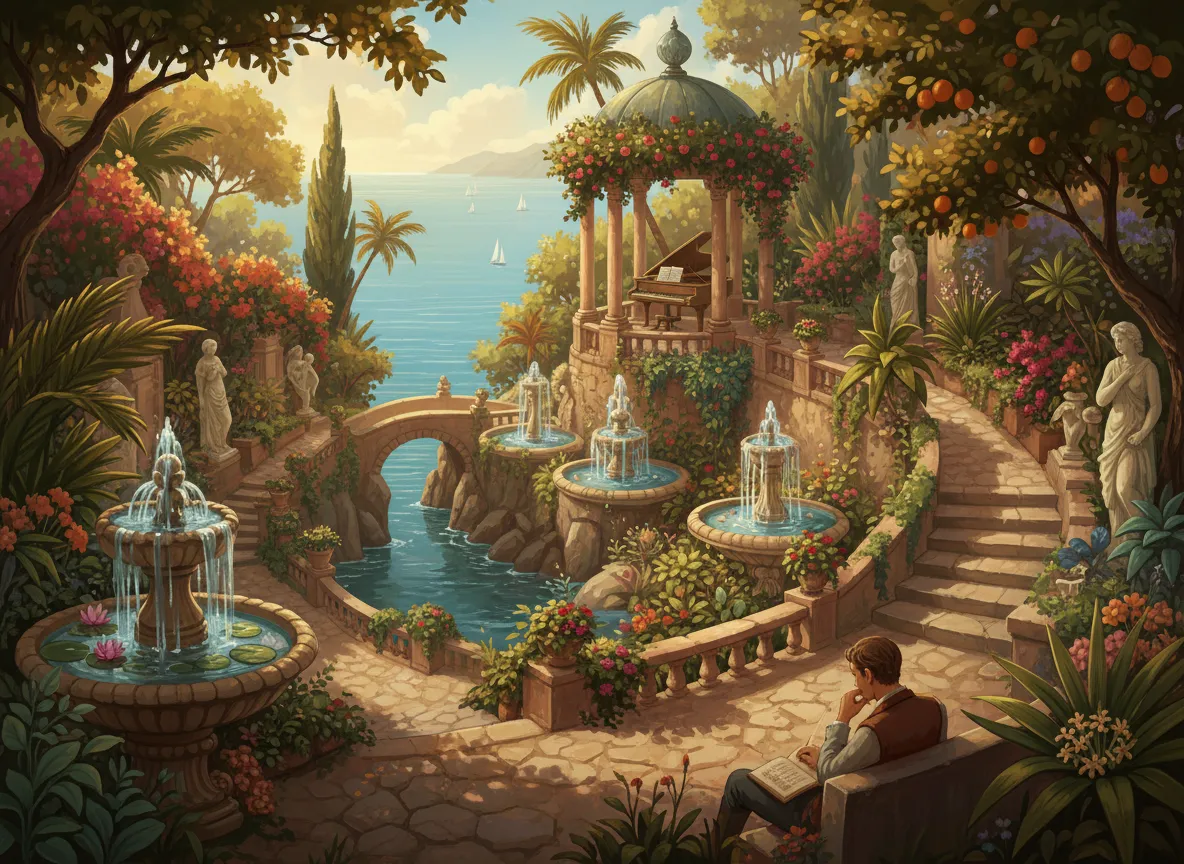
In 1949 the English composer William Walton and his young Argentine wife Susana arrived in Forio and fell in love with a volcanic gorge full of rocks and wild myrtles. They bought that impossible land and, from 1956, began to invent a garden there: they called it La Mortella, after the «mortelle», the myrtles growing among the stones. The design was by the great landscape architect Russell Page, an admirer of Walton's music, but it was Susana who brought it to life, devoting to it a legendary energy for over fifty years.
Today La Mortella is one of the most beautiful gardens in the world, with a Greek theatre overlooking the sea where young orchestra musicians play among the palms. Your tour lead takes you there on a slow afternoon: you walk among tree ferns and water lilies while, somewhere among the fronds, a piano note rises into the warm air. Then you understand that this is not just a garden, but a love story still alive.
From the first Greek colony to the island of poets
Ischia is the oldest Greek colony in the Western world: even before Cumae, iron was smelted here, writing was done in the Greek alphabet and love was already being spoken of. Layer upon layer — Greeks, Romans, Aragonese — the Gulf has left traces that your tour lead lets you touch with your own hands.
- ~750 BC
Pithecusae, the first colony in the West
Euboean sailors from Chalcis and Eretria land and found Pithecusae at Lacco Ameno, the first permanent Greek settlement in Italy: a trading post where Greeks, Etruscans and Phoenicians lived side by side.
- late 8th century BC
The Nestor Cup
In the necropolis of Pithecusae a Rhodian kotyle is laid to rest, bearing three incised verses — among the oldest Greek writings in the Western world — promising whoever drinks from it the desire of Aphrodite. Today it is held at the Museo di Villa Arbusto.
- 1441
Alfonso of Aragon and the Castle
Alfonso V of Aragon transforms the fortress on the rock and connects it to the mainland with a masonry bridge 220 metres long: for centuries a refuge for the entire island against pirate raids.
- 1956
La Mortella is born
In Forio, Susana Walton, wife of the English composer William Walton, begins the Mediterranean garden she will call La Mortella, after the myrtles among the rocks; it opens to the public in 1991.
- 2022
Procida Capital of Culture
Procida becomes the first island to be named Italy's Capital of Culture, with the motto «culture does not isolate»: a year of events that brings the small fishing village to the heart of the nation.
The Furore group tour brings 20–50 participants to discover Ischia and Procida on fixed calendar dates, with a dedicated tour lead who has this sea on their doorstep: transfers are organised, boats are booked, and the thermal spa stops are chosen for the group — no rushing for ferries through the crowds. A morning at the Giardini Poseidon, in the bay of Citara — six hectares and over twenty pools by the sea, from 28 to 40 degrees — or at Negombo, nestled in the cove of the Baia di San Montano. An afternoon at the Giardini La Mortella in Forio, born in 1956 from the dream of Susana Walton, wife of the English composer William Walton: she named it after the myrtles — «le mortelle» — that grew among the rocks, and today it is one of the most beautiful gardens in the world, with a Greek theatre overlooking the sea where young orchestra musicians perform. The tables are chosen by the tour lead: you eat coniglio all'ischitana the way it should be eaten.
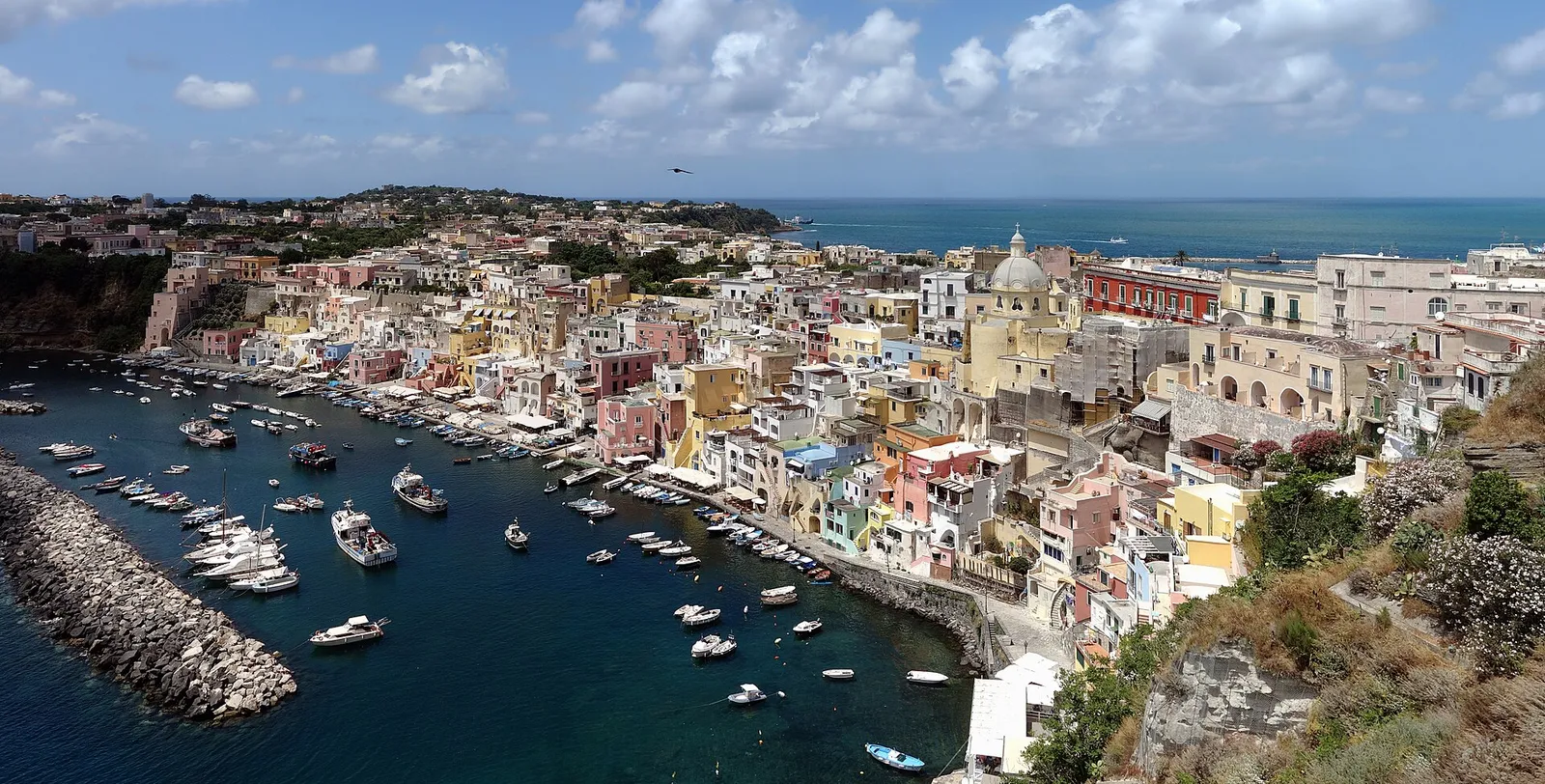
We save the finale for the light. In Forio the group reaches the Chiesa del Soccorso as the sun goes down: all white, suspended over the water, the stucco catching fire in red and — on lucky evenings — the green flash on the horizon. If the tour calendar includes an extra day, a boat towards Procida: the Marina Corricella, the pastel houses with their archways, the colours that fishermen still cannot change at will because they were used to recognise their own home from the sea. Procida was Italy's Capital of Culture in 2022 — the first island to hold the title — and remains, simply, real. Every stop has its own local tour lead: people born here, who open doors that no printed guide knows.
The journey map
When to go
What's included
- Dedicated storytelling tour lead
- Transfers on site included
- Selected charming places to stay
- Experiences and tastings on the programme
- Furore 24/7 assistance
Not included
- Return travel to the departure location
- Meals not indicated in the programme
- Tips and personal extras
- Travel insurance (optional)
Where you will sleep
We choose every place to stay by hand: no anonymous chains, but places with a soul, in the heart of the villages or looking out over the landscape.
Historic residences
Palaces and stone houses in the centre of the villages, among ancient walls and silence.
Boutique hotels
Small charming hotels, with a view, attentive service and an intimate atmosphere.
Farmhouses and wineries
Authentic hospitality among vines, olive trees and real tables, where they welcome you like home.
Your tour lead
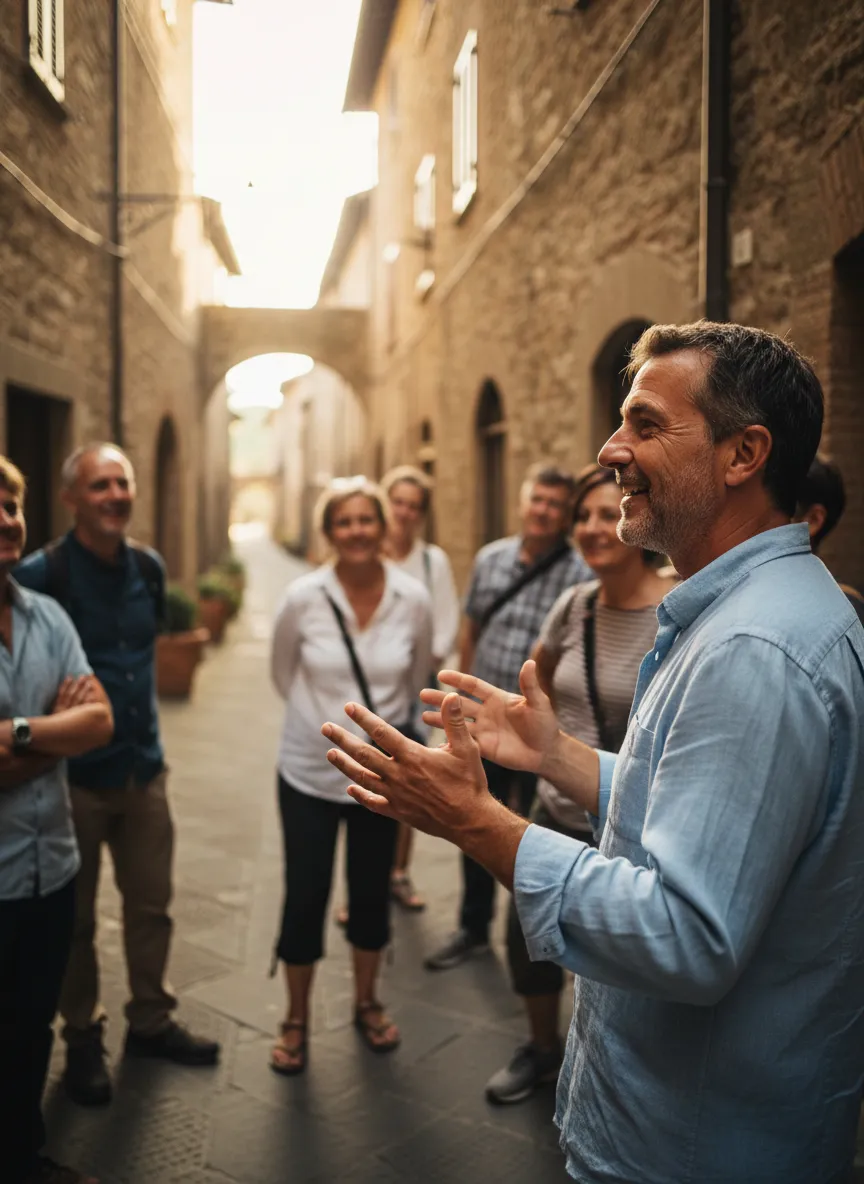
Not just any chaperone: a storyteller of the land, born here or who chose to stay. They know the true stories, the doors to open and the right rhythms. They are the person who turns a beautiful journey into an unforgettable memory.
The journey timeline
- Departure from Naples
- Day 1
From Naples to the green island
Private crossing to Ischia, charming accommodation and an afternoon walk to the Castello Aragonese, with the low light on the terraces.
- Day 2
Thermal baths and gardens of Forio
A relaxing morning at the Giardini Poseidon in the bay of Citara; in the afternoon La Mortella and, as the sun sets, the Chiesa del Soccorso.
- Day 3
Sant'Angelo and the Maronti
A walk down into the car-free village, a boat to the Maronti fumaroles and a seafood lunch on the little harbour. A slow afternoon, as it should be.
- Day 4
Procida in pastel
Private boat to Procida: the Marina Corricella, Terra Murata and the colourful lanes of the Capital of Culture, before heading home.
- Return to Naples
Frequently asked
What is the best time to visit Ischia and Procida?
May to June and September to early October: warm sea, pleasant thermal baths and lively islands without the August crowds. The thermal spas are wonderful in spring too.
How many days do you need to visit Ischia and Procida?
We recommend 4–5 days: enough time for the castle, a day at the thermal baths, Sant'Angelo and a trip to Procida, without rushing and with room for the sea.
How does joining the group tour work?
Tours depart on fixed calendar dates with groups of 20 to 50 people: simply choose your date, sign up and the Furore tour lead takes care of transfers, boats and stops. No DIY planning required.
How do you get there and travel between the islands?
You depart from the port of Naples — our home base — with crossings and boats pre-booked for the group, and on the island with dedicated transfers: no waiting, everything coordinated by the tour lead.
More villages to discover
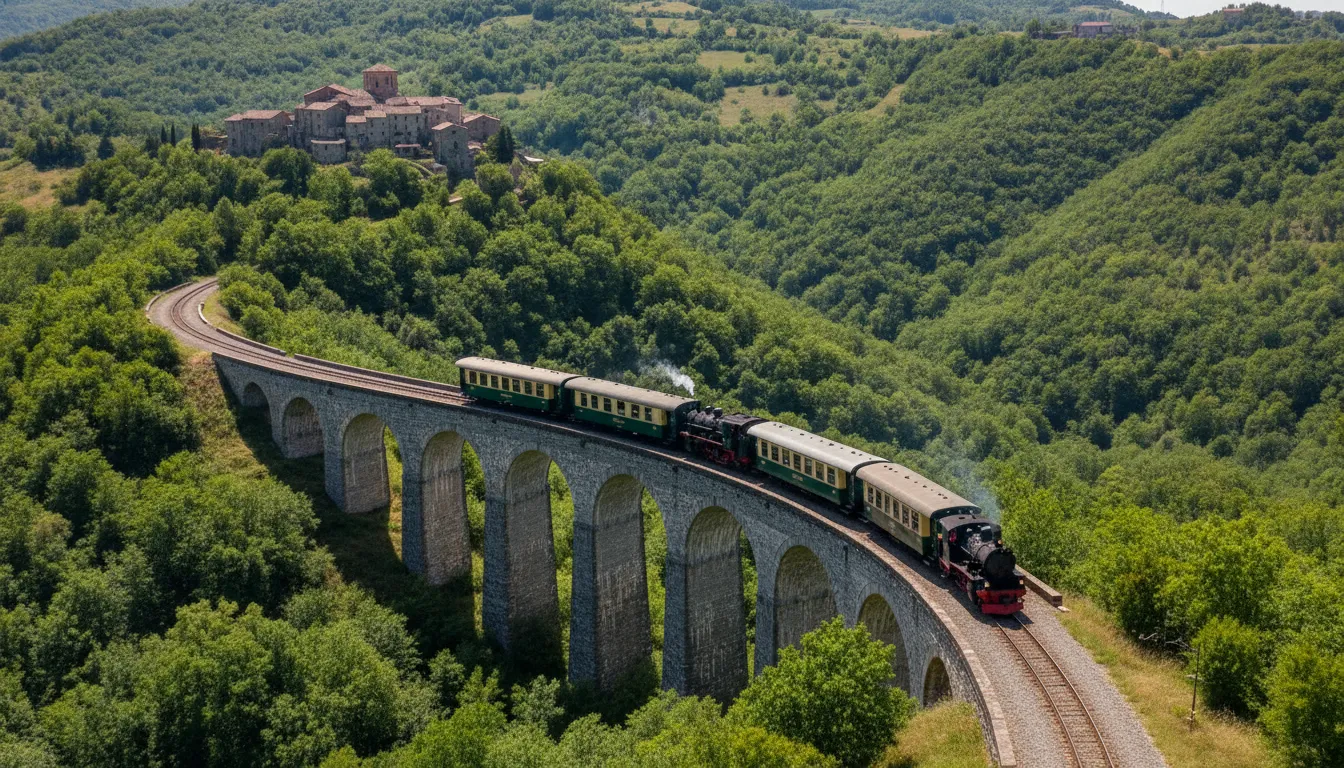 Abruzzo
Italy's Transiberian and the Villages of Abruzzo
Abruzzo · Sulmona, Pescocostanzo, Cocullo, Campo di Giove
A slow train through the wild heart of the Apennines
Explore the village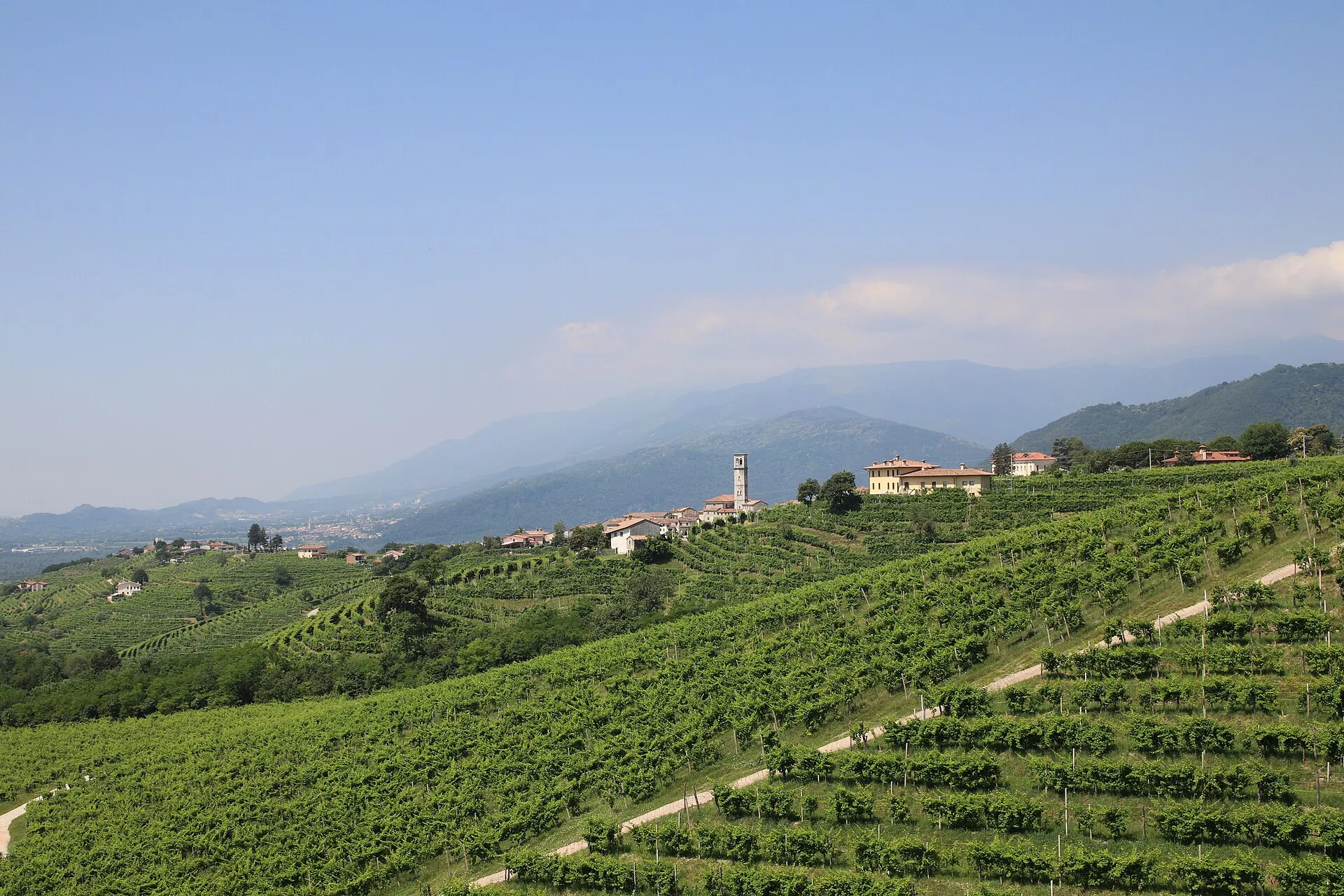 Veneto
Colline del Prosecco
Veneto · Valdobbiadene, Conegliano and the UNESCO Rive
Hills where the light of the Pre-Alps becomes wine
Explore the village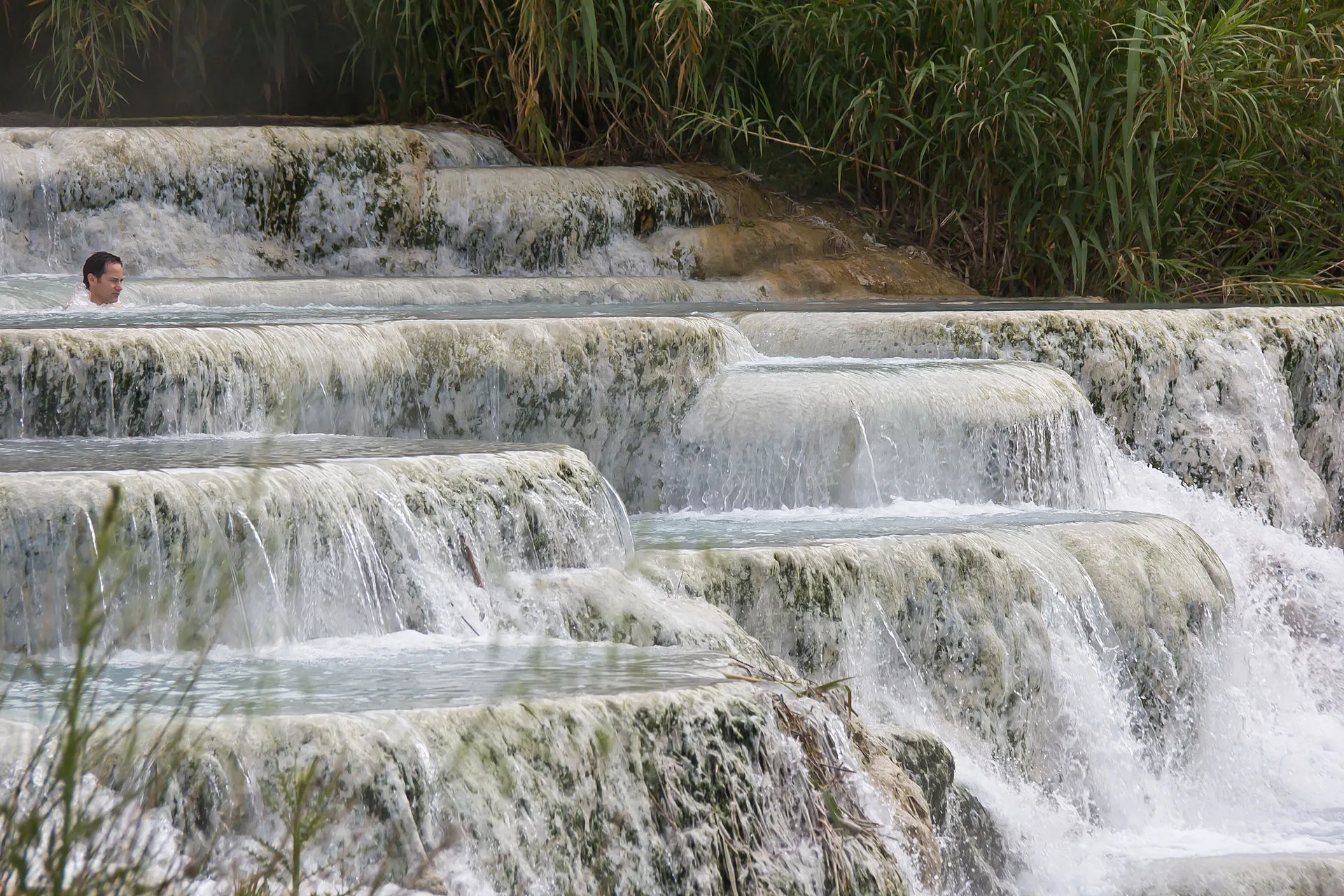 Tuscany
Saturnia and the Tuscan Maremma
Tuscany · Saturnia, Pitigliano, Sovana
Warm waters born from a thunderbolt and cities carved from tufa
Explore the villageReady to truly set off?
Choose the tour that calls you and sign up: the itinerary, the stories and the logistics are on us.